REVIEW · HO CHI MINH CITY
Ho Chi Minh City: Five Faiths of Saigon Guided Tour
Book on GetYourGuide →Operated by VIVA VIETNAM · Bookable on GetYourGuide
Five faiths, one city, no hurry. This half-day tour is a clear, practical way to understand how religions live side by side in Ho Chi Minh City—by walking through them, not just reading about them. I like that the guide connects each place of worship to what people actually do there, day to day. I also like the stop at the Cao Dai temple, because Caodaism feels distinctly Vietnamese and surprisingly approachable.
One thing to plan for: not every site is guaranteed open for interior visiting. The Pink Tan Dinh Church may be closed on weekends, so you might only be able to see it from outside.
In This Review
- Key things you’ll notice on this Saigon faith tour
- Five faiths, one city route: why 4 hours works
- Saigon Central Mosque: a calm start and a look at Muslim community life
- Jade Emperor Pagoda: smoke, carvings, and Taoist wishes for good fortune
- Tan Dinh Church: pink French-colonial Catholic architecture with possible weekend limits
- Mariamman Hindu Temple: color, Tamil devotion, and why Hindu sites matter here
- Cao Dai temple: Caodaism’s colorful idea of uniting faiths
- What your guide does that turns sights into understanding
- Practical tips: shoes, respectful attire, and photo reality checks
- Price and value: is $34 for 4 hours a good deal?
- Should you book the Ho Chi Minh City five faiths tour?
- FAQ
- How long is the Ho Chi Minh City Five Faiths of Saigon Guided Tour?
- Which places of worship does the tour visit?
- Is the entrance fee included in the price?
- What languages are available for the live guide?
- Are meals included?
- What should I bring for the tour?
- Are there any rules about shoes or photography?
Key things you’ll notice on this Saigon faith tour
- Five worship traditions in 4 hours, with real walking and short stops for photos and questions.
- Caodaism at the Cao Dai temple, a uniquely Vietnamese faith with symbolic rituals you can actually see.
- The Jade Emperor Pagoda’s atmosphere, where smoky incense and detailed carvings help you read Taoist practice.
- A pink French-colonial Catholic church look, and a heads-up that access can change on weekend days.
- A Hindu temple tied to Tamil devotion, bright colors and daily prayer energy.
- Guides that use maps and visuals on the spot, helpful when the city layout gets confusing.
Five faiths, one city route: why 4 hours works
Saigon can feel like nonstop motion, but this tour slows things down on purpose. In about four hours, you get a focused route through five major religious landmarks. Each stop includes a mix of photo time and guided explanation, so you’re not just looking at architecture—you’re learning what people come to do there.
The value here is that the tour ties worship to the city’s daily rhythms. You see Islamic, Taoist, Christian, Hindu, and Caodai traditions in a single afternoon, then you leave with a clearer sense of how residents navigate differences without turning religion into a wall. That’s the big idea behind the tour’s name: the city’s spiritual life isn’t one-note.
It’s also a good length for first-time visitors. You don’t have to commit a full day, and you’re still likely to have energy left afterward for neighborhoods and street food. If you prefer structure—meet, visit, understand, move on—this fits your style.
You can also read our reviews of more guided tours in Ho Chi Minh City

Saigon Central Mosque: a calm start and a look at Muslim community life
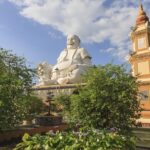
You begin at the Saigon Central Mosque, which is a peaceful way to start the day. Expect a photo stop, then time to visit and get a guided walkthrough. This first stop matters because it sets the tone: the city’s religious story starts with everyday prayer, community, and tradition.
Your guide should help you connect what you’re seeing to how Islam is practiced in Vietnam—especially for locals and visitors who gather for prayer. Even if you don’t know the basics of Islamic ritual, you can still follow along by paying attention to details and asking questions. A good guide turns the visit into something tangible: not religious trivia, but how faith shows up in space and routine.
Practical note: religious sites often expect respectful behavior and clothing. So wear something that feels modest and comfortable for walking. And keep your pace steady—this start is meant to feel calm, not rushed.
Jade Emperor Pagoda: smoke, carvings, and Taoist wishes for good fortune
Next comes the Jade Emperor Pagoda, one of Saigon’s best-known Taoist temple experiences. You’ll get another photo stop and a guided visit, typically with extra time here (about 45 minutes). The place has an immediate sensory feel: incense smoke, intricate carvings, and lots of visual symbolism.
What makes this stop click is the way people use the space. Locals come to pray for things like prosperity and good fortune, and you’ll often hear how the temple connects to the Lunar New Year period. That seasonal angle is useful because it helps you understand the temple as part of the living calendar, not just a monument.
Taoist practice can be hard to picture from afar, but the pagoda helps you translate ideas into objects and routines. Look closely at the carved elements the guide points out. If you want a deeper grasp, ask how the symbolism links to daily life. A good guide will do that part for you without making it feel like a lecture.
Tan Dinh Church: pink French-colonial Catholic architecture with possible weekend limits
Then you’ll see the iconic pink Tan Dinh Church, built during the French colonial era. Even if you’re not a church-architecture person, you’ll likely recognize it fast. The tour includes time for photos and a guided explanation of its place in Saigon’s Catholic heritage.
This is one of those stops where timing matters. The tour information includes a clear heads-up: the Pink Church is not open for visit on weekends. If your day lands on a weekend run, you may only be able to stand outside and look rather than go inside.
That’s the main drawback to keep in mind. It doesn’t ruin the tour—it just changes what you can learn from the building itself. If interior access matters to you, try to pick a weekday if possible.
Either way, the exterior is visually striking, and the guide’s context helps you understand what French-era Catholic architecture looks like in a Southeast Asian city.
Mariamman Hindu Temple: color, Tamil devotion, and why Hindu sites matter here
The tour then shifts to Saigon’s Indian heritage with the Mariamman Hindu Temple. This is where the day gets extra colorful. You’ll spend time there for photos and a guided visit—typically around 30 minutes at that stop.
The Mariamman temple is tied to Tamil community worship and devotion to the goddess Mariamman. Even if Hinduism is new to you, you can still follow what matters here: people showing up to pray, the strong visual language of the space, and the sense that faith is social, not hidden.
A temple visit like this also helps you understand why Saigon’s religious diversity isn’t theoretical. Hindu worship in this city isn’t something sealed behind walls; it’s part of neighborhood life and community identity. When your guide explains the background, the colors and statues stop feeling random and start feeling meaningful.
If you’re the type who likes to ask questions, this is a great time. Ask about the goddess, the everyday reasons for visits, and how the community relates to the wider city.
You can also read our reviews of more city tours in Ho Chi Minh City



Cao Dai temple: Caodaism’s colorful idea of uniting faiths
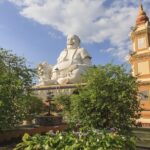
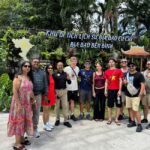
The final stop is the Cao Dai temple in Saigon, which is one of the rare chances you get to see Caodaism up close. Expect photo time and guided explanation, with a longer visit here (often around an hour).
Caodaism is the big payoff of this tour. The temple’s architecture is bold, but the important part is what the guide explains about symbolic rituals and the religion’s vision of uniting faiths under one spiritual belief. That theme gives the day a satisfying through-line: you started with Islamic prayer, moved through Taoist and Christian and Hindu spaces, and end with a faith that’s explicitly about harmony.
On top of the explanation, you might be allowed to witness a ceremony depending on the day and rules at the temple. It’s not something you can count on, but it’s the kind of moment that makes this tour feel less like sightseeing and more like observing living tradition.
If you’re nervous about getting religion wrong, don’t be. A good guide will help you understand what you’re seeing in plain language, and you’ll come away with a better sense of how people experience worship here.
What your guide does that turns sights into understanding
The tour lives or dies by the guide, and the best ones do three things well: explain, answer, and pace. Your guide is live and can be Japanese, English, or Vietnamese. That matters because you’ll get more than a script—you’ll get conversations.
From what I’ve seen with guides leading this kind of route, the standout move is using the phone like a visual aid. Maps, extra images, and quick clarifications help you connect the city streets to the religious landmarks. It’s also a big help if you’re traveling solo, because some guides are happy to help with photos and angles so you’re not stuck doing awkward self-timer gymnastics.
Names you might hear on the tour include Daniel, Stephanie, and Tao. The common theme across them is clear communication and a willingness to answer questions rather than just moving people along.
If you want to get the most out of the day, come with one or two questions ready—like how each religion fits into Vietnamese culture, or what everyday prayers look like in each place. Then let the guide connect the dots for you at each stop.
Practical tips: shoes, respectful attire, and photo reality checks
This tour is mostly walking and visiting, so plan for comfort. The basics are simple: wear comfortable shoes, bring water, and bring your camera if you want photos.
But there’s a catch: shoes are not allowed in some areas of religious sites. So even though you’ll wear comfortable shoes to get between stops, be ready to remove them when the site rules ask for it. That’s normal for temple and church interiors in many places, but here it’s explicitly part of the do’s and don’ts.
Respectful attire is recommended. You don’t need to dress like you’re going to a wedding, but keep it modest—especially for any interior sections where rules are stricter.
Photography may be restricted in certain areas. I recommend you keep your camera ready, but don’t get offended if someone asks you to pause or stop. It usually comes down to ceremony space or privacy rules.
Price and value: is $34 for 4 hours a good deal?
At $34 per person for about four hours, the value is mostly in what’s included. You’re not paying extra entrance fees, and you’re getting a local guide plus a small group experience. Those add up fast in big cities when you start mixing multiple sites.
What’s not included is also clear: meals, transportation to and from the meeting point, and personal expenses. If you’re staying nearby, those missing pieces won’t matter much. If you’re far out, you’ll just want to plan your own ride to the meeting area.
There are also two starting options: the Sheraton Saigon and the City Theater area (Nhà hát Thành phố Hồ Chí Minh). Your drop-off is similarly flexible, returning you to either of those locations. That’s a quiet benefit because it keeps the tour from becoming a long detour through one hotel zone.
Overall, this isn’t a luxury experience. It’s a focused, educational half-day with a good mix of landmark diversity and guided context. If you want five religious stops with explanations without the hassle of planning everything yourself, it’s good value.
Should you book the Ho Chi Minh City five faiths tour?
Book this if you want a structured way to understand Saigon’s religious mix without guessing. It’s especially worth it if you’re curious about Caodaism or you like seeing places of worship with context, not just photos.
Skip it or adjust expectations if you strongly need interior access everywhere. The Tan Dinh Church may be closed for visiting on weekends, and some religious sites can restrict access for practical reasons. You’ll still see the landmarks and learn a lot, but your experience may be more exterior-focused depending on the day.
This also suits you if you like asking questions. A good guide turns these stops into a conversation about culture and coexistence. And if you’re short on time in Ho Chi Minh City, four hours is a smart way to pack meaning into an afternoon.
FAQ
How long is the Ho Chi Minh City Five Faiths of Saigon Guided Tour?
It runs for about 4 hours.
Which places of worship does the tour visit?
You visit five religious landmarks: the Saigon Central Mosque, Jade Emperor Pagoda, Tan Dinh Church, Mariamman Hindu Temple, and a Cao Dai temple.
Is the entrance fee included in the price?
Yes. All entrance fees are included.
What languages are available for the live guide?
The live tour guide is available in Japanese, English, and Vietnamese.
Are meals included?
No. Meals are not included.
What should I bring for the tour?
Bring comfortable shoes, a camera, and water.
Are there any rules about shoes or photography?
Shoes are not allowed in certain areas, so you may need to remove them. Photography may also be restricted in some areas, so follow the guide and site instructions.