REVIEW · HO CHI MINH CITY
From Ho Chi Minh: Cu Chi Tunnels Half-Day History Tour with Guide
Book on Viator →Operated by SST TRAVEL · Bookable on Viator
The Cu Chi Tunnels hit fast. This half-day group tour from Ho Chi Minh City gives you a documentary + command center intro before you go underground, so the Vietnam War story lands in a way that feels clear, not confusing. I especially like how the English-speaking guide keeps the pace readable, often with sharp humor and details—on past tours, guides such as Kevin and Kyle have been praised for making the experience easy to follow.
I love that the structure isn’t just wandering: you watch a film, see key spaces, then explore fighting bunkers at a set rhythm. The only drawback is the group format—this is a half-day with a tour schedule and a cap of up to 35 people, so if you want total quiet or a super-slow crawl, you may find the pace a bit tight.
In This Review
- Key Things I’d Plan Around
- Cu Chi Tunnels, But With a Real Half-Day Game Plan
- The 7:30 AM Pickup: How to Start Smooth (Not Speedrun)
- The Lacquer Workshop Stop: A Quick Vietnam Snapshot
- Inside the Tunnels: Film, Command Center, and Fighting Bunkers
- War-Era Snacks and Everyday Details That Make It Click
- Lunch? Not Really. The Real Benefit Is What You Do After 2:30
- Price and Value: Why $14 Can Work (When You Know What You’re Buying)
- Who This Tour Suits Best (And Who Might Want Another Style)
- Should You Book This Cu Chi Tunnels Half-Day Tour?
- FAQ
- FAQ
- What time does the tour start, and when do I get back?
- Where does hotel pickup and drop-off happen?
- Is the documentary film included?
- What food and drinks are included?
- Are entrance tickets included in the price?
- Is the shooting activity included?
- How many people are in the group?
- What if the weather is bad or I need to cancel?
Key Things I’d Plan Around
- Documentary first: You start with a short film so the tunnel layout and WWII-era purpose make sense.
- Command center stop: You get the “who was making decisions” view before you go deeper into the fighting spaces.
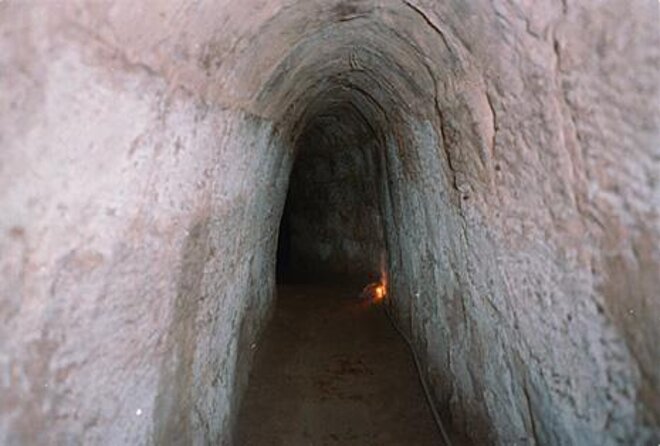
- Fighting bunkers + tunnel exploration: The visit is built to show how people lived and fought, not just what the site looks like.
- War-food basics: Steamed tapioca and hot tea are part of the experience (and included).
- Lacquer workshop en route: A quick stop that adds Vietnam craft context without derailing the day.
- Hotel pickup in District 1: It saves time and stress so you can use your half-day on the tunnels.
Cu Chi Tunnels, But With a Real Half-Day Game Plan

Cu Chi Tunnels is one of those places where “seeing it” isn’t the whole point. The value is understanding what you’re looking at: how narrow corridors, hidden spaces, and basic equipment supported people under constant threat. This tour is built around that idea with a set flow—film, command center, bunkers, then time in the tunnels—so you’re not piecing everything together alone.
I like that it feels efficient without feeling like a rush job. You get a concentrated experience and then you’re back in Ho Chi Minh City with the rest of the day still yours. For many visitors, that’s the sweet spot: enough time to feel the scale and purpose, not so long that you’re stuck traveling all day.
The other win is the guide component. On this kind of site, the difference between “interesting” and “stays with you” is often explanation—why certain things were built the way they were, and what they meant in WWII-era context. Guides such as Kevin and Kyle have a reputation for keeping English clear and the storytelling engaging, including a funny edge that helps you process heavy material without going numb.
You can also read our reviews of more guided tours in Ho Chi Minh City

The 7:30 AM Pickup: How to Start Smooth (Not Speedrun)
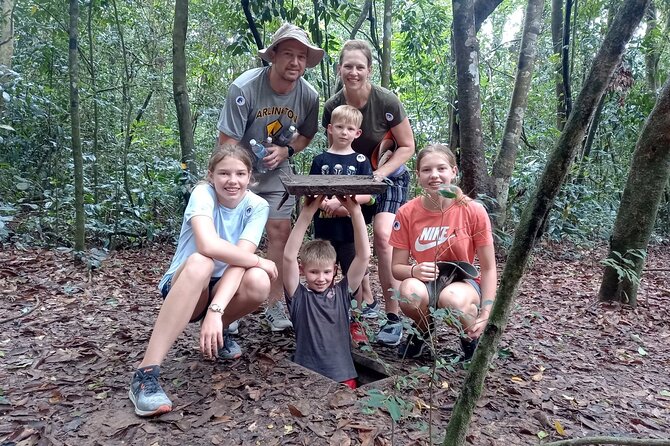
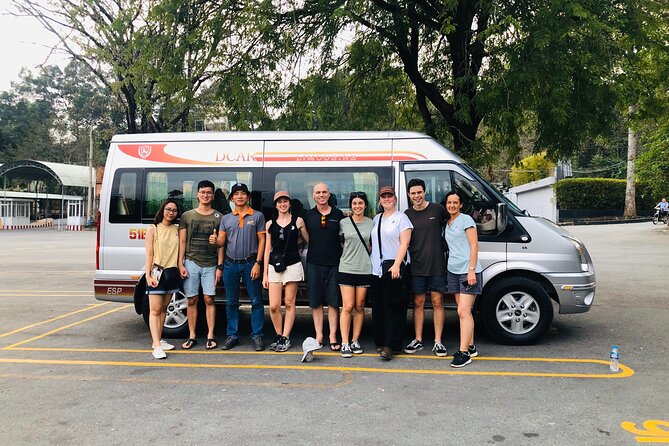
The tour starts at 7:30 am with hotel pickup. If you’re staying in District 1 (or near the meeting area in the city center), pickup is designed to be easy, so you don’t spend your morning hunting taxis or guessing transit times. You’ll also get a return drop-off back in the afternoon.
This matters more than it sounds. Cu Chi is outside the core city area, and half-day tours live or die by timing. Starting early helps you get time in the tunnels while you’re still fresh—and it reduces the chance your schedule gets squeezed by traffic.
Also, you’re not stuck with a walk-your-luggage vibe. You’re on a van, and the day is organized with set stops rather than free-form wandering. Past visitors have highlighted comfortable transport and smooth service, which is exactly what you want when you’re about to spend hours thinking about war underground.
Practical tip: wear something you can move in. The tunnel environment can mean uneven steps and tight spaces, and you’ll be happier if your outfit doesn’t feel like a museum rulebook.
The Lacquer Workshop Stop: A Quick Vietnam Snapshot
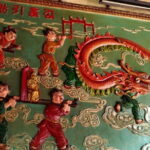
On the way to Cu Chi, you’ll visit a lacquer work shop. It’s a short stop—about 30 minutes—so think of it as a palate cleanser between the city and the tunnels. You’ll get a quick look at a craft that’s part of Vietnam’s broader material culture, not just the war story.
Is it essential? No. But it can be a useful contrast. When you spend half a day in a historical site, a brief craft stop gives your brain a different reference point: Vietnam isn’t only wartime survival; it’s also making, building, and refining objects that last.
If you tend to skip these quick add-ons on principle, you might treat this as a chance to stretch your legs and ask the guide one or two questions before the tunnel portion starts. The guide can connect what you’re seeing in the workshop to the larger picture of how people lived and worked.
Inside the Tunnels: Film, Command Center, and Fighting Bunkers
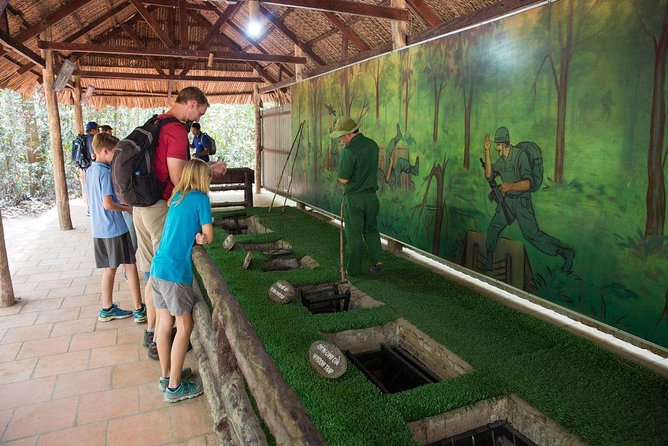
This is the core of the tour, and it’s built around the idea of guided orientation. Before you go deep, you watch a documentary film. That film sets the stage so the tunnel spaces stop being random holes in the ground. Instead, you start seeing them as a system—built for movement, secrecy, and survival.
Next up is the command center. This portion is valuable because it shifts the story from only individual hardship to also the bigger choices: planning, communications, and how people coordinated under extreme conditions. You’re not just touring “a tunnel network.” You’re learning how it worked as part of a strategy.
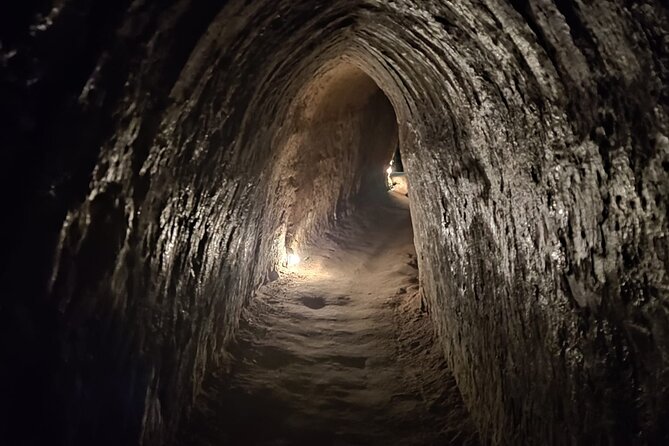
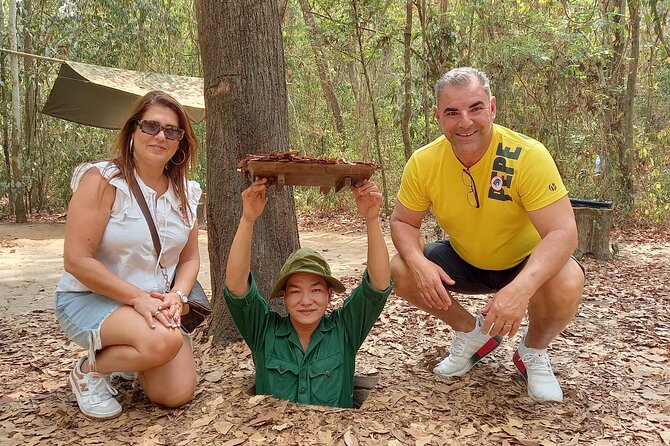
Then comes the time to explore fighting bunkers and other spaces connected to the tunnels. The point isn’t to romanticize anything. It’s to understand how survival and combat depended on design—tight passages, hidden points, and everyday improvisation. Even if you’ve read about Cu Chi before, this kind of walkthrough tends to make the scale and restrictions feel real.
What you should expect in practical terms: you’ll be moving between stops on a schedule, and the underground parts can feel more confined than you’d imagine. If you don’t like tight spaces, this is still doable for many people, but go in with the right mindset. This isn’t a theme park slide; it’s a historical site meant to communicate hardship.
War-Era Snacks and Everyday Details That Make It Click
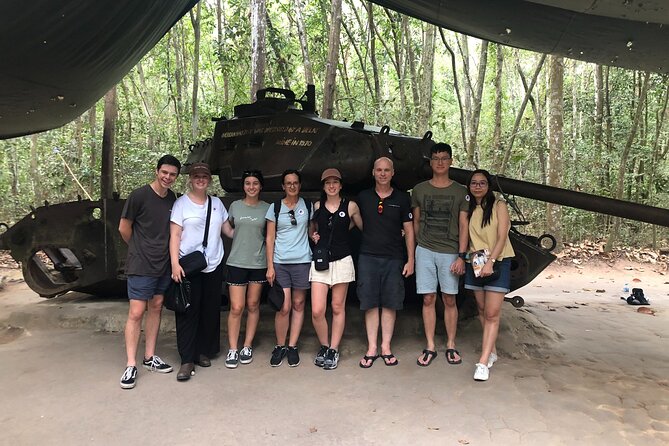
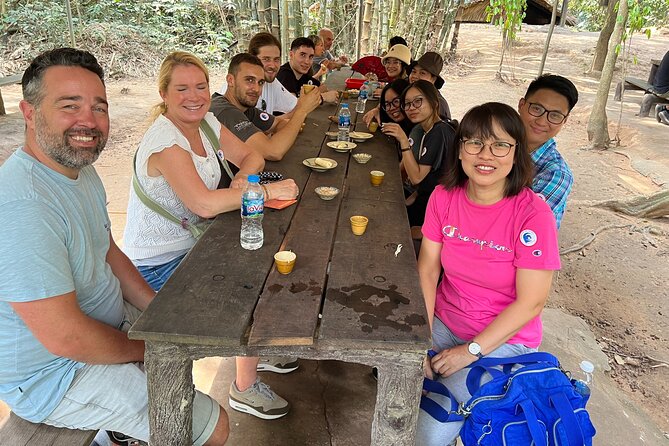
A big part of why this tour feels more human is the included food. You’ll enjoy local special food—steamed tapioca—plus hot tea. It’s not a fancy lunch, and it’s not meant to be. It’s about tasting something simple that fits the survival context the guide talks about.
You’ll also hear about small, specific technical details during the tunnel experience. One highlight is the Hoang Cam smoke-less stove, which is the kind of item that sounds minor until you realize how much it changes daily risk. When you understand that people were trying to reduce visibility while cooking or heating, it makes the site feel less like history text and more like lived problem-solving.
This is where a good guide earns their keep. Kevin and Kyle have been praised for clear explanations, and for good reason: when you learn what something was designed to solve, you start noticing those design choices during your walking time.
Food logistics are covered in the basics too. You’ll get bottled water and wet tissue. That’s the kind of included comfort that helps you stay focused on the experience instead of hunting for supplies.
You can also read our reviews of more historical tours in Ho Chi Minh City




Lunch? Not Really. The Real Benefit Is What You Do After 2:30
The tour runs about 6 to 7 hours, and it finishes around 2:30 PM. That timing is a gift. You’re not committing your whole day to the tunnels, and you’re still in Ho Chi Minh City with daylight hours to explore markets, cafés, or other sights.
Instead of treating the tunnels visit as an all-day event, I recommend you plan for an easy afternoon afterward. Do something low-stress: a walk, a museum, a meal with a long sit-down. Your brain will have plenty to process.
Also, having the tour end in the city helps you avoid that annoying situation where you spend more time commuting than learning. Hotel drop-off in District 1 means you can go straight back to reset.
If you like your day structured, this schedule makes sense. If you prefer a slower pace with more stops, then you might want a longer Cu Chi option elsewhere—but for a first visit, this half-day format is efficient and solid.
Price and Value: Why $14 Can Work (When You Know What You’re Buying)
At $14 per person, this tour is priced for value, and the math makes sense if you consider what you get included. You’re paying for hotel pickup/drop-off in District 1, an English-speaking guide, entrance tickets, plus tapioca and tea.
Many “cheap” tours cut corners by excluding key pieces, like admission or a guide—so you end up paying more later. Here, the essentials are wrapped into the price, which keeps your day predictable. It also means you aren’t stuck dealing with cash-only tickets or guessing entry lines.
The other value angle is time. Half-day tours cost less than full-day options, but they also prevent you from losing your whole day to transport. In Ho Chi Minh City, that matters because you’ll want time back in town to enjoy Vietnam’s current-day energy, not only its war-era story.
One consideration: this is a group tour with a schedule. If you’re the kind of traveler who wants private guide attention or extra time inside the tunnels, you may feel the limits of a set itinerary. But if your goal is a strong first visit that doesn’t balloon in cost, this price point is hard to beat.
Who This Tour Suits Best (And Who Might Want Another Style)
This tour makes the most sense if you want:
- A guided, structured Cu Chi visit with film and specific stops
- A manageable time commitment (about 6 to 7 hours)
- Pickup and drop-off that spares you morning logistics
- A basic included meal (tapioca and hot tea)
- A group size that stays capped (up to 35), so it’s not a huge crowd
It’s especially good for first-timers. If you’ve never been to Cu Chi, the film and command center stop help you orient fast. If you’ve been before and want a deep, slow, detailed walk, you might feel this half-day format is too tight—but that’s not the design here.
It can also suit families and mixed ages, since the tour is organized for general participation. Just remember the tunnel environment can be physically restrictive compared to open-air sites.
One more practical angle: if you care about group vibe, it may help to choose dates and times that keep the group from feeling crowded. The tour is capped, but smaller groups still usually feel calmer.
Should You Book This Cu Chi Tunnels Half-Day Tour?
If you’re choosing one Cu Chi outing and you want a strong, guided first visit without spending the entire day on the road, I’d say yes. The included film-and-command-center approach helps you understand what you’re seeing, and the tapioca/tea add a simple, contextual touch that fits the site’s purpose.
Book it if:
- You’re staying in District 1 and want hassle-free pickup
- You like tours with a clear schedule and an English-speaking guide
- You want a first-time orientation before walking the tunnels and bunkers
Consider skipping or changing plans if:
- You’re extremely sensitive to tight spaces or confinement
- You need a quieter, more private experience with extra time
FAQ
FAQ
What time does the tour start, and when do I get back?
Pickup starts at 7:30 AM. The tour ends back in Ho Chi Minh City at about 2:30 PM.
Where does hotel pickup and drop-off happen?
Pickup and drop-off are included for hotels in District 1.
Is the documentary film included?
Yes. You’ll watch a documentary film before you start the tunnel journey.
What food and drinks are included?
The tour includes steamed tapioca and hot tea. You also get bottled water and wet tissue.
Are entrance tickets included in the price?
Yes. All entrance tickets are included.
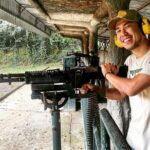
Is the shooting activity included?
No. Optional shooting activity is not included.
How many people are in the group?
The tour has a maximum of 35 travelers.
What if the weather is bad or I need to cancel?
The experience requires good weather. If it’s canceled due to poor weather, you’ll be offered a different date or a full refund. You can also get free cancellation up to 24 hours in advance for a full refund.