Tunnels under Saigon are a big wow, and this tour pairs them with top central sights so you can get your bearings fast without juggling transit. I like the hotel pickup in District 1 plus air-conditioned round-trip transport, and I really value that you’re not left guessing with an English-speaking guide and entrance fees handled. The main drawback to keep in mind: there’s been at least one reported situation where the day was shortened or adjusted, so confirm your duration and date before you lock it in.
For about $25, it’s a strong fit for first-time visitors who want a lot of place-names and real context in a single sitting. You’re looking at roughly 4 to 5 hours, which means you’ll hit major stops but you won’t have time for slow, museum-level browsing at each one.
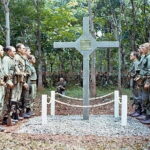
The Cu Chi Tunnels visit is the emotional anchor, with a guided look at the underground network used during the war. If you choose the VIP tour option, you’ll add extra treats on site—beer, fruits, snacks, and lunch—so the experience feels less like a history sprint and more like a full outing.
In This Review
- Key things to notice before you go
- Price and value: what $25 buys you in Ho Chi Minh City
- Timing and logistics: morning/afternoon and how the day usually flows
- Cu Chi Tunnels: the guided experience that makes the tour worth it
- The VIP option: extra comfort and food on site
- Shooting and bullets: plan around what’s not included
- Ho Chi Minh City highlights: how the landmarks fit together in one route
- Reunification Palace: a key political stop, fast and focused
- War Remnants Museum: tragedy with context
- Notre-Dame Cathedral and Saigon Central Post Office: French-era details in plain sight
- Ben Thanh Market and Chinatown: atmosphere plus practical shopping time
- Your guide and the real difference between a good day and a frustrating one
- Protect your plan: confirm what you’re booked for
- What’s included (and what you’ll likely pay for)
- Who this tour suits best (and who should look elsewhere)
- Should you book the Cu Chi Tunnels Luxury Trip?
Key things to notice before you go
- District 1 pickup and AC transport make the day easier than self-planning
- A guided tunnel visit with context about how the underground system worked
- Major city landmarks in one run so you see more than one neighborhood
- VIP add-ons can turn the tunnels stop into a comfort-focused meal break
- Group size stays small (up to 15), which keeps the pace calmer
- Lunch is part of the deal when offered on this tour format
Price and value: what $25 buys you in Ho Chi Minh City
This is priced at $25 per person, and that matters because the tour bundles the stuff that usually adds up fast: pickup from the central District 1 area, air-conditioned transportation, an English-speaking guide, and entrance fees. For a short time in town, that’s practical value—you’re paying for a plan, not just a ticket.
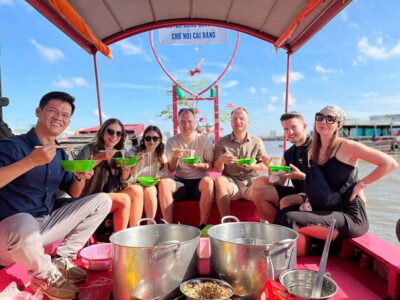
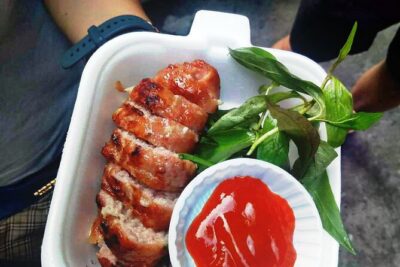
You also get small, real conveniences built in: a bottle of mineral water and tapioca are included. Those might sound minor, but when you’re bouncing between sites in a few hours, it reduces the “what do we eat now?” stress.
Where the value equation shifts is the route format. The description includes a full-day feel with lunch and multiple city highlights, yet the stated duration is about 4 to 5 hours. That doesn’t mean it’s bad—it means expectations need to be tight: you’ll see the big hits, not everything at a leisurely pace.
You can also read our reviews of more tours and experiences in Ho Chi Minh City

Timing and logistics: morning/afternoon and how the day usually flows
You can book this as a morning or afternoon departure, and the pickup is from central District 1. That’s smart because Ho Chi Minh City traffic can turn a simple trip into a time sink. With pickup and round-trip transport organized, you’re spending your time at sights instead of negotiating rides.
Plan for a “high-impact highlights” schedule. You’re visiting Cu Chi Tunnels outside the city (about 60 kilometers away), then returning to central areas for landmark stops. Even if the city time is brief, the structure works because Cu Chi is its own world—once you start walking underground, you can’t really rush your brain the same way you would on a quick photo stop.
Cu Chi Tunnels: the guided experience that makes the tour worth it
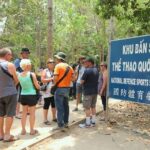
The Cu Chi Tunnels stop is built around a guided visit into one of the most talked-about wartime sites in Vietnam. You’ll head out around 60 kilometers from Ho Chi Minh City and meet the tunnel system as a network—not as one dramatic hole in the ground.
The key point I like here is that you’re shown the logic of the system. The tunnels are described as a vast network, with a 220-kilometer length mentioned for the broader system. Your guide explains how it was used during the war, and you spend time looking at the underground layout alongside stories that connect the tunnels to daily survival and movement.
What also helps is the surface scenery on the way there. You’ll pass rural areas with rice paddies and see details like ducks and water buffalos near the roadside. That contrast—peaceful fields above, underground wartime infrastructure below—lands harder than a straight museum stop.
A practical note: the day isn’t only about sightseeing. It’s designed to make you picture what the area was like during the period when it was called a Free Target Zone, and what the bombing damage did to the district. The point isn’t to “shock” you; it’s to give you enough context that the tunnels feel usable in your imagination, not just spooky.
The VIP option: extra comfort and food on site
If you pick the VIP tour option, you’ll get added extras during the tunnels visit: beer, fruits, snacks, and lunch. That can be a big deal because Cu Chi is far enough from the city that food timing can get awkward on a DIY trip.
Even if you skip VIP, the included snack support (tapioca) and a water bottle help you avoid the “hangry history tour” feeling. If you know you’ll want a real meal rather than small bites, the VIP option is the simplest way to turn the day from fast-moving to more comfortable.
Shooting and bullets: plan around what’s not included
The information provided is clear that bullets are not included if you try shooting. If that option appeals to you, budget for it separately so it doesn’t surprise you mid-visit.
You can also read our reviews of more tours and experiences in Ho Chi Minh City





Ho Chi Minh City highlights: how the landmarks fit together in one route
After returning from the tunnels area, the tour focuses on central sights that give you a strong visual map of modern Ho Chi Minh City. It’s the kind of route that helps you understand where different eras sit side by side—French colonial architecture, reunification-era symbolism, and living street-market culture.
Reunification Palace: a key political stop, fast and focused
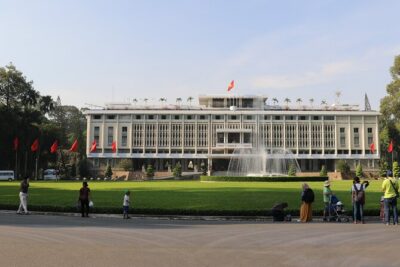
The Reunification Palace is one of the major stops on this tour. If you only have a half-day window, it’s a smart pick because it’s a concentrated snapshot of the country’s turning point.
In a guided format, you’re not just looking at rooms—you’re learning what they represent. The value here is time. Without a guide, you might wander and miss the “why this matters” layer.
The only limitation is speed. With a short overall duration, you’ll want to rely on your guide for the explanation rather than expecting long, quiet roaming.
War Remnants Museum: tragedy with context
Next is the War Remnants Museum. This is the stop where the day’s emotional weight sharpens. The tour is described as teaching Vietnam’s tragic past, and that fits the museum’s purpose.
A guide matters here. Even if you’ve read a lot before arriving, the museum can feel overwhelming because it covers so many themes at once. Having an English-speaking guide helps you connect the dots while you’re standing in front of the displays.
If you tend to get overloaded by heavy content, schedule a little breathing room for yourself after. This is the kind of place that sticks with you long after you leave.
Notre-Dame Cathedral and Saigon Central Post Office: French-era details in plain sight
The route includes architectural landmarks such as Notre-Dame Cathedral and the Saigon Central Post Office. You’ll also have a stop connected to the Saigon Opera House.
These stops work well together because they’re all about the city’s French-colonial architectural imprint. Even if you don’t care about architecture deeply, they’re useful reference points. They help you orient the city visually so later, when you explore on your own, you understand where things are relative to each other.
Try to look up. Many people rush these by accident because they’re expecting a quick exterior photo. The payoff is in the details—facades, symmetry, and the way the buildings sit amid traffic and street life.
Ben Thanh Market and Chinatown: atmosphere plus practical shopping time
For the market and Chinatown portion, the tour shifts from “history and architecture” into “daily life.” Ben Thanh Market is included, and Chinatown is mentioned as a place where you soak up the atmosphere and browse stalls.
I like this kind of mix because it gives you a more complete picture of the city. Museums and palaces tell you what happened. Markets show you what people do now.
The timeframe matters, though. With a 4 to 5 hour day structure, you won’t have hours to wander each aisle like you would on a dedicated market visit. Use this segment for quick browsing and a few smart purchases rather than trying to do everything in one go.
If you like snacks, you’ll already have tapioca and water on board, so you can keep the shopping portion flexible.
Your guide and the real difference between a good day and a frustrating one
A tour lives or dies on the guide. In the positive example shared, an English-speaking guide named Anh was singled out for being incredibly knowledgeable and helpful. That kind of support makes the sights easier to read, especially when you’re moving quickly between very different places.
The same example also mentions that Anh recommended and helped arrange a reservation at a great restaurant for the evening. That’s a practical advantage you don’t always get from tours: you finish feeling like you know what to do next, not just what to see.
On the other hand, there’s a reported issue where the operator changed a booking from what looked like a full-day format to a shorter one, and the guide didn’t explain much unless questions were asked. That doesn’t mean the experience is always like that, but it does point to a simple strategy.
Protect your plan: confirm what you’re booked for
Before you go, take a minute to verify you’re confirmed for the full set of stops and the duration that matches the version you expect. If the itinerary changes on short notice, you can end up with less time at the places you cared most about.
It’s also worth going in with a mindset that the day can feel “tight.” Private doesn’t always mean unlimited time; it means a guide and transport are organized for you. If you’re the type who needs slow pacing, consider building in extra solo time later in your trip.
What’s included (and what you’ll likely pay for)
Here’s the practical breakdown of what you’re covered for, based on the details provided:
Included:
- Hotel pickup and drop-off from central District 1
- Air-conditioned transportation
- English-speaking tour guide
- Entrance fee
- Bottle of mineral water
- Tapioca
Also mentioned as part of the experience:
- Lunch at a local restaurant (and VIP option includes lunch too)
Not included:
- Drinks
- Bullets if you try shooting
That list helps you pack smart. Bring a little cash or a card for drinks and any paid extras at Cu Chi. If you want to avoid paying for surprise snacks later, you can also plan for the included water and tapioca, plus the lunch portion.
Who this tour suits best (and who should look elsewhere)
This is a great match if you:
- Are seeing Ho Chi Minh City for the first time and want a guided route that hits big names
- Have limited time and don’t want to coordinate transit across multiple stops
- Prefer learning from an English-speaking guide rather than trying to piece everything together on your own
- Want a single outing that combines history, architecture, and street-level city atmosphere
It may not be ideal if you:
- Need a slow pace and deep time at each museum or market
- Are very sensitive to itinerary changes and want absolute certainty about duration
- Prefer to choose your own lunch and browsing pace without a schedule
Should you book the Cu Chi Tunnels Luxury Trip?
If you want a high-impact morning or afternoon that covers Cu Chi Tunnels plus major central Ho Chi Minh City landmarks, this looks like good value—especially with pickup, AC transport, an English-speaking guide, and lunch support.
My main “before you book” checklist is simple:
- Confirm the schedule and duration you’re actually booked for
- Choose VIP if you want more food and comfort during the tunnels stop
- Bring extra money for drinks and any shooting-related add-ons
If those boxes work for you, you’ll come away with a clearer picture of Vietnam—from the underground wartime network at Cu Chi to the political and museum stops back in the city, then out to the markets where everyday life continues.