REVIEW · HO CHI MINH CITY
Hands-on Discovery of Vietnamese Coffee & Culture
Book on GetYourGuide →Operated by Lacàph Coffee Experiences · Bookable on GetYourGuide
Coffee and culture, with your hands on the cup. You’ll learn two Vietnamese-style brews using Lacàph beans, watch a small-batch roasting demo, and leave with a better sense of coffee’s role in daily life. I really like the hands-on brewing plus the story videos led by hosts and trainers like Giao and Vi, and one thing to consider: the space is upstairs and it’s not suitable for wheelchair users.
In about 150 minutes, the session hits a nice balance: structured enough that you won’t feel lost, but not stiff. The pace matters here, because you’re doing more than tasting. You’re learning how to make the flavors happen.
If you’re new to Vietnamese coffee, this workshop is a smart place to start. The price is $30 per person, and you get filter coffee, phin coffee, snacks, and the roasting demo, not just a quick talk.
In This Review
- Key highlights to look for
- Finding Lacàph Coffee Experiences on Nguyễn Công Trứ
- Two brews and Vietnamese coffee beans you actually use
- Filter coffee pairing: Lacàph Filter Blend with bánh đậu xanh
- Phin coffee practice: microfilter brewer plus cocoa cashews
- Roasting demo: hear the cracks, smell the switch
- Learning coffee stories through mini-documentary videos
- Cultural significance: what Vietnamese coffee is really doing
- Price and value: what $30 buys you in real experience time
- Who this workshop suits best
- Small practical tips for getting the most out of your cup
- Should you book this Vietnamese coffee workshop in Ho Chi Minh City?
- FAQ
- How long is the Vietnamese coffee workshop?
- What is included in the experience?
- How much does it cost?
- What languages are the instructors?
- Is the experience suitable for wheelchair users?
- Can I cancel if my plans change?
Key highlights to look for
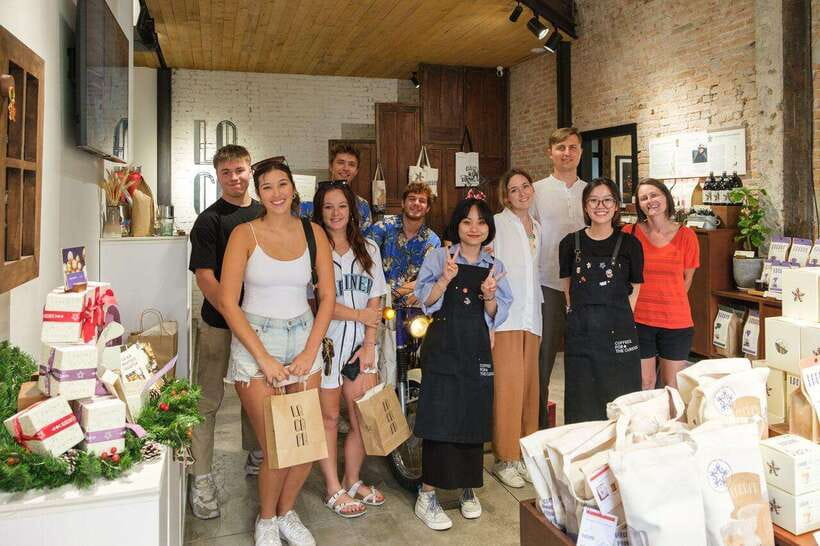
- Two Lacàph blends, two brewing styles: You’ll brew your own coffee with Vietnamese beans.
- Phin gear in the mix: You’ll use a Lacàph microfilter phin brewer so you can reproduce it later.
- Roasting with your senses: You’ll hear crackling and smell the aromatic shift during the small batch demo.
- Snack pairings that teach: Mung bean cake and cocoa cashews are served with the coffee types.
- Coffee stories on video: Mini-documentary segments connect Hà Nội, Đà Lạt, and Chợ Lớn in Sài Gòn to the people behind the beans.
- A well-run workshop feel: Sessions are described as organized and on schedule without feeling strict.
Finding Lacàph Coffee Experiences on Nguyễn Công Trứ

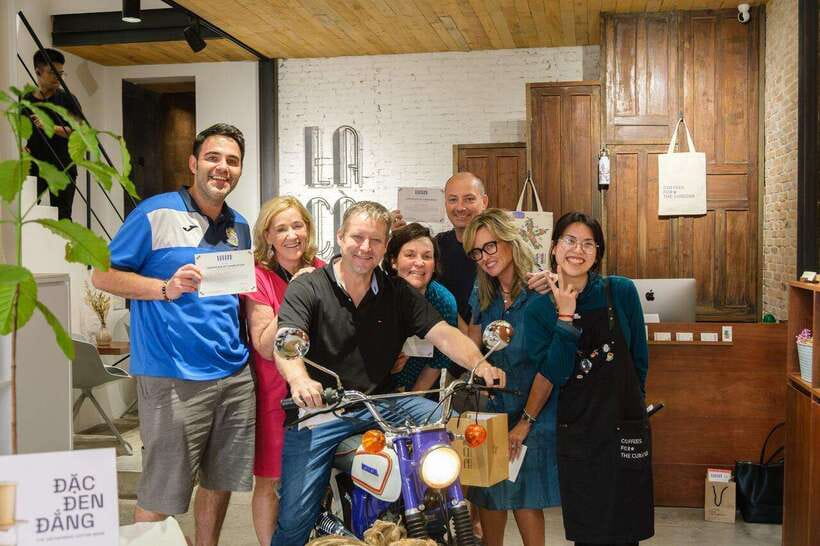
This workshop is in District 1, at 220 Nguyễn Công Trứ. Lacàph is on the upper floor of a charming older building, which means you’re not walking into a big tourist hall. You’re going upstairs into a coffee-focused space.
Here’s the key wayfinding detail: look for a small sign in front of a purple iron door. Step through, climb the stairs, then at the top take a sharp left. It’s quirky in a good way because it feels like you found a local place, not a generic activity booth.
Practical tip: if you’re arriving around peak evening hours, give yourself an extra few minutes. The doorway is easy to miss if you’re rushing, and once you find it, everything else is straightforward.
You can also read our reviews of more tours and experiences in Ho Chi Minh City


Two brews and Vietnamese coffee beans you actually use
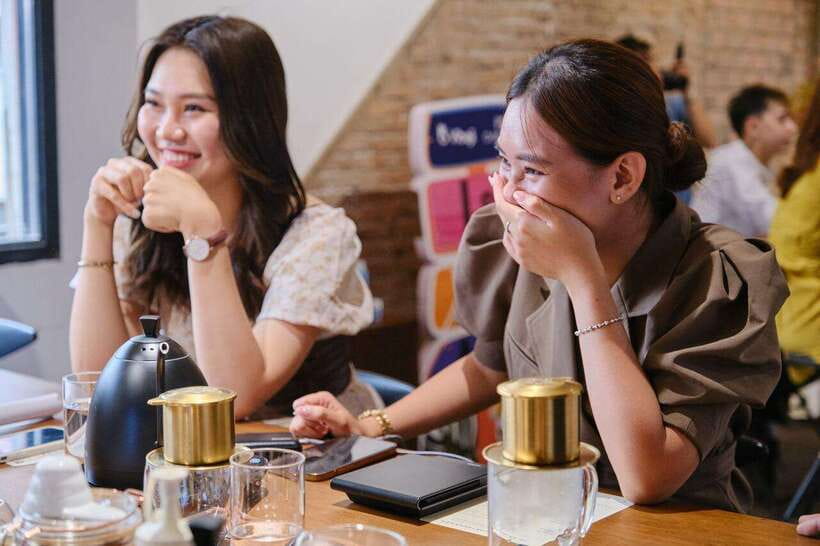
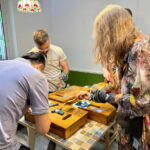
The heart of the experience is hands-on brewing. Over the 150 minutes, you make two Lacàph-based preparations, and you’re doing it with Vietnamese coffee beans rather than relying on pre-made drinks.
The session starts with a multi-sensory experiment. Think aroma, texture, and attention to how coffee behaves when you control the process. That matters because Vietnamese coffee isn’t just about caffeine. It’s about technique, and technique changes the taste.
Then you shift into practical brewing. You’ll learn simple methods that are meant to be repeatable at home. That’s a big deal for value: if you only taste but can’t recreate it, you’ve lost the “skill” part of a workshop.
Filter coffee pairing: Lacàph Filter Blend with bánh đậu xanh
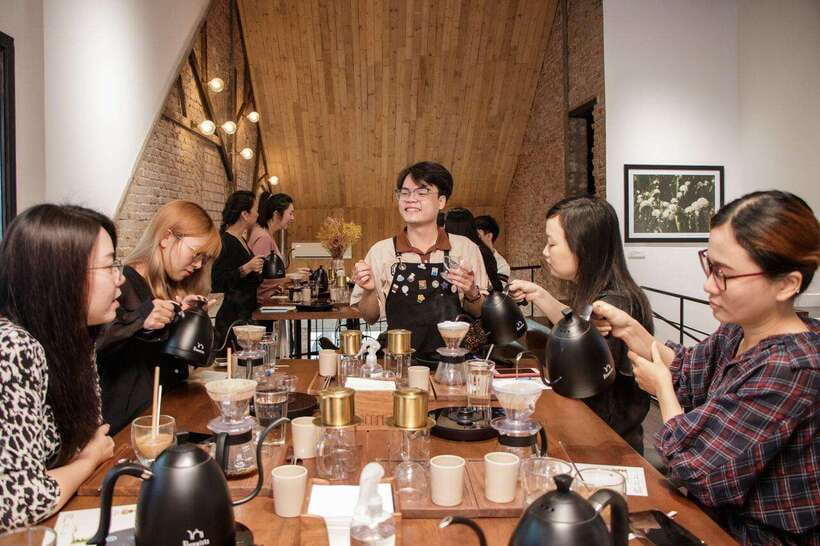
One of your included tastings is filter coffee made with the Lacàph Filter Blend. Along with it, you’ll get “Bánh Đậu Xanh,” a Vietnamese mung bean cake.
This pairing is quietly smart. Mung bean cake has a gentle sweetness and a soft, starchy texture. That kind of sweetness helps you notice the coffee’s body and flavor direction without fighting you with bitterness. If you tend to think coffee is either strong or weak, pairings like this help you hear the nuance.
Also, you’ll likely pick up what to pay attention to while brewing: scent before the first pour, how the coffee looks as it runs, and how the final cup lands on your tongue. That’s how you move from tasting like a tourist to tasting like a brewer.
Phin coffee practice: microfilter brewer plus cocoa cashews
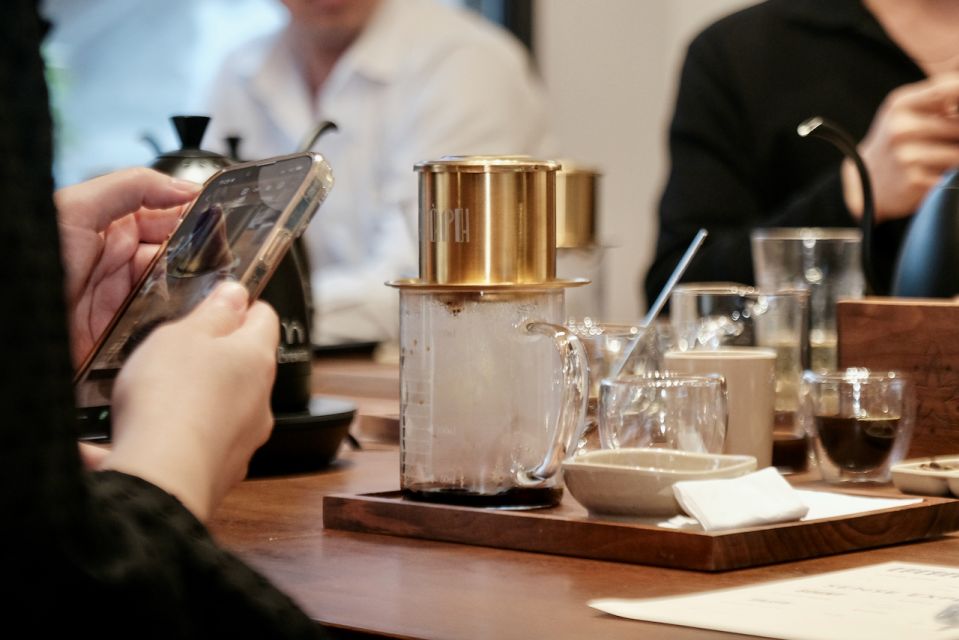
Next comes phin coffee, the signature Vietnamese style made with the metal phin dripper. In this workshop, you’ll use the Lacàph Microfilter Phin Brewer with the Lacàph Phin Blend.
You won’t just watch someone pour. The point is that you do the steps. The phin changes everything: it slows the brew, concentrates the extraction, and gives you that familiar weighty cup many people associate with Vietnam.
You’ll also get a contemporary snack pairing: cocoa coated cashews. The cocoa adds chocolate notes, and cashews bring crunch and a creamy fat feel. The result is a tasting flight that helps you separate coffee bitterness from roast character. In other words, you can learn what’s happening in the cup instead of just reacting to it.
Roasting demo: hear the cracks, smell the switch
At some point, you’ll see a small batch roasting demo for the Lacàph Phin Blend. This is one of those parts that sounds simple until you’re watching it in real time.
You’ll witness roasting and listen for those satisfying crackling sounds. You’ll also inhale the aromatic profile as the coffee changes. That smell shift is the lesson: coffee roasting isn’t just a background step. It’s where flavor direction starts.
Why it’s valuable: most visitors only experience coffee at the end stage, after it’s brewed. Roasting makes you understand why some cups taste nutty, some taste more chocolatey, and some feel sharper. It also makes your own brewing decisions feel less random.
If you’re the type who likes understanding the “why” behind the “how,” this roasting moment is worth paying attention to.
You can also read our reviews of more tours and experiences in Ho Chi Minh City

Learning coffee stories through mini-documentary videos
The workshop doesn’t stop at equipment and snacks. You also get a cultural layer through an in-house mini-documentary series.
You’ll see visual stories connected to coffee from places like Hà Nội, Đà Lạt, and Chợ Lớn in Sài Gòn. The idea is to show coffee as a people story, not only a plant or a product.
You learn about farmers and other people’s stories through those videos. That matters because Vietnamese coffee culture is deeply tied to labor, seasons, and local livelihoods. If you only taste the final cup, you miss the context that makes the drink matter to so many locals.
I like this structure because it gives you two kinds of understanding at once: sensory learning from brewing, and cultural learning from story.
And yes, it keeps the session moving. In a timed workshop, videos can either feel like filler or like a needed reset. Here, it’s meant to connect the cup in your hand to the places on the screen.
Cultural significance: what Vietnamese coffee is really doing
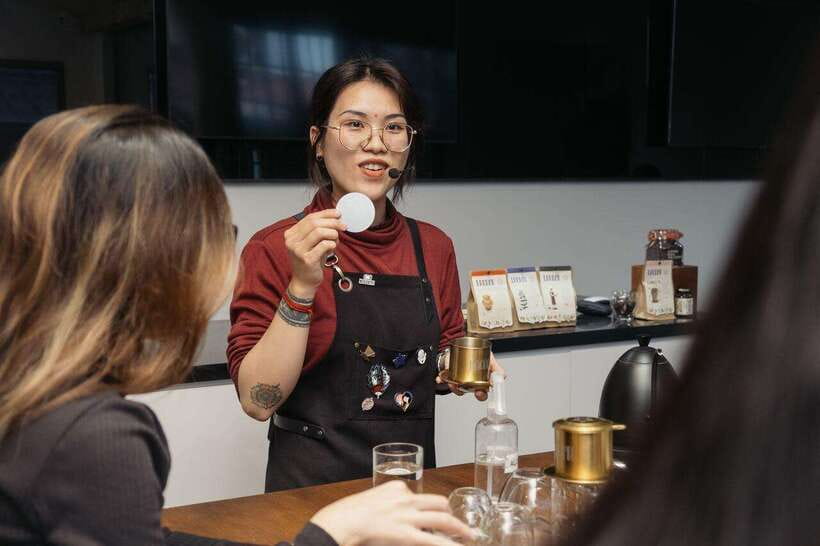
Coffee in Vietnam isn’t treated like a quick stop. It’s a rhythm. The workshop’s focus on culture and technique helps you see why.
When you brew filter coffee and phin coffee side by side, you naturally notice that Vietnamese coffee comes in different formats for different moods. The phin method tends to feel heavier and more concentrated. The filter style often reads smoother and can highlight different roast characteristics.
So while you’re learning how to make coffee, you’re also learning how Vietnam drinks coffee: slowly enough to savor, strong enough to stand up to conversation and street life.
This is also where the farmer stories matter. Coffee isn’t “just a drink” if you understand the people behind it. The session pushes you toward that perspective without turning into a lecture.
Price and value: what $30 buys you in real experience time
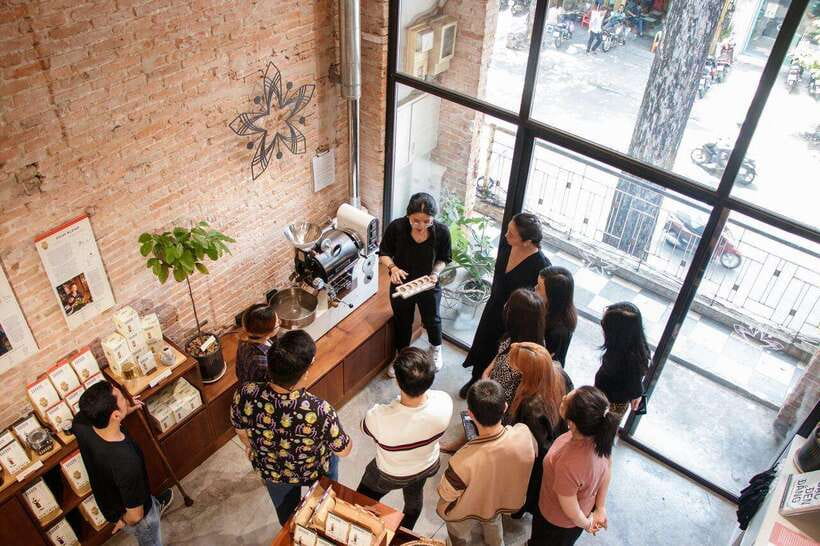
Let’s talk value. At $30 per person for about 150 minutes, you’re not paying for a one-note tasting. You’re paying for multiple included items and active learning.
Here’s what you’re getting:
- Filter coffee with Lacàph Filter Blend plus Bánh Đậu Xanh
- A roasting demo with Lacàph Phin Blend
- Phin coffee using the Lacàph Microfilter Phin Brewer plus cocoa coated cashews
- Cultural context via coffee-related mini-documentary videos
- Guided explanation in English and Vietnamese
For many workshops, the cost is mostly in flavor samples. Here, a big part of the price is in skill building. If you walk out able to brew a phin-style coffee at home, that’s a clear return.
Also, the reviews point to smooth timing and organization. One note I’d take seriously: the workshop can feel scheduled without feeling rigid, which is exactly what you want when you’re learning. If it’s chaotic, you can’t learn. If it’s too strict, it kills the fun.
If your plans are flexible, you can also reserve and pay later, which reduces risk if you’re juggling Vietnam timing.
Who this workshop suits best

This is a great pick if you’re doing a Vietnam food-and-culture day in Ho Chi Minh City and want something interactive. It’s especially good for:
- Coffee beginners who want a guided start
- People who enjoy food science and taste comparisons
- Travelers who like learning the human side behind everyday products
It may be less ideal if you need wheelchair access, since it’s not suitable for wheelchair users and the meeting point is upstairs. Also, pets aren’t allowed.
If you’re short on time, 150 minutes is long enough to matter. You’ll actually learn steps, not just hear about them.
If you’re the type who likes to bring things home, the repeated brewing methods are a key reason this workshop is worth it.
Small practical tips for getting the most out of your cup
You can get more from the experience with a little mindset shift. Here are a few ways to pay attention:
- Smell first, then taste. Roast aroma changes quickly, so early impressions matter.
- Compare the two coffee preparations in your head as separate cups, not one blended idea.
- Take note of what you liked most in the snacks, then try to connect that to what you taste in the coffee.
- If you’re offered guidance on brewing steps, slow down just enough to remember the sequence, not only the flavor result.
And if your host or trainer is Giao or your guide is Vi (names seen in past sessions), lean in. The energy matters here, and the best learning happens when you ask quick questions.
Should you book this Vietnamese coffee workshop in Ho Chi Minh City?
If you want a coffee experience that’s more than sipping, I’d book it. The workshop gives you hands-on brewing, a roasting demo, and cultural context through story videos, all in a time frame that respects attention.
Skip it only if you need wheelchair access or you’re looking for something purely about sightseeing rather than skill and tasting. Otherwise, this is a solid use of time in District 1, especially if you want Vietnamese coffee culture with real technique you can practice later.
FAQ
How long is the Vietnamese coffee workshop?
It lasts 150 minutes.
What is included in the experience?
You get filter coffee and phin coffee tastings, plus a small batch roasting demonstration and snack pairings. Filter coffee is paired with bánh đậu xanh, and phin coffee is complemented with cocoa coated cashews.
How much does it cost?
The price is $30 per person.
What languages are the instructors?
The instructor speaks English and Vietnamese.
Is the experience suitable for wheelchair users?
No, it is not suitable for wheelchair users.
Can I cancel if my plans change?
Free cancellation is available up to 24 hours in advance for a full refund.