REVIEW · HO CHI MINH CITY
Cai Be Mekong Delta Tour: Cooking Class, Cycling & Craft Villages
Book on Viator →Operated by TNK Travel · Bookable on Viator
Can one morning reach the Mekong? This Cai Be tour strings together river culture and countryside life with a guided day trip from Ho Chi Minh City, including craft workshops, a cooking class, and time on two wheels.
I like two things most. You get practical food and craft know-how, including coconut candy making and rice popcorn production. And after lunch, you trade traffic for countryside cycling at a relaxed pace.
One thing to plan around: it starts early and the pickup is easiest for hotels in District 1, so check whether your hotel is in the zone.
In This Review
- Key highlights worth knowing
- Why Cai Be Still Feels Like the Mekong Delta
- Getting to Cai Be From Ho Chi Minh City Without Making It Complicated
- Floating Market Remnants on the Tien River: Small Time, Big Perspective
- Craft Villages in Cai Be: Where Snacks and Skills Actually Come From
- Tan Phong Antique Homes: Architecture Shaped by Floods and Heat
- A Real Cooking Class in a Tropical Garden (Not Just a Demonstration)
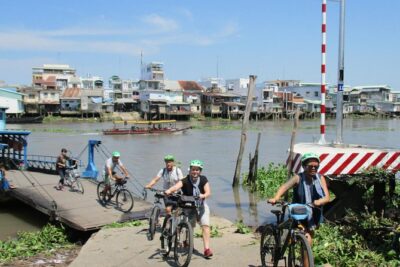
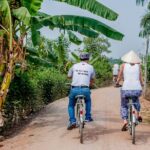
- The Post-Lunch Bicycle Tour Through Rice Paddies and Villages
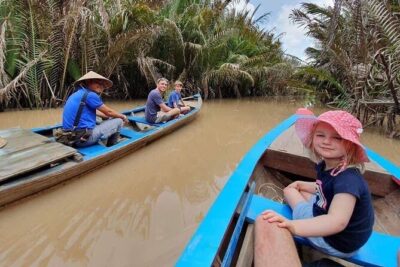
- Boat Trip Back and the Day’s Final Reset
- Price and Value: Why $39 Can Actually Make Sense
- Things to Know Before You Go (So the Day Runs Smoothly)
- Should You Book This Cai Be Tour?
- FAQ
- How long is the Cai Be Mekong Delta tour?
- Where is the meeting point in Ho Chi Minh City?
- What’s included in the $39 price?
- Is hotel pickup available from anywhere in Ho Chi Minh City?
- How big is the group?
- What happens if weather is bad?
Key highlights worth knowing
- Tien River floating market remnants instead of a full-on modern floating market show
- Family-run craft villages where you can see how snacks and goods are made, not just hear about them
- Tan Phong antique homes with old woodwork and details shaped by the Mekong Delta climate
- Cooking class with lunch that you actually prepare and eat in a garden setting
- Bicycle tour after lunch through fruit groves and rice paddies with village-side viewpoints
- Boat trip plus air-conditioned return once the day winds down
Why Cai Be Still Feels Like the Mekong Delta
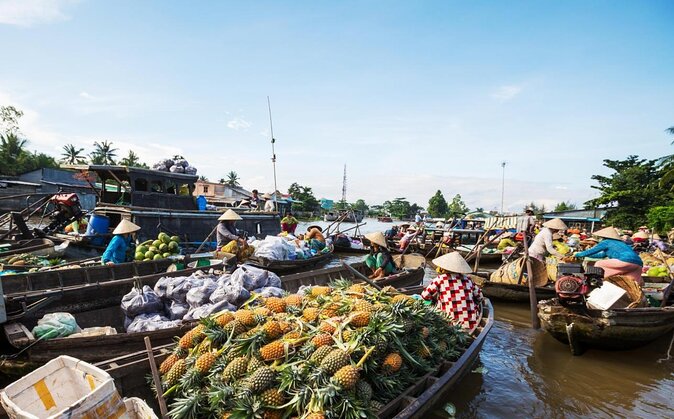
A lot of Mekong Delta tourism leans on one big “floating market” image. This trip takes a more realistic approach. You’ll head to Cai Be and look at the remnants of the area’s famous river trade life along the Tien River. It’s not presented like a theme park. It’s more like a snapshot of what remains and what has changed.
That matters because it sets the tone for the whole day. You’re not just collecting photos. You’re seeing how daily life and livelihoods connect to the river—then moving into nearby craft villages where skills have been passed down for generations.
The day also keeps its focus on what you can do with your hands and feet: tasting and learning during the craft stops, cooking your own lunch, then cycling through rural lanes.
You can also read our reviews of more cycling tours in Ho Chi Minh City


Getting to Cai Be From Ho Chi Minh City Without Making It Complicated
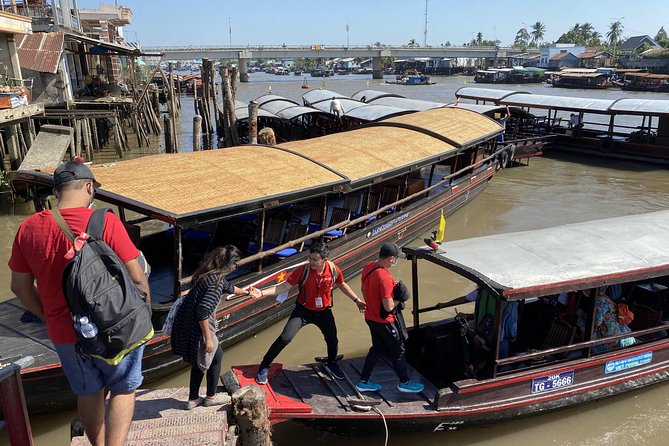
Plan for an early start. The meeting point is 112 Đ. Trần Hưng Đạo, Phường Phạm Ngũ Lão, Quận 1. Most departures are set so you’re on the road around 07:30 AM, with the long drive handled by an A/C van and the Trung Luong Expressway.
Pickup works best if you’re staying in central Ho Chi Minh City (District 1). If your hotel isn’t centrally located, the tour notes that pickup and transfer may not work smoothly and extra charges may apply outside District 1. If you’re in a tight traffic-rule area, they ask you to contact the supplier for support—basically, they’ll try, but you may need help coordinating.
Also note the return time depends on traffic. That’s normal for Ho Chi Minh City. Build in some buffer for the evening.
Floating Market Remnants on the Tien River: Small Time, Big Perspective
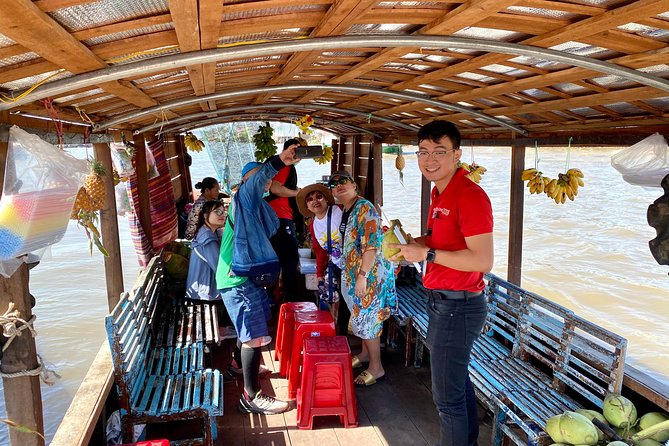
The first stop is Cai Be, with a trip tied to the remnants of the old floating market culture on the Tien River. This part is short (about two hours total at the stop), but it gives you context fast.
I like this opening because it reframes expectations. Instead of chasing a perfect postcard scene, you get a sense of how river commerce shaped the region—and how modernization has changed what you see today. When you then move on to villages and traditional craft work, the connections feel more grounded.
If you’re the type who hates long, slow explanations, this first segment works. You’re there early, and you’re already looking at the real setting instead of just being told about it.
Craft Villages in Cai Be: Where Snacks and Skills Actually Come From
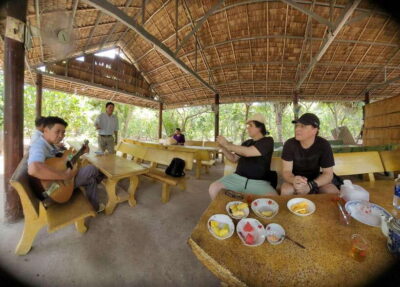
Next comes the part people remember most: the Cai Be craft village time paired with food and music. You’ll see tropical fruits and hear traditional Vietnamese music while you’re in the area. Then you’ll visit craft villages where families practice skills that have stayed alive for decades.
Two specific items get time and attention: coconut candies and rice popcorn. The production is shown using time-honored methods, which is exactly what you want from a craft stop. This isn’t a quick look at a stall; it’s watch-how-it’s-made learning, with enough time to understand the process.
The tour also highlights that these family enterprises support local economic well-being and traditional livelihoods. That’s more than a marketing line. When you’re watching hands work and you’re tasting what comes out of the process, you can see why these skills matter.
Practical tip: go easy on strong cravings right before this part. You’ll likely want to sample what’s being made, and it’s easier to enjoy if you’re not already too full.
Tan Phong Antique Homes: Architecture Shaped by Floods and Heat
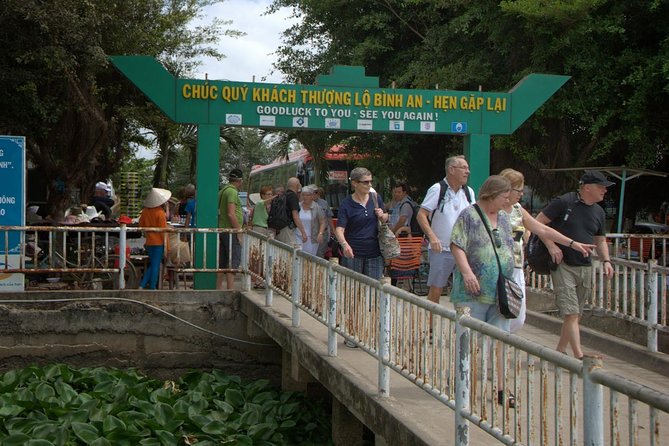
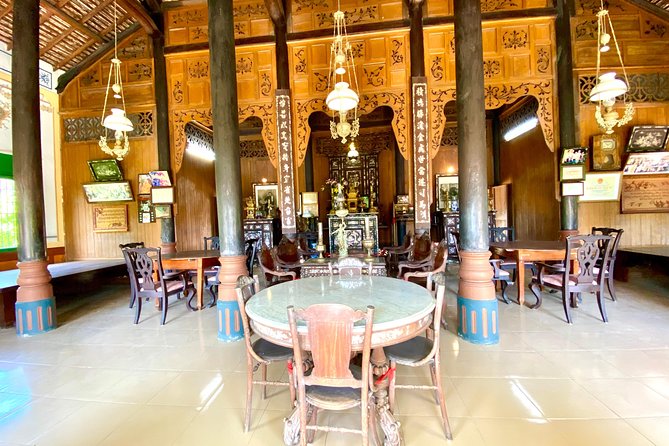
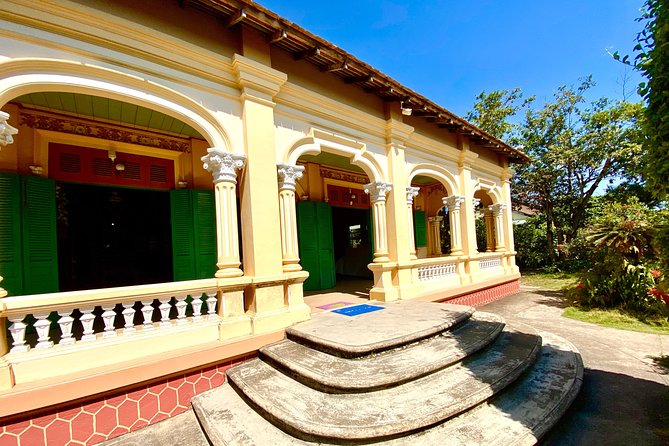
After the craft time, you head to Tan Phong for a look at maintained antique homes. This stop lasts about an hour, which sounds short, but the point here is quality of detail.
You’ll notice traditional Vietnamese architectural features like intricate wooden frameworks and carved ornamentation. The guide also points out how the design fits the Mekong Delta climate—homes built to function in a region where weather patterns and water influence daily life.
This is one of those stops that can go either way on a tour: you either get a quick walk past pretty facades, or you get real commentary. The good news is that the trip is guided by an English-speaking guide, and the day has a reputation for guides staying engaged and answering questions. In guide feedback, names like Abe and Mark have come up for strong communication and genuine interest in making the day feel meaningful, not rushed.
If you care about architecture or how people adapt buildings to their environment, this is the moment that clicks.
You can also read our reviews of more cooking classes in Ho Chi Minh City
A Real Cooking Class in a Tropical Garden (Not Just a Demonstration)
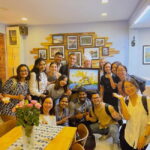
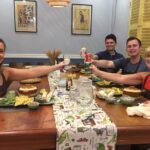
Lunch on this tour is built around a cooking class. You’ll learn traditional Vietnamese dishes with friendly instruction from the guide and then eat the meal you help prepare.
The setting is a tropical garden area, so it doesn’t feel like you’re cooking in a back-room workshop. You’re doing it as part of the day’s rhythm—learning during the craft stops, then shifting to food in a slower, more relaxed atmosphere.
This is the best value segment on the itinerary because the included lunch is not separate from the experience. You’re not paying for a meal and then hoping the cooking class adds something. Here, the cooking class is the lunch experience.
What to expect from the class itself: you’ll get step-by-step guidance, and you’ll end up with a plate (or multiple dishes) you made. Even if you’re not a confident cook at home, the structure is designed for participants who need instruction, not a kitchen challenge.
The Post-Lunch Bicycle Tour Through Rice Paddies and Villages
After lunch, you get a bicycle tour of the countryside lanes. This is where the day turns from “look and listen” into “move through the landscape” in a gentle way.
You’ll pedal past rice paddies and fruit groves, and you’ll also pass through charming villages where daily life shows up in small ways—people going about routine tasks, neighbors watching you glide by, and locals who are open to friendly interaction.
I like that this is positioned after lunch, not before. You’re fueled, you’re warmed up to the region, and then you get the payoff: a slower pace with views that feel personal.
One consideration: cycling on a tour can be tricky if you’re sensitive to uneven surfaces or you’re expecting a totally flat, paved path. The tour describes a leisurely pace through countryside lanes, but it doesn’t promise road quality details. Bring practical shoes and don’t dress like it’s a city bike ride.
Boat Trip Back and the Day’s Final Reset
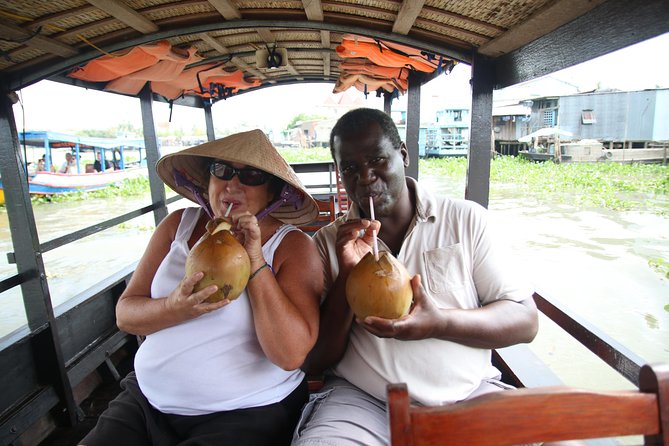
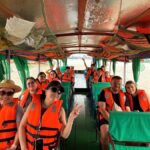
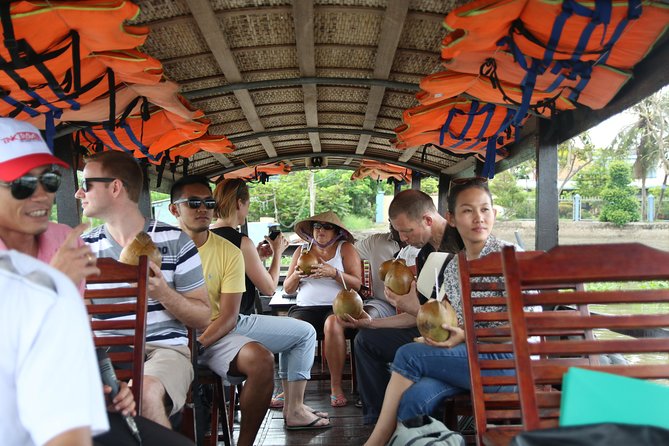
To close the loop, you’ll take a boat trip back to Cai Be, then switch to an air-conditioned bus for the return toward Ho Chi Minh City. This end segment matters more than you might think.
After a morning of crafts and architecture plus lunch and cycling, you want something that feels like recovery without killing the momentum. A boat ride does that well. You get river views and a calmer rhythm, and then the bus brings you back comfortably.
The transition also helps you mentally “land” the day. You’re not still cycling or still walking when you’re tired. You’ve got time to sit, watch the countryside shift, and get your energy back for the city again.
Price and Value: Why $39 Can Actually Make Sense
At $39 per person, this is priced like a value-focused day tour. For that money, you’re getting a guided day with:
- A/C transport
- English-speaking guide
- Included lunch
- Boat trip plus entrance fees for the Mekong Delta portions
- Pickup and transfer from centrally located hotels in District 1 (when available)
The biggest reason it feels like good value is that lunch and transport aren’t treated as add-ons. They’re integrated into the activities: you cook, you eat, then you cycle, then you boat. A lot of budget tours charge about the same, but the included meal is just a quick stop and the “culture” part is short.
Also, the group size cap is maximum 25 travelers. That doesn’t mean it’s private, but it often helps keep the day from becoming chaotic.
Who should book? I’d put this in the sweet spot for:
- First-timers who want Mekong Delta highlights without doing five separate half-days
- People who like food experiences that involve doing, not only watching
- Travelers who want culture plus light adventure (cycling) rather than a lecture-heavy day
Who might skip it? If you want a long, slow, multi-day boat-and-market style experience, a single-day format can feel compressed. This tour is long enough to pack in a lot, but it’s still a one-day timeline.
Things to Know Before You Go (So the Day Runs Smoothly)
Weather matters. The tour notes it requires good weather, and if it’s canceled for poor weather, you’ll be offered another date or a full refund.
Since you’ll be outdoors at multiple stops and cycling after lunch, I strongly recommend you travel with:
- Sun protection and a hat
- Water you can manage during transitions
- Comfortable shoes you’re okay getting a little dusty
Also, keep your expectations realistic about timing. The tour return depends on traffic, and it’s an early start from Ho Chi Minh City.
If you’re traveling with kids, there’s a specific rule: children must be accompanied by an adult. Child pricing applies only when sharing with two paying adults; otherwise the child is charged at the adult rate, and extra surcharges may apply when there are two or more children.
Should You Book This Cai Be Tour?
I think you should book this if you want a full-feeling Mekong Delta day in one package: crafts that show real production, an architectural stop that explains why homes look the way they do, a cooking class tied directly to lunch, and a post-meal cycling segment that keeps the day active but not frantic.
I wouldn’t book it if you’re expecting a classic, nonstop floating market experience or if your main goal is maximum time on the water. This tour’s strengths are variety and practical cultural contact—watching how people work, then stepping into food and movement before the day closes with a boat ride and A/C return.
If you do book, aim for one big mindset: go with curiosity. This trip works best when you treat it like a living day in the Delta, not a checklist of sights.
FAQ
How long is the Cai Be Mekong Delta tour?
The tour runs about 9 to 10 hours.
Where is the meeting point in Ho Chi Minh City?
The meeting point is 112 Đ. Trần Hưng Đạo, Phường Phạm Ngũ Lão, Quận 1, Hồ Chí Minh, Vietnam. The activity ends back at the meeting point.
What’s included in the $39 price?
Included are an English-speaking guide, A/C van for sightseeing, one lunch at a local Vietnamese restaurant, a boat trip and entrance fees in the Mekong Delta, and pickup/transfer at centrally located hotels in District 1.
Is hotel pickup available from anywhere in Ho Chi Minh City?
Pickup and transfer are stated for centrally located hotels in District 1. If your hotel is outside District 1, extra surcharges may apply, and for centrally located hotels where pickup is blocked by traffic rules, you may need to contact the local supplier for support.
How big is the group?
The tour has a maximum of 25 travelers.
What happens if weather is bad?
The experience requires good weather. If canceled due to poor weather, you’ll be offered a different date or a full refund.