REVIEW · HO CHI MINH CITY
Ho Chi Minh City: Stained Glass Art Workshop in Saigon
Book on GetYourGuide →Operated by VIVA VIETNAM · Bookable on GetYourGuide
Stained glass turns light into stories. In this Ho Chi Minh City workshop, you’ll make your own stained glass ornament, coaster, or mini panel in a calm studio setting, guided by an English-speaking local artist. You also get the backstory: how stained glass found a place in Vietnamese colonial-era and modern buildings.
I like that you’re not just watching. You learn the basics of glass cutting, shaping, and assembling, with hands-on steps you can actually use right away. I also like the cultural layer, including the history and symbolism of stained glass in Vietnamese architecture, plus help choosing patterns that mix traditional and modern styles.
One drawback to consider: the experience depends on how the instruction is delivered. One booking reported that English communication was harder than expected and that the pace left them working more independently than they hoped—so come ready to ask questions if anything feels unclear.
In This Review
- Key things to know before you book
- A Peaceful Studio Where Light Becomes Art
- What You’ll Make: Ornament, Coaster, or Mini Panel
- The Real Skill: Cutting, Shaping, and Assembling
- Choosing Patterns Inspired by Vietnamese Architecture
- The Stories Behind the Glass: History and Symbolism in Vietnam
- English Guidance: When You Want Calm Help
- How the 3 to 3.5 Hours Typically Flows
- Value for $35: A Souvenir That Isn’t Fake
- Who This Workshop Fits Best (and Who Should Skip It)
- Small Watch-Outs Before You Book
- Should You Book This Stained Glass Workshop in Saigon?
- FAQ
- How much does the Ho Chi Minh City stained glass workshop cost?
- How long is the workshop?
- Where does the workshop take place?
- Is the workshop suitable for beginners?
- What language is instruction provided in?
- What will I make during the workshop?
- Are tools and materials included?
- Is transportation included in the price?
- Is there a cancellation option?
- Is this experience suitable for children or people with mobility issues?
Key things to know before you book
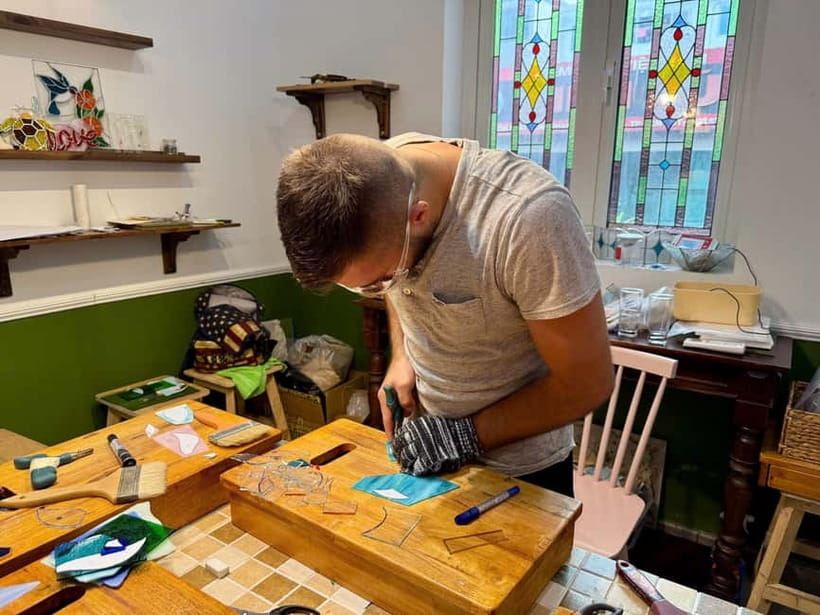
- Hands-on souvenir: You take home what you make, not a finished item from a shop.
- Simple start for beginners: The workshop is designed for people with no prior experience.
- Tool safety included: You’ll learn how to safely handle stained glass tools and materials.
- Pattern choice matters: You select from traditional and modern designs inspired by local architecture.
- Cultural context built in: You hear how stained glass connects to Vietnam’s colonial and modern buildings.
- 3 to 3.5 hours total: Expect a focused workshop session that moves at a steady pace.
A Peaceful Studio Where Light Becomes Art
Ho Chi Minh City (Saigon) can be loud, fast, and hot. This kind of workshop is the opposite in the best way. You step into a calmer creative studio and spend about 210 minutes making something tangible—something you can see and touch later when you’re back home.
Stained glass has a special superpower. It doesn’t just look pretty in daylight; it changes as the light changes. That means your final piece won’t feel like a temporary craft. It becomes a home object with a story—your story. And because you’re making it yourself, it’s a more meaningful souvenir than the usual t-shirt or mug run.
You can also read our reviews of more city tours in Ho Chi Minh City



What You’ll Make: Ornament, Coaster, or Mini Panel
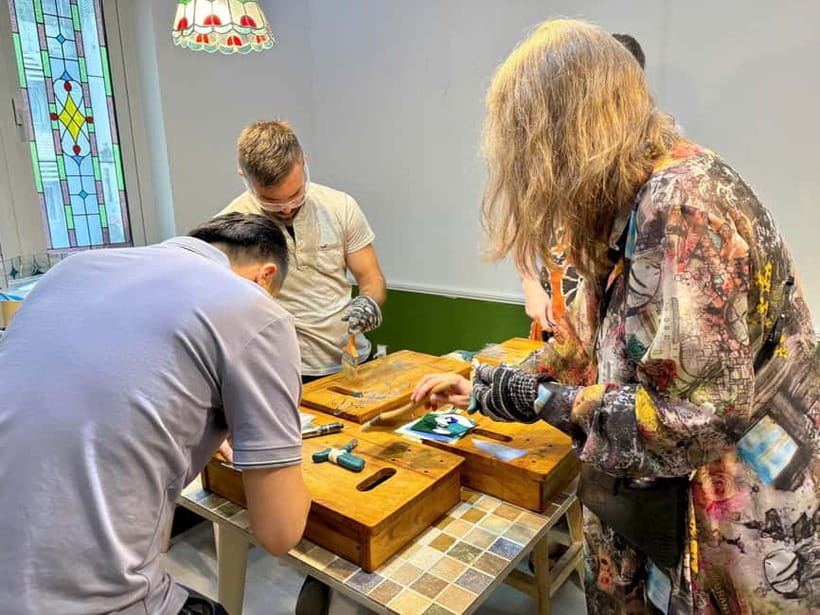
The workshop is built around one simple goal: leave with a finished stained glass piece. You’ll be able to choose between making an ornament, a coaster, or a mini panel. That choice is useful because it changes the final size and how you’ll display it later.
You can also expect that your piece is not a random result. The workshop gives you options for your design, with patterns that can lean traditional or modern, inspired by local architecture. In other words, you’re not stuck with the instructor’s sample forever—you’re shaping the look.
If you’re thinking about gifts, coasters and ornaments tend to travel well. A mini panel is great if you want something more decorative to hang or place somewhere that gets light.
The Real Skill: Cutting, Shaping, and Assembling
This workshop is hands-on from the start. You’ll learn the basics of glass cutting, shaping, and assembling. Those three words matter because they describe the core workflow of stained glass craft: prepare the glass pieces, shape them to fit your design, then bring everything together into a finished composition.
You’ll also get instruction on how to safely handle stained glass tools and materials. That’s a big deal for a beginner class. Cutting tools aren’t magic wands; they require care, attention, and basic technique. Even if you only manage the “starter level,” you’ll walk away with a clearer sense of how the craft works and why finished stained glass looks the way it does.
One more practical point: since all tools and materials are included, you don’t need to guess what to pack or buy. You just show up with curiosity and a willingness to slow down for a few hours.
Choosing Patterns Inspired by Vietnamese Architecture
Your design choice can make or break a craft workshop—especially if you’re the type who wants the final piece to feel like you.
Here, you choose from a range of traditional and modern patterns inspired by local architecture. That’s a nice touch because it keeps the workshop tied to the place you’re visiting. Instead of generic “stained glass shapes,” your patterns are connected to what’s around you in Vietnam’s built environment.
When you pick a pattern, you’re also setting the tone for the time you’ll spend. A more detailed pattern may take more patience; a simpler one may help you finish faster with confidence. If you’re nervous about messing up, choose something that feels achievable—then let the colors and shapes do the storytelling.
The Stories Behind the Glass: History and Symbolism in Vietnam
The workshop doesn’t treat stained glass as just a technique. You also learn history and symbolism—specifically how stained glass appears in Vietnamese colonial and modern buildings.
This part helps you see your craft with a wider lens. Instead of viewing stained glass as a European import you only associate with churches abroad, you understand it as a visual language that arrived, adapted, and became part of local architecture. That context gives your final piece more weight, even if it’s small.
It’s also the kind of information that makes the workshop feel less like a “manufacturing line” and more like a cultural exchange. You’re not only making; you’re learning why the materials and designs show up in the first place.
You can also read our reviews of more tours and experiences in Ho Chi Minh City





English Guidance: When You Want Calm Help
The workshop includes an English-speaking instructor, and in a positive experience a guide was described as speaking with excellent English. That matters because stained glass instruction includes small process details—how you hold tools, how you approach edges, and how you assemble parts. Good communication keeps you from feeling lost.
I also appreciate that instruction is described as calm and supportive, with instructors (referred to as the Masters) ready to help where needed. That’s the vibe you want in a craft class. Pressure ruins creativity. You want time to ask, adjust, and learn without feeling like you’re behind.
Still, there is a consideration. One booking noted limited explanation during the course and that they were left to work for much of the time, needing reminders to move through each step. If you’re the kind of person who needs very clear pacing or step-by-step confirmation, come ready to speak up early and often. Ask what the next stage is before you start cutting or fitting pieces.
How the 3 to 3.5 Hours Typically Flows
The session runs about 3 to 3.5 hours, so it’s long enough to learn something real but not so long that you fade halfway through.
Here’s the practical flow you can expect:
- You start in the studio setting and get guided introduction to stained glass.
- You learn the basics of cutting and shaping and how to handle tools safely.
- You assemble your design into a finished ornament/coaster/mini panel.
- You incorporate the cultural context you learn along the way, especially when choosing patterns and understanding symbolism.
Since you’ll be working with glass tools and materials, you should plan to focus. Put your phone away between steps. Let the workshop do its job: build skills and a finished object, not a distracted half-finish.
Value for $35: A Souvenir That Isn’t Fake
At $35 per person, this workshop feels like good value when you look at what’s included. You get:
- an English-speaking local instructor,
- all tools and materials,
- and your finished stained glass piece to take home.
Craft classes often sound expensive until you compare them with the real cost of buying a souvenir that’s just decorative and mass-produced. Here, you’re paying for instruction plus materials, and your output is genuinely personal. That’s the kind of souvenir that brings a moment back every time you see it.
You also avoid the usual “I bought it and now I don’t know what to do with it” problem. A coaster actually gets used. An ornament hangs. A mini panel can display light and color in a way that works in small spaces.
Who This Workshop Fits Best (and Who Should Skip It)
This is a beginner-friendly art and culture experience. If you like hands-on activities, appreciate design, or want a calmer break from Saigon’s pace, you’ll likely enjoy it.
It’s also a good match if you want something more meaningful than a typical purchase. Making your own stained glass turns the souvenir into a small craft story you can tell.
On the other hand, it’s not suitable for:
- children under 12,
- people with mobility impairments.
If you’re planning your trip with someone who has accessibility needs, double-check suitability before booking.
Small Watch-Outs Before You Book
This workshop sounds smooth on paper, but a few real-world points help you get a better experience:
- Ask questions early. If anything about the process is unclear, raise it right away rather than waiting.
- Pick a pattern that matches your comfort level. Detailed designs can be rewarding, but if you’re new, start simpler so you finish confidently.
- Don’t treat it like a casual craft. You’ll work with tools and glass materials. A focused mindset makes the session much more enjoyable.
- Plan for a studio vibe. This is not a sightseeing walking tour. It’s a creativity session in a peaceful setting.
Should You Book This Stained Glass Workshop in Saigon?
I’d book it if you want a relaxing, hands-on way to experience Saigon beyond the usual sights. For $35, you’re getting instruction in cutting, shaping, and assembling, plus cultural context on stained glass in Vietnamese architecture. You also leave with an actual keepsake made by your own hands, not just something you bought.
Skip it (or at least think twice) if you strongly prefer very detailed, slow, step-by-step explanation and you know you get frustrated when instruction is brief. In one case, communication and pacing weren’t ideal—so if you’re sensitive to that, go in ready to ask questions quickly.
FAQ
How much does the Ho Chi Minh City stained glass workshop cost?
It costs $35 per person.
How long is the workshop?
The duration is 210 minutes, which is about 3 to 3.5 hours.
Where does the workshop take place?
It takes place in Ho Chi Minh City (Saigon), Vietnam.
Is the workshop suitable for beginners?
Yes. It’s described as perfect for beginners and art lovers, and no prior experience is needed.
What language is instruction provided in?
Instruction is provided in English.
What will I make during the workshop?
You can choose to make an ornament, coaster, or mini panel.
Are tools and materials included?
Yes. All tools and materials are included, and your finished piece is yours to take home.
Is transportation included in the price?
No. Transportation is not included.
Is there a cancellation option?
Yes. Free cancellation is available up to 24 hours in advance for a full refund.
Is this experience suitable for children or people with mobility issues?
It is not suitable for children under 12, and it is also not suitable for people with mobility impairments.