REVIEW · HO CHI MINH CITY
6 Hours Historical Tour in Cu Chi Tunnel with Free Snack
Book on Viator →Operated by Kim Delta Travel · Bookable on Viator
Cu Chi tunnels reframe what you think you know. This 6-hour Cu Chi Tunnels tour takes you from Ho Chi Minh City to the underground network that shaped the Vietnam War, with an English-speaking guide and hands-on sights like booby traps and tunnel entrances hidden behind camouflage.
Two things I genuinely like: you get a clear mix of history and practical details, and the included wartime snack set of tapioca plus hot pandan-leaf tea keeps the experience grounded, not just scenic. One consideration: the day can include an extra stop on the way (often a factory or shop), so if you want pure tunnel time, keep your expectations flexible.
In This Review
- Key highlights at a glance
- Cu Chi Tunnels: The war-underground you see above and below
- District 1 pickup and the 1.5-hour ride out of the city
- Inside the Cu Chi complex: documentary, traps, and camouflage
- Crawling the tunnel segment: small space, big meaning
- Wartime food in a wartime kitchen: tapioca and pandan tea
- AK-47 shooting at your own expense: how it fits this day
- A quick detour you might notice on the way
- Price, group size, and what to pack for a 6-hour day
- Should you book Kim Delta Travel’s Cu Chi Tunnels tour?
- FAQ
- How long is the Cu Chi Tunnels tour?
- What time do the tours start from Ho Chi Minh City?
- Is pickup included?
- What is included in the price?
- What snack and drink do I get?
- Do I get to crawl through the tunnels?
- Is AK-47 rifle shooting included?
- What is the maximum group size?
- What happens if the tour is canceled due to weather or too few travelers?
- What is the cancellation policy?
Key highlights at a glance
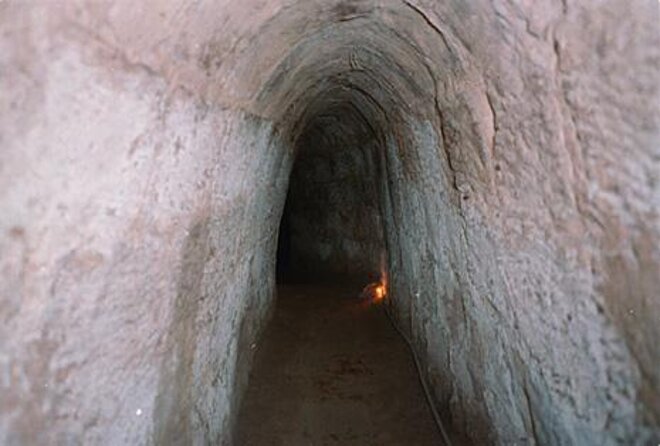
- Secret-door tunnel entrances and camouflage details help explain how the network worked
- Short documentary sets the war context before you see the site
- Booby traps show how defense was built into everyday movement
- Optional tunnel crawl gives you a real sense of scale (and squeeze)
- Tapioca and pandan tea are included, tied to wartime living
- Max 25 travelers keeps the group experience more manageable
Cu Chi Tunnels: The war-underground you see above and below
Cu Chi is one of those places where the story clicks fast. Even before you crawl, you’ll understand the key idea: this wasn’t just a tunnel system for travel. It was a whole mini-world underground, with claims of hospitals, schools, theatres, and kitchens built into the network. That context matters because it changes how you interpret every small opening and hidden entrance.
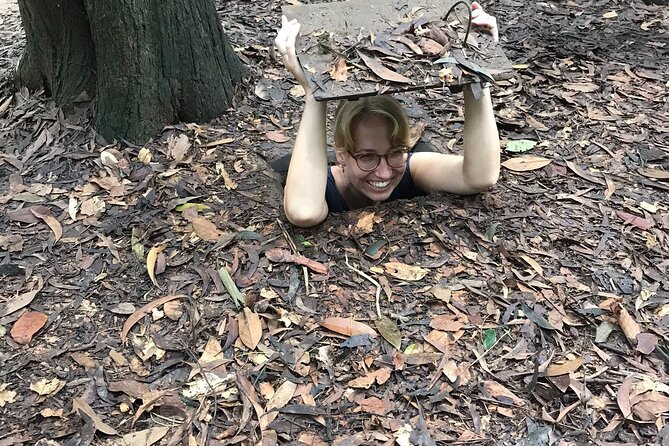
What you’ll notice at the site is the disguise and the design. Entrances are described as being covered by a secret wooden door, with camouflage leaves above. And the tunnels were intentionally tight. The goal wasn’t comfort; it was survival. The tour’s structure follows that logic: documentary first, then traps and displays, then the tunnel experience.
If you care about history from Vietnam’s perspective, this kind of guided visit can feel more personal than reading alone. Just remember: this is a war site, so plan for a serious tone even when there’s time for snacks and optional add-ons.
You can also read our reviews of more historical tours in Ho Chi Minh City

District 1 pickup and the 1.5-hour ride out of the city
This tour is built for an easy start. You choose either an 8:00 am or 12:30 pm departure, and a pickup option is offered for people staying in Central District 1 hotels. If you’re not in that zone, you meet at 268 Đề Thám, Phường Phạm Ngũ Lão, Quận 1. Either way, you’re back at the same meeting point when the day ends.
Once you leave the city, you’ll drive for about 1.5 hours to reach Cu Chi. The upside of doing it in a group with an air-conditioned vehicle is simple: you don’t have to figure out transportation, and you can use the ride time to get your bearings and focus on the story instead of the route.
The one “watch-out” here is pacing. Some tours add a stop along the way that can feel like a detour if you’d rather use every minute at the tunnels. If that matters to you, book with the mindset that the day is a full half-day, not a nonstop sprint to the site.
Inside the Cu Chi complex: documentary, traps, and camouflage
The day starts with a short documentary on Cu Chi during the war. It’s the kind of primer that helps you connect what you’re seeing later. Without it, the tunnels might just feel like old infrastructure. With it, the tunnels start to feel engineered for tactics and daily life.
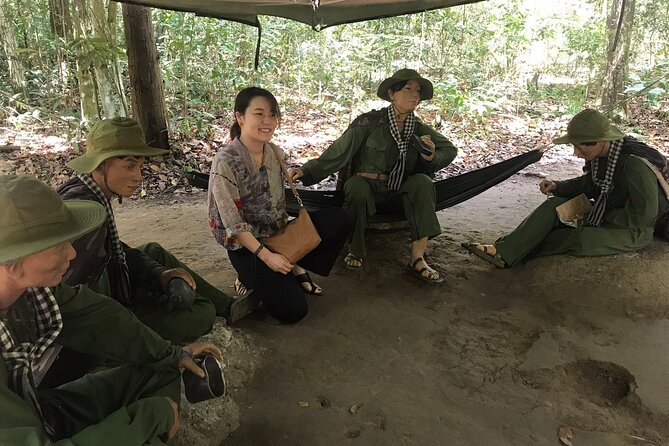
Then comes the core of the experience: seeing war-time features like booby traps. These stops are where the tour’s guided format pays off. You’re not just walking past objects; you’re getting context for why traps were used, what they prevented, and how that shaped movement through the area.
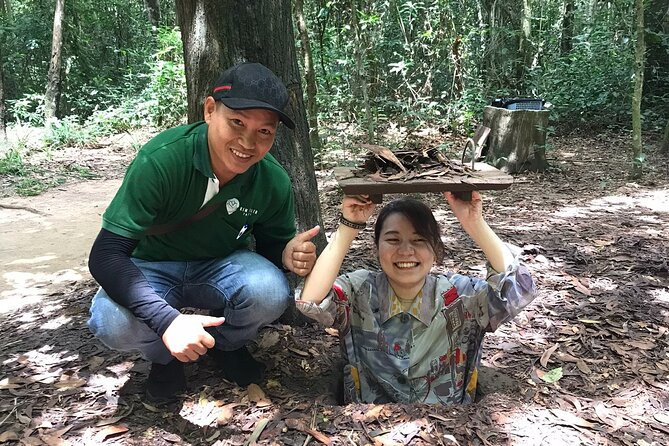
A big part of the appeal is the emphasis on camouflage and disguise. You’ll hear how entrances were hidden with a secret wooden door and how camouflage leaves helped blend the site into the surroundings. That theme repeats: nothing here is accidental, and the tour helps you connect the design to the threat environment.
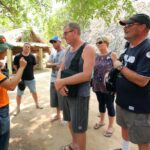
Language quality is a variable you should plan for. The tour includes an English-speaking guide, and many people highlight guides like Bao for answering questions and keeping things engaging. Others mention that English can vary, so if you’re picky about historical explanations, ask questions early in the day and stay patient if phrasing is basic.
Crawling the tunnel segment: small space, big meaning
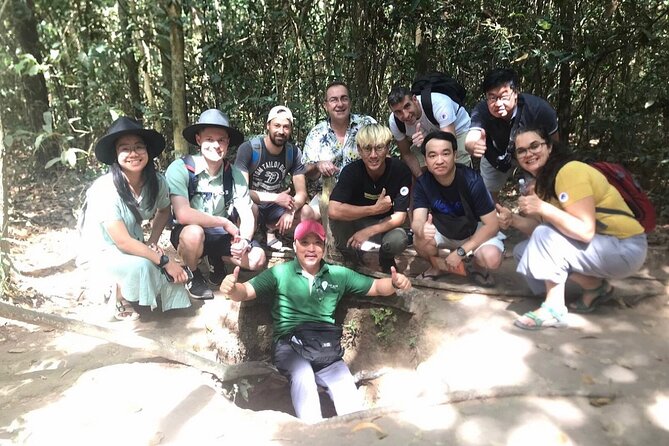
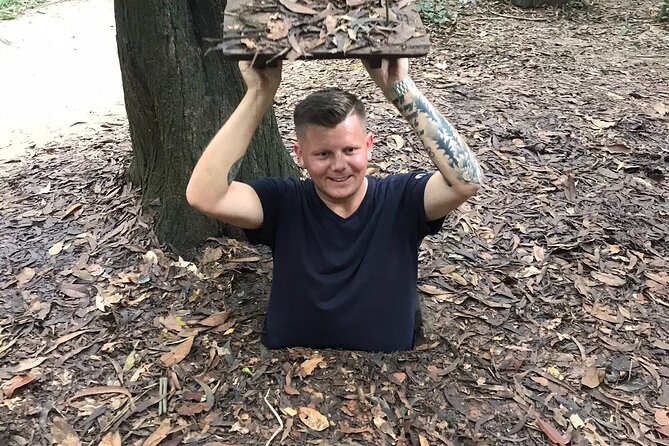
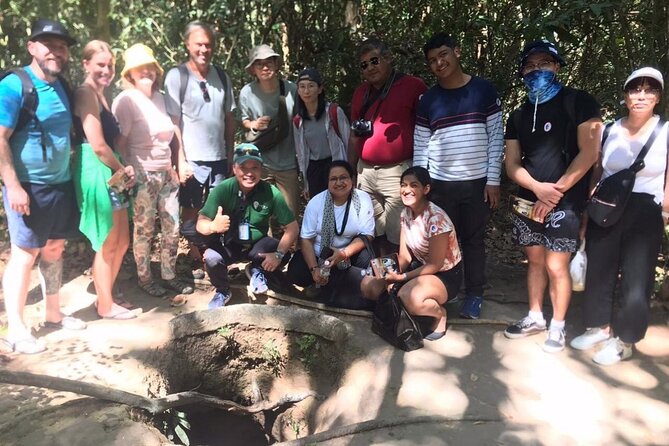
One of the most memorable parts is the chance to crawl through one of the tunnels, and it’s described as a short distance. That “short” detail matters. Even without going far, you feel the key point immediately: these tunnels were built so only people who fit the design could move safely.
For me, the value isn’t the thrill. It’s the perspective. When you’re in a tight tunnel, you understand why secrecy mattered and why the network needed disguise. You also understand why the site is set up for guided exploration rather than self-adventure. Safety and logistics matter in a place like this.
If you have claustrophobia or mobility issues, treat this as the biggest decision point of the tour. The tour says most people can participate, but crawling through a small space is still the activity most likely to feel uncomfortable. If you’re unsure, consider how you handle tight indoor spaces in general, not just how you feel about history.
Also, go in mentally prepared for the tactile reality: you’ll be moving through an environment designed for concealment, not sightseeing comfort. That’s the point, and it’s why the experience tends to stick with you longer than a photo stop.
Wartime food in a wartime kitchen: tapioca and pandan tea
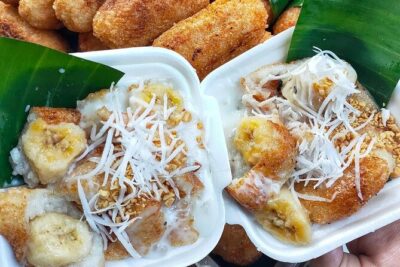
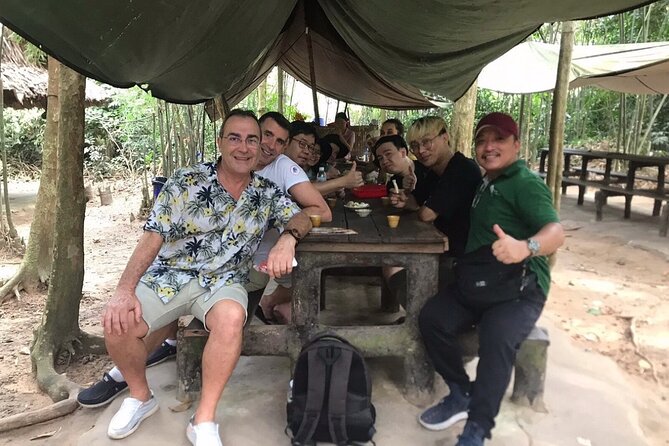
This tour includes a practical food moment that helps the history feel human. You’ll taste typical wartime dish tapioca and drink hot pandan-leaf tea. That might sound like a minor perk, but it’s actually part of the story the tour is telling.
Why it works: it connects underground life with everyday survival. When the tour points out that kitchens existed in the tunnels, the food stop gives you a concrete reference. You don’t just hear that people ate under pressure. You taste something that matches the described wartime diet.
I like that this is included in the tour price. At this price level, tours often skip food or give you something small and generic. Here you get both a snack and a hot drink, which also helps with energy on a day that includes travel plus a physically cramped activity.
For the tea, pandan leaves are used for a fragrant, comforting flavor. It won’t replace a meal, but it gives you a reset. If you have dietary restrictions, the tour data doesn’t list options, so it’s smart to plan for basic ingredients and ask before you go if you have strict needs.

AK-47 shooting at your own expense: how it fits this day
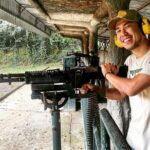
There’s an optional shooting range activity where you can try rifle shooting with an AK-47. It’s listed as optional at your own expenses, and the bullets are not included. In other words, you’ll pay extra if you want to do it.
How it fits: it’s clearly framed as an add-on, not the centerpiece. That matters because Cu Chi is fundamentally about history and the tunnel network, not about a shooting attraction. If you skip it, the tunnel experience still stands on its own.
If you do want to try it, treat it like a controlled extra. The tour description sets expectations by including the option and separating the cost of bullets. That’s helpful for budgeting. It also prevents the day from feeling like a surprise spend.
Just keep your priorities in order. If you came for the historical lessons and the tunnel crawl, don’t let the range pull you away from asking questions at the key stops like the documentary and the traps. If you came for a mix of history and action, then the range can be a satisfying final chapter.
A quick detour you might notice on the way
Not every part of the day is strictly about Cu Chi. One criticism mentioned an extra stop along the way, described as a disabled artists store. I can’t promise exactly what will be included on every departure, but the fact that it shows up in comments means it’s worth preparing for.
What to do with that info: if your goal is maximum tunnel time, mentally label this as a possible time sink. If your goal is a broader look at how tours pass through the region, these stops can be a minor side scene. Either way, don’t schedule other plans right after the tour ends.
The best approach is simple: treat the trip as a half-day excursion that includes more than the main site. The core value still comes from what happens once you reach the tunnels—documentary, traps, the tunnel crawl, and the snack-and-tea break.
Price, group size, and what to pack for a 6-hour day
At $19.79 per person for a roughly 6-hour outing, this tour’s value comes from what’s included, not just the headline price. You get an air-conditioned vehicle, pickup where offered, an English-speaking guide, admission ticket, plus the tapioca snack and hot pandan tea. Those inclusions matter because they remove cost surprises later.
Group size is capped at 25 travelers. That’s a sweet spot for a site like Cu Chi. Big enough for comfort and logistics. Small enough that you’re not stuck behind a wall of people for the whole day.
What to pack is mostly about comfort:
- Water is included, but you may still want to bring more if you run hot.
- Wear clothing that can handle dust and the kind of wear you expect at an outdoor historical site.
- If you plan to crawl, consider how you feel about tight spaces and bring a mindset that expects it.
Timing also matters. You’ll start at 8:00 am or 12:30 pm. If you’re the kind of person who feels better with earlier starts, the morning departure can help you avoid the busiest late-day conditions in the city.
One more practical note: you’ll get mobile tickets, and confirmation is received at booking. That makes it easier to show up ready, rather than hunting for papers.
Should you book Kim Delta Travel’s Cu Chi Tunnels tour?
If you want an organized Cu Chi Tunnels experience from Ho Chi Minh City with included admission and food, this is a solid pick. The biggest strengths are the guided structure (documentary, traps, and the crawl) and the included tapioca + pandan tea snack that keeps the day from feeling purely visual.
I’d especially recommend it if:
- You like history with a clear story arc
- You want a guide to explain camouflage and war-time tactics
- You’re okay with a physically tight tunnel crawl
I’d think twice if:
- Claustrophobia is a real issue for you
- You hate any detours and need strict tunnel-only time
- You need very advanced English-level historical commentary (guide quality can vary)
If you go in with the right expectations—serious war site, guided pacing, short crawl—you’ll likely find this day hits the sweet spot of value and authenticity.
FAQ
How long is the Cu Chi Tunnels tour?
The tour duration is about 6 hours.
What time do the tours start from Ho Chi Minh City?
Tours start at 8:00 am or 12:30 pm.
Is pickup included?
Pickup is offered for guests staying in Central District 1 hotel. The activity also has a meeting point in District 1.
What is included in the price?
The price includes admission ticket, air-conditioned vehicle, snacks (tapioca, hot tea, bottled water), all fees and taxes, and an English-speaking guide.
What snack and drink do I get?
You get tapioca and hot pandan leaves tea, plus bottled water.
Do I get to crawl through the tunnels?
Yes, the tour includes the option to crawl a short distance through one of the tunnels.
Is AK-47 rifle shooting included?
Rifle shooting with an AK-47 is optional and is not included in the price. Bullets are also not included, so you pay at your own expense.
What is the maximum group size?
The tour has a maximum of 25 travelers.
What happens if the tour is canceled due to weather or too few travelers?
If poor weather causes cancellation, you’ll be offered a different date or a full refund. If the minimum number of travelers isn’t met, you’ll also be offered a different experience/date or a full refund.
What is the cancellation policy?
Free cancellation is available up to 24 hours in advance for a full refund. If you cancel less than 24 hours before the start time, the amount paid is not refunded.