REVIEW · HO CHI MINH CITY
Cu Chi Tunnels – Half Day Luxury Tours
Book on Viator →Operated by Cu Chi Tunnels Tours · Bookable on Viator
Underground life hits fast, even with your shoes on. This half-day luxury tour takes you about 43 miles outside Ho Chi Minh City for a guided look at the Cu Chi Tunnels, with mobile tickets for easy pickup and a schedule that stays tight. I like that the ticket covers entrance and transport, so you’re not doing the usual add-on math while you’re trying to learn.
You’ll also get a hands-on moment at a nearby shooting range and then a simple post-tour snack of period-appropriate tea and cassava. One possible drawback: you should expect some waiting and driving time, since the best part here happens during a several-hour road-and-tunnel combo.
In This Review
- Key highlights you’ll actually use
- From Ho Chi Minh City to the tunnels: what the day feels like
- The first briefing: video, construction, and how people survived
- Cu Chi Tunnels up close: living areas, kitchens, and war facilities
- Trap doors and security: why the maze isn’t a tourist gimmick
- Shooting range add-on: a hands-on, controlled contrast
- Tea and cassava after the tunnels: a small reset
- Guides and the difference they make: Son and Jimmy #10
- Price and value: is $35 worth it for half a day?
- Practical tips so your day goes smoothly
- Who this tour is best for
- Should you book this Cu Chi Tunnels half-day luxury tour?
- FAQ
- FAQ
- How long is the Cu Chi Tunnels half-day tour?
- Is hotel pickup included?
- What is the meeting point?
- What’s included in the price?
- Do I need a paper ticket?
- Is there a shooting range option?
- How far is Cu Chi from Ho Chi Minh City?
- How big is the group?
- When do I get confirmation?
- What is the cancellation policy?
Key highlights you’ll actually use
- Hotel pickup and a pre-booked bus make the 43-mile trip feel simple
- A guided tunnel intro gets you oriented fast before you go underground
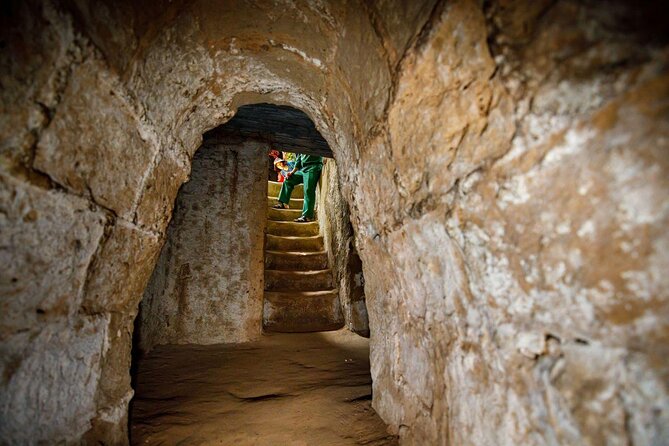
- Tunnel living and war facilities you can see in one walk-through loop
- Optional shooting range time adds a controlled, action-style break from the history
- Tea and cassava help your energy level after the heavier parts of the tour
From Ho Chi Minh City to the tunnels: what the day feels like
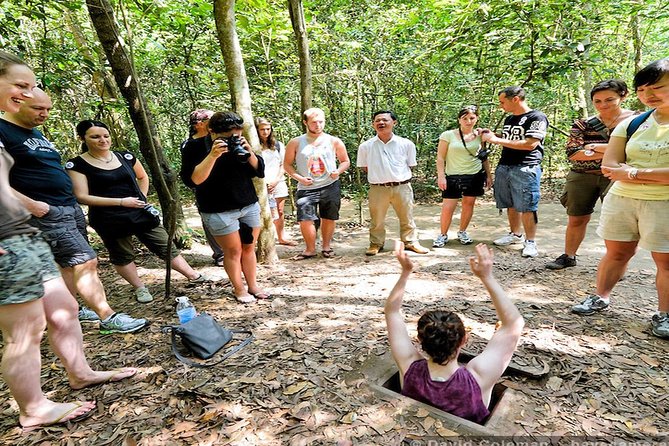
Cu Chi Tunnels day has a clear rhythm: you leave the city, you get briefed, you spend focused time in the tunnels area, and you come back with enough structure that you don’t have to plan anything on the fly.
This tour runs about 6 hours total. The on-site tunnel portion is about 4 hours, which is usually the part people remember most. The rest is the ride in and out, plus time for orientation and moving between spots. If you like travel days that have a plan (and don’t turn into a puzzle), this schedule will suit you.
You’ll start from central Ho Chi Minh City, with pickup offered from your inner-city hotel. The tour also returns you to the starting area near the original meeting point (the activity ends back at the meeting point). That matters because Cu Chi is far enough outside the city that “just wing it” can turn into a long, expensive headache.
The group size stays capped at up to 30 travelers. In practice, that usually means a louder, busier crowd than a private tour, but still small enough for a guide to keep the story moving instead of feeling like a lecture hall.
You can also read our reviews of more tours and experiences in Ho Chi Minh City

The first briefing: video, construction, and how people survived
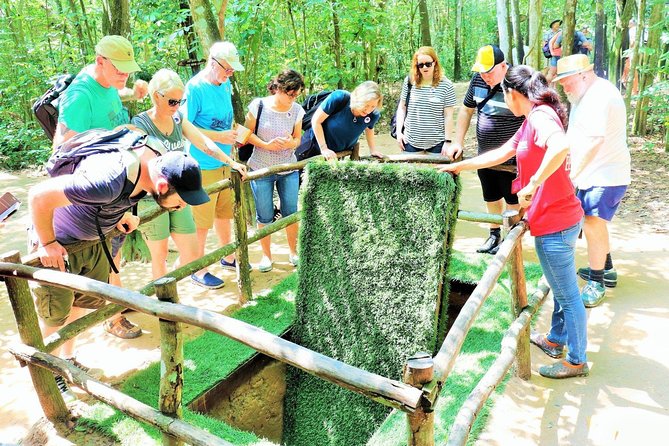
Before you’re crawling through anything, you get a short introduction and an introductory video. This part is genuinely useful. It sets up the tunnel logic: how they were built, why survival depended on planning, and how people managed in harsh conditions.
Think of this as your “translation layer.” Without it, a tunnel map can look like a random hole-and-corridor maze. With it, you start noticing patterns: where life support would go, where movement would be safer, and where security choices show up in the design.
After the briefing, you explore the tunnels and related areas with your guide. This is where the “luxury” style matters in small ways: you’re not trying to interpret signage, find the right routes, or negotiate entry fees while everyone else is in line. Your job is mostly to pay attention and ask questions.
Cu Chi Tunnels up close: living areas, kitchens, and war facilities
The core experience is a guided tour through the tunnels systems and nearby preserved sections. Expect to see a mix of living spaces and functional war areas, not just dark passages.
The tour description points out that you’ll encounter special constructed living areas with kitchens and bedrooms, often shown side by side with practical facilities like:
- storage
- weapons factories
- field hospitals
- command centers
That combination is what makes this stop feel real. It’s not only about hiding. It’s about running a basic operation, day after day, while remaining concealed.
You’ll also notice the level of organization implied by these layouts. The guide’s job here is to connect the dots—how people could sleep near daily-use areas, how supplies would be moved, and why medical and command spaces couldn’t be an afterthought.
If you’re the kind of traveler who likes “how it worked,” this portion will satisfy you. It also helps that the walk is guided, so you’re not stuck wondering why one section exists and another doesn’t.
Trap doors and security: why the maze isn’t a tourist gimmick
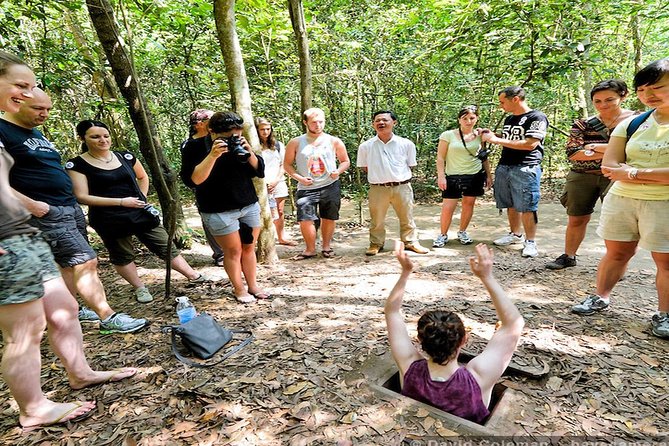
Once you start moving through the tunnel system, the focus shifts from “history you can see” to “security you can feel.” The tour highlights hidden trap doors and dangerous traps inside the maze-like tunnels for protection during the war.
This is one of those moments where you stop thinking about the tunnels as an attraction and start thinking about them as a survival tool built under pressure. Even when you’re not in a tight crawl, the story lands. The tunnel design isn’t about comfort. It’s about control—control of entry, movement, and detection.
A practical thing to keep in mind: follow your guide’s pace and directions. Don’t rush the story so you can check off photos. The best part here is understanding what each feature was meant to do. If you treat it like a museum hallway, you’ll miss the point; if you slow down and read the guide’s explanation, the design starts to make sense.
Shooting range add-on: a hands-on, controlled contrast
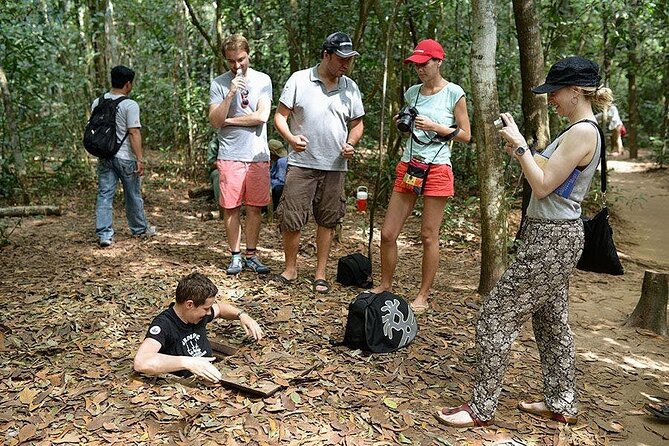
One of the tour’s highlights is the chance to try shooting at a nearby range. This is where the day gets more action-oriented, and it’s intentionally different from the tunnel exploration.
It’s an interesting choice for a war-thematic visit. The tunnels emphasize concealment, engineering, and daily endurance. The range shifts you into a more direct “battle feeling” moment, still framed as a guided activity rather than something chaotic.
If you’re sensitive to mixing hands-on activities with heavy war subject matter, you’ll want to mentally prepare. On the other hand, if you enjoy learning through doing—within clear boundaries—this add-on can make the day feel less one-note.





Tea and cassava after the tunnels: a small reset
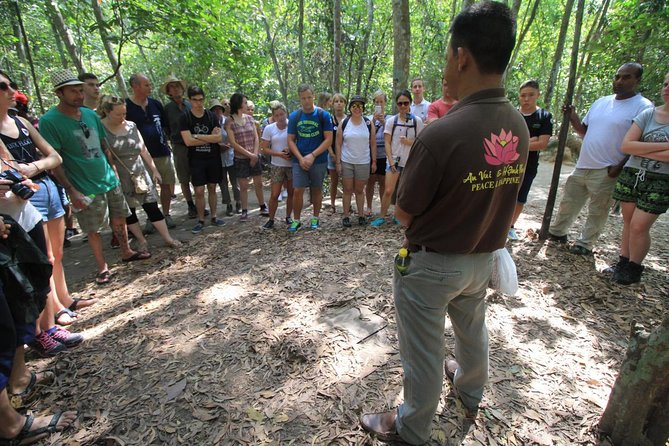
After the heavier parts of the tour, you’re provided refreshments: tea and cassava. That might sound simple, but it’s timed well. You’ve spent time underground and in spaces tied to conflict. A warm drink and straightforward snack help your body catch up, so you can process what you just learned without feeling wiped out.
The description also calls these refreshments period-appropriate, which means the snack isn’t random. It’s meant to be part of the story of daily life, not just a convenience stop.
This is the kind of detail that improves value. A tour that only delivers information can leave you drained. A tour that also gives you a basic, included snack tends to feel more complete.
Guides and the difference they make: Son and Jimmy #10
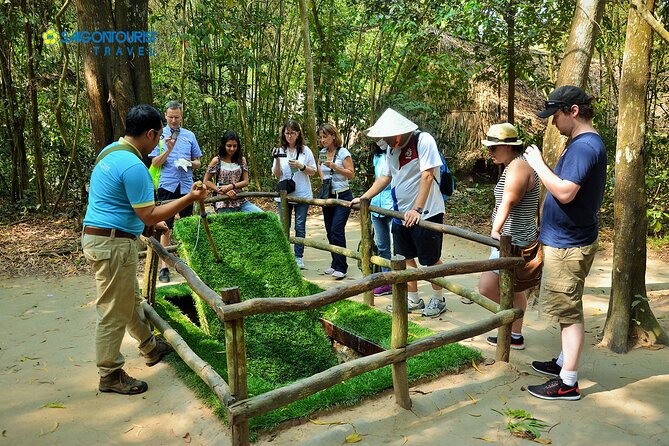
A big reason this tour gets strong ratings is the way guides bring the material to life. In the feedback I saw, the tour guide Son stood out for being helpful and for sharing a lot of Vietnam context beyond just the tunnels. Another guide mentioned was Jimmy #10, noted as funny while still delivering a history lesson that felt like it came alive.
You can’t guarantee which guide you’ll get, but you can take this as a hint: ask questions, especially about what you’re seeing right then. When the guide is strong, the tunnel visit turns from facts-on-a-signboard into a moving story you understand as you walk.
Price and value: is $35 worth it for half a day?
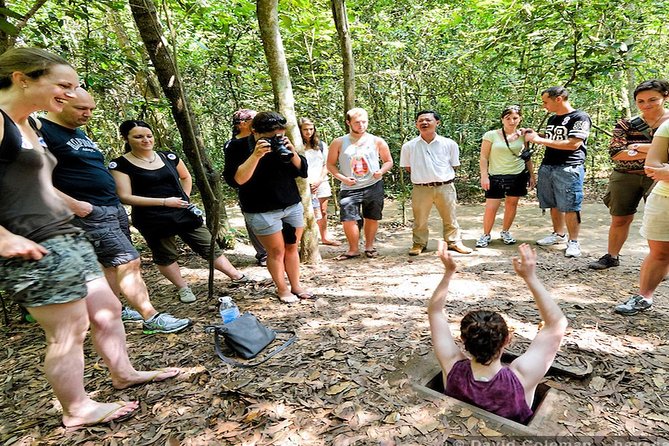
At $35 per person, this isn’t a bargain that cuts corners—it’s positioned as a budget-friendly way to avoid the common costs that sneak into day trips: separate transport, separate admission, and the time you lose figuring it out.
The tour specifically calls out no hidden costs, with entrance fees and transport covered by the ticket price. For a place like Cu Chi, that coverage is a big deal. Without it, you’re often paying extra for a car or driver, then adding entry fees on top.
You’re also getting refreshments included, plus mobile ticket convenience. Mobile ticketing may sound minor, but it helps you avoid paper handling and speeds up pickup.
So the value equation looks like this: you pay a moderate price, and you get a structured day with included transport and admission, plus a hands-on range add-on and a snack. If you want control of your time and less hassle, the price makes sense.
Practical tips so your day goes smoothly
A few things will help you get the most out of the tour without turning it into a stressed-out sprint:
- Wear comfortable shoes and plan for uneven or indoor/outdoor transitions, since this is a mix of tunnel-area pathways and facilities.
- Bring water or plan to rely on what’s provided; at minimum, count on tea after the tour, not before.
- Keep your phone charged for the mobile ticket stage, but don’t let photos steal your attention from the guide’s explanations.
- When it comes to the shooting range, listen to instructions carefully and treat it as a guided activity rather than free-for-all fun.
Also, if you’re in Ho Chi Minh City with limited time, this kind of half-day structure is a smart use of your schedule. You’ll get a meaningful chunk of tunnel time without sacrificing your whole day to logistics.
Who this tour is best for
This is a strong match if you:
- want a guided experience rather than self-navigation
- like your history with practical context and visible facilities
- appreciate included costs and a plan that runs on time
- would enjoy a hands-on moment at a nearby shooting range
It may be less ideal if you want a fully flexible private day or if you strongly prefer a quiet, strictly museum-style approach without action components.
Should you book this Cu Chi Tunnels half-day luxury tour?
If you want Cu Chi Tunnels without the stress of arranging transport and admissions yourself, I think this is an easy yes. The included entrance and transport, the pickup from your hotel, and the mobile ticket make it straightforward. Add in the guided intro video, the range option, and the included tea and cassava, and you get a day that feels complete rather than patchy.
Book it if you’re short on time in Ho Chi Minh City and want the best chance of understanding what you’re seeing as you walk through it.
FAQ
FAQ
How long is the Cu Chi Tunnels half-day tour?
The tour runs about 6 hours total, with about 4 hours at the Cu Chi Tunnels stop.
Is hotel pickup included?
Yes, pickup is offered from inner-city hotels.
What is the meeting point?
The tour starts at 112 Đ. Trần Hưng Đạo, Phường Phạm Ngũ Lão, Quận 1, Hồ Chí Minh, Vietnam, and ends back at the meeting point.
What’s included in the price?
Entrance fees and transport costs are included, and refreshments (tea and cassava) are provided.
Do I need a paper ticket?
No. You’ll use a mobile ticket by downloading it to your phone for easy pickup.
Is there a shooting range option?
Yes. You can try shooting at a nearby range as part of the experience.
How far is Cu Chi from Ho Chi Minh City?
The tour drives about 43 miles from Ho Chi Minh City to the tunnels area.
How big is the group?
The tour has a maximum of 30 travelers.
When do I get confirmation?
Confirmation is received at the time of booking.
What is the cancellation policy?
This experience is non-refundable and cannot be changed for any reason.