REVIEW · HO CHI MINH CITY
Saigon Street Photography Experience
Book on Viator →Operated by Secret Experiences · Bookable on Viator
Saigon feels made for street photography. This morning walk in Ho Chi Minh City pairs you with pro photographers—Frederik Wissink or Kevin Lee—and turns sidewalks into real picture practice. You start with coffee or tea, get advice on talking to people, and then move through downtown scenes, alleyways, and architecture that carries Vietnam’s story right on the surface.
I love how small the group is (max 10), so you get real feedback instead of generic pointers. I also like the focus on non-touristy locations, including French colonial and war-era apartment buildings, a local hardware market, and a Buddhist temple.
One thing to consider: the 7:00 am start means an early wake-up, and the experience needs good weather to run. If you’re expecting a slow, late-morning stroll, plan for the opposite.
In This Review
- Key things that make this Saigon photo walk worth it
- Saigon Street Photos: Learning With Fred Wissink or Kevin Lee
- Café Linh77 at 7:00 am: Getting Oriented Before You Shoot
- What You Learn About Talking to People (And Getting Better Frames)
- French Colonial and War-Era Apartment Buildings: Where History Becomes Composition
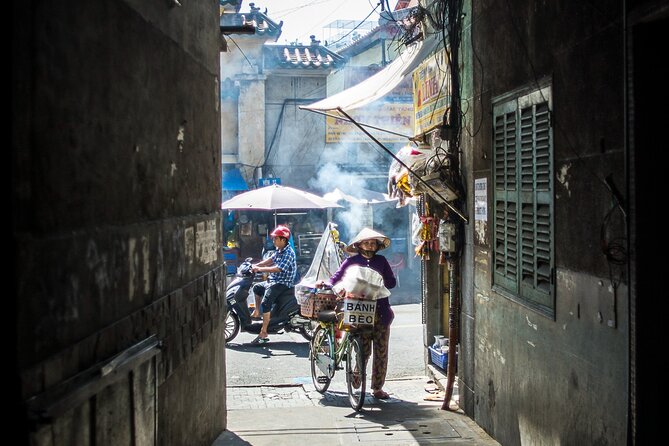
- The Alleyway Experience: Seeing Daily Life Up Close
- A Local Hardware Market Stop: Color, Texture, and Real Movement
- Buddhist Temple Photography: Working Light and Angle Without Forcing the Scene
- How the 2 Hours 30 Minutes Really Feels
- Small Group Size: Why Max 10 People Helps You Improve Faster
- What You’ll Actually Take Home: Angles, Light, and Approach
- Price and Value: Is $73 Worth It?
- Who Should Book This Saigon Photography Walk
- Weather, Morning Timing, and What to Expect If Plans Shift
- Should You Book This Saigon Street Photography Experience?
- FAQ
- Who hosts the Saigon street photography experience?
- Where does the tour start?
- What time does the tour start?
- How long is the street photography walk?
- What places will you visit during the walk?
- How large is the group?
- Is the tour suitable for beginners?
- Is it a mobile ticket?
- Is the meeting point near public transportation?
- What happens if the weather is bad?
Key things that make this Saigon photo walk worth it
- Two professional hosts with street and commercial experience (Frederik Wissink or Kevin Lee)
- Coffee or tea at the start before you start shooting
- Photo coaching focused on people-first street skills (how to approach, where to look, what to notice)
- Downtown architecture + everyday life stops, including apartment buildings and a local hardware market
- A calm stop at a Buddhist temple where you can work on light and angles
- A manageable duration (about 2 hours 30 minutes) with a small group size
Saigon Street Photos: Learning With Fred Wissink or Kevin Lee
Street photography in a big city can feel random. This tour avoids that problem by pairing you with working photographers—Frederik Wissink (Canadian by birth, Vietnam-based for 17 years) or Kevin Lee. Fred has spent years on commercial assignments for big names and has taught photo tours in Hoi An, which shows in how he breaks down what to look for. Kevin brings both photography and production instincts, plus experience hosting street photography meetups in Singapore.
The key idea is simple: you’re not just “taking pictures.” You’re learning how to see—and how to work the street in a respectful, practical way. That matters most in places like Ho Chi Minh City where everyday life is close up, and your presence needs to feel natural.
You can also read our reviews of more photography tours in Ho Chi Minh City

Café Linh77 at 7:00 am: Getting Oriented Before You Shoot
You meet at Cafe Linh77 at Hàm Nghi in District 1, and the tour starts at 7:00 am. Starting early is smart here. Streets and alleyways can get crowded later, and morning light tends to flatter faces and buildings better.
The first part of the experience is built around a simple reset: coffee or tea and a photo briefing. Instead of jumping straight into gear talk, the host shares what to watch for in street scenes—details, backgrounds, and small moments that turn a normal photo into a story. You also get practical guidance on how to approach people for portraits or candid shots without turning the walk into an awkward performance.
What You Learn About Talking to People (And Getting Better Frames)
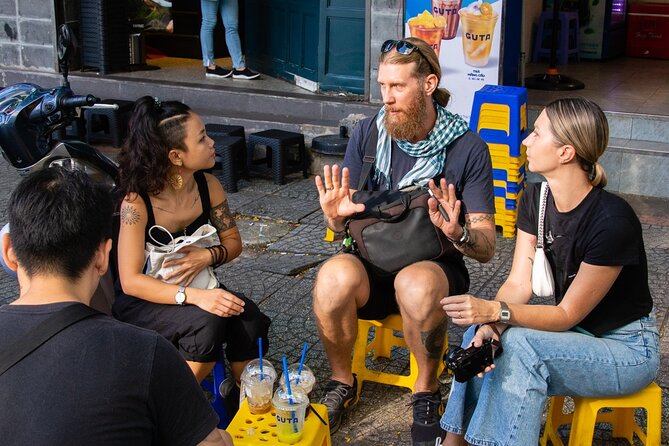
Street photography is half camera and half human behavior. This experience spends time on the social side: how to approach, how to ask (or not ask), and how to keep your focus on the moment rather than your anxiety.
You’ll get tips on:
- What to look for in daily life (patterns, gestures, surfaces, and texture)
- Ways to approach people so your camera feels friendly, not intrusive
- Ways to frame angles and light so your shots look intentional
One of the recurring themes from the host style is that they don’t treat street photos like luck. If you can spot angles and light, you can make good pictures even when the scene is busy. And if you shoot with a phone, you’re not out of luck either—this tour supports all levels, and the hosts clearly work with devices people actually carry.
French Colonial and War-Era Apartment Buildings: Where History Becomes Composition
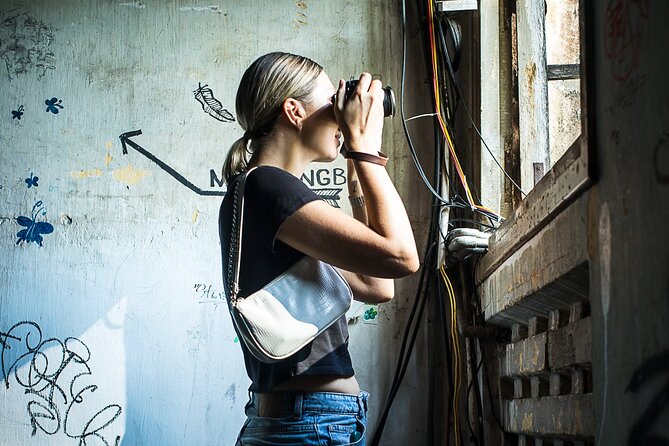
The downtown architecture stop is more than sightseeing. You’re there to photograph buildings that show layers of Saigon’s past in their shapes and walls—French colonial styles mixed with war-era apartment blocks.
Why this matters: architectural subjects give you strong “structure” for street photography. You can:
- Use doorways, stairwells, and windows as natural frames
- Photograph contrasts—old concrete beside daily routines
- Look for repeating lines that make your composition feel cleaner
Also, buildings like these often create sheltered corners and semi-private spaces. That gives you a chance to slow down, watch how people move, and work on timing. Even if you’re new to photography, architectural settings help you practice without needing to constantly find the perfect person-to-person moment.
The Alleyway Experience: Seeing Daily Life Up Close
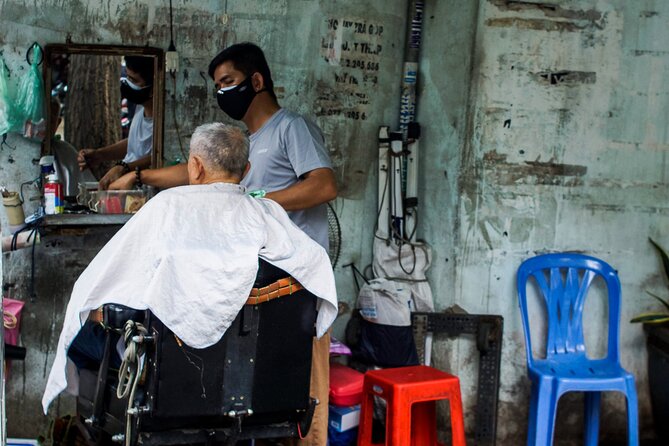
A big promise of this walk is the chance to see how Vietnamese families live in the intricate network of alleyways. This is where the tour becomes more than photo tips—it becomes a way to understand the city as people actually experience it.
The practical benefit for your photography: alleyways reduce visual noise. They create depth, leading lines, and a sense of place. Instead of trying to shoot a whole street at once, you can focus on smaller scenes: hands at work, conversations on the edge of a doorway, kids moving through space, or an everyday task played out in public.
This is also where the host’s guidance helps. If you’re unsure how to photograph candid life, you’ll get direction on what to attempt, how close to get, and how to keep your camera use respectful.


A Local Hardware Market Stop: Color, Texture, and Real Movement
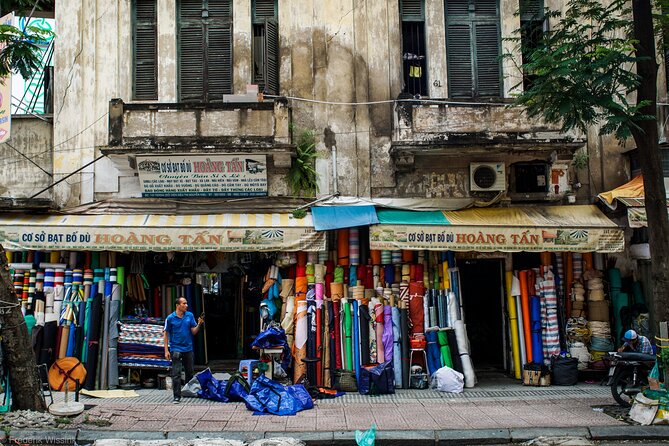
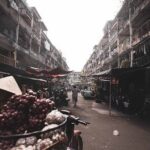
You’ll visit a local hardware market. Markets are where street photography becomes hands-on. You have motion, signage, packaging, metal textures, and people doing specific tasks. That combination is perfect for learning because you can practice framing while the scene is actively changing.
For your photos, the hardware market offers:
- Repeating shapes and materials you can use for composition
- Faces and gestures you can learn to capture without overthinking
- Small-scale “story moments” that don’t require a staged setup
A drawback here is also predictable: markets can be busy and loud. If you hate noise and chaos, treat this as your practice stop. You’re learning camera timing and angle choices, not getting a quiet museum experience.
Buddhist Temple Photography: Working Light and Angle Without Forcing the Scene
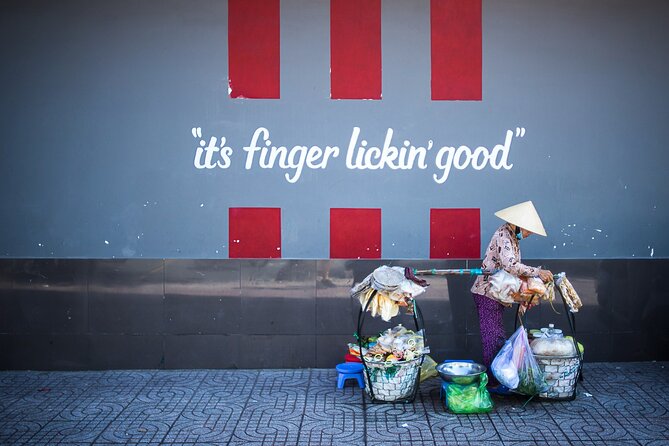
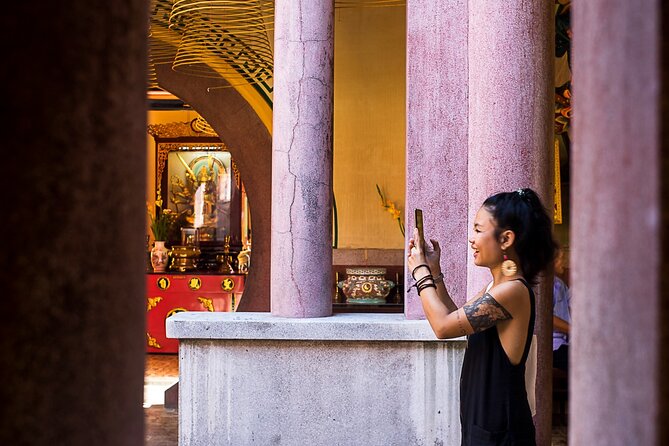
The walk includes a beautiful Buddhist temple. This is one of the places where you can shift gears from candid street scenes to calmer compositions and more deliberate angles.
Why temples help your photography:
- Lighting often creates strong shadows and contrast
- Decorative details give you texture and layering
- The environment encourages more respectful, slower shooting
Just keep your expectations grounded. This part of the tour is still a street photography experience, so you’ll want to be ready to work with what’s available—open areas, walkways, and architectural elements—rather than expecting a controlled photo studio.
How the 2 Hours 30 Minutes Really Feels
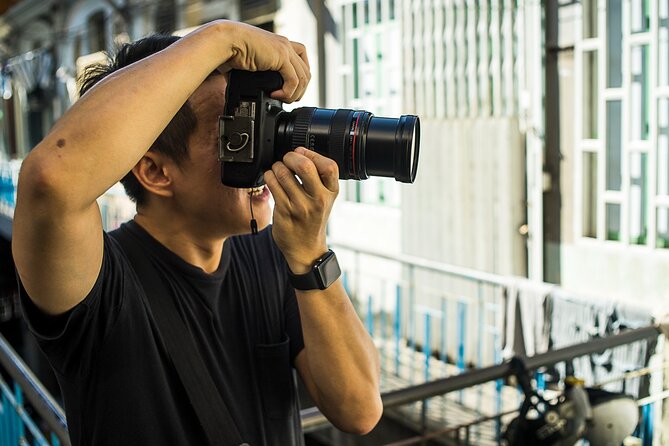
The total duration is about 2 hours 30 minutes, and the tour ends back at the meeting point. That timeline is long enough to learn, try things, and get feedback, but short enough that you don’t spend half a day thinking about logistics.
A helpful detail: locations are not too far apart, so the walking doesn’t feel extreme. It’s still a walking tour, so comfortable shoes matter. The good news is that the format stays practical—coffee at the start, guided stops with purpose, and an ending that lets you keep the rest of your day free.
Small Group Size: Why Max 10 People Helps You Improve Faster
With a maximum of 10 people, you’re not lost in the crowd. That matters for street photography, because the best coaching is tailored. If you’re struggling with angles or exposure, it’s easier for the host to notice and correct you when your group is small.
You also get a calmer pace for questions. If you want help interpreting a scene—what’s worth shooting, what to ignore, and how to approach a subject—you’re more likely to get direct answers.
What You’ll Actually Take Home: Angles, Light, and Approach
The best street photography advice sounds basic, then turns out to be huge in practice. Here, the focus stays on what you can apply immediately.
From the way the hosts teach, I’d expect you to leave with:
- A stronger habit for angles and light (not just pointing and clicking)
- Better instincts for what details make a photo feel intentional
- A more confident approach when you want to photograph people
This tour supports different experience levels. Beginners get structure and practice, while more advanced shooters can use the walk as a way to refine composition choices and experiment with perspectives.
And yes, it can work for phones. If you prefer the camera you already carry, this setup helps you get better results from it—without acting like you need a full studio kit.
Price and Value: Is $73 Worth It?
At $73 per person, the value depends on what you want from a city walk.
Here’s what you’re paying for, in real terms:
- Professional instruction from either Frederik Wissink or Kevin Lee
- Time spent on approach skills and composition, not just sightseeing
- Multiple location types in one morning (architecture, alleyways, market, temple)
- A small group size that supports more direct feedback
- Coffee or tea at the start
If your goal is simply to see District 1 and take a few photos, you could do it on your own. But if you want improvement—learning how to frame street life and photograph people with confidence—this price starts to look fair. The instruction component is the difference.
Who Should Book This Saigon Photography Walk
This is a good match if:
- You want street photography coaching in Ho Chi Minh City
- You’re photographing with a camera or a phone and want better framing
- You like local neighborhoods and real-life settings more than major attractions
- You enjoy morning light and can handle an early start
It’s less ideal if you want a relaxed “tour bus” style experience. This is active. You’ll walk, you’ll look closely, and you’ll practice.
Weather, Morning Timing, and What to Expect If Plans Shift
The experience requires good weather, and if it gets canceled due to poor weather, you’ll be offered a different date or a full refund. That’s a normal reality for outdoor walking tours in any city.
Plan for the timing too. A 7:00 am start can feel early, but it’s a smart choice for photography. Morning helps with light and reduces heavy congestion, which makes it easier to find clean frames and work with people in a calmer setting.
Should You Book This Saigon Street Photography Experience?
I think you should book it if you’re serious about improving your street photos—and you want guidance that’s practical, human, and rooted in real neighborhoods. The best part is the combination: pro hosts, small group size, and a morning route that moves through architecture, daily alley life, markets, and a temple without turning into a checklist of landmarks.
Skip it only if early mornings and walking feel like a bad trade for you. Also, if street photography makes you uncomfortable around people, plan to lean on the host’s approach guidance rather than trying to power through.
If you want a morning in Saigon where your camera finally feels like part of the day—not a barrier—this is the kind of tour that helps.
FAQ
Who hosts the Saigon street photography experience?
The experience is created with photographer Frederik Wissink and is hosted either by him or by Kevin Lee.
Where does the tour start?
You’ll meet at Cafe Linh77 Hàm Nghi, Phường Nguyễn Thái Bình, Quận 1, Ho Chi Minh City.
What time does the tour start?
The start time is 7:00 am.
How long is the street photography walk?
It lasts about 2 hours 30 minutes.
What places will you visit during the walk?
You’ll visit several photo stops, including French colonial and war-era apartment buildings, a local hardware market, and a Buddhist temple.
How large is the group?
The experience has a maximum of 10 travelers.
Is the tour suitable for beginners?
Yes. It’s suitable for aspiring and professional photographers of any level, including total beginners.
Is it a mobile ticket?
Yes, the experience includes a mobile ticket.
Is the meeting point near public transportation?
Yes, the meeting point is described as being near public transportation.
What happens if the weather is bad?
The experience requires good weather. If it’s canceled due to poor weather, you’ll be offered a different date or a full refund.