REVIEW · HO CHI MINH CITY
Ho Chi Minh: Historical City Scooter Tour
Book on GetYourGuide →Operated by AN Tours Vietnam · Bookable on GetYourGuide
A private scooter tour can get you oriented fast. In Ho Chi Minh, this 4-hour ride links major landmarks with everyday neighborhoods, so you finish with a real sense of Saigon, not just photos. I like the one-on-one feel with guides like Halsey, Henry, Hannah, Son, Midori, and Sunny, plus the care they take with pacing and traffic. I also love how the route mixes big sights (Notre Dame, War Remnants Museum) with places most people skip (the flower market, coffee stop, Chinatown markets). The main catch: scooter riding isn’t a good idea if you have back issues, mobility limits, or heart problems.
You’ll start with hotel pickup (usually 8:00AM or 1:00PM), then roll through an efficient loop that hits a lot of Ho Chi Minh’s districts in one day. The tour includes a good helmet and a raincoat, which matters because weather and road spray can change quickly.
If you hate sun, glare, and short walks between stops, plan to dress smart. Bring sunscreen and comfy shoes, and you’ll be glad you did.
In This Review
- Key things that make this scooter tour worth your time
- Fast, Focused Saigon on a Scooter
- The 4-hour game plan (and why 8 districts matters)
- Hotel pickup, helmets, and that real-traffic reality
- Stop One: Saigon Notre Dame Cathedral and French materials
- Post Office break: meeting the last handwritten letter-writer
- War Remnants Museum: stories that change how you see the city
- Thich Quang Duc Monument: protest, sacrifice, and memory
- The oldest apartment built from war: everyday life after the fighting
- Flower market open almost 24 hours: Da Lat flowers in the morning
- Vietnamese coffee at a 75-year-old shop with a rare method
- Chinatown, markets, and the 300-year-old Thien Hau temple
- Safety, comfort, and getting the most out of the ride
- Price and value: is $49 a smart spend?
- Who should book this scooter tour
- Should you book the Ho Chi Minh historical scooter tour?
- FAQ
- What time does the pickup usually happen?
- How long is the tour?
- What language is the live guide?
- What’s included in the price?
- What should I bring?
- Is this tour suitable for everyone?
Key things that make this scooter tour worth your time
- Private just for you: a small, focused experience with an English-speaking driver
- Major landmarks plus local life: cathedral, museums, flower market, and Chinatown
- War history handled carefully: stops that explain events and their impact on daily life
- Coffee and markets, not only monuments: a specific 75-year-old coffee shop and the big flower trade
- Feels safe with skilled riding: you’ll move through heavy traffic with practice and control
- Flexible pacing: the itinerary adapts so you’re not rushed like a bus tour
Fast, Focused Saigon on a Scooter
Ho Chi Minh City rewards people who move. On a scooter, you cut through the chaos at street level and get close to how the city actually works. In one afternoon, you can see a cathedral, a war museum, a monk memorial, a flower market, a coffee shop, and Chinatown—without spending your whole day in transit.
The private format is the big quality-of-life upgrade. Instead of waiting for a group to agree, you get a driver who can set the pace and manage turns and timing. That’s also why guides like Henry and Hannah tend to get praised: you’re not just watching, you’re talking.
You can also read our reviews of more city tours in Ho Chi Minh City



The 4-hour game plan (and why 8 districts matters)

The tour is built around a tight loop. You’ll cover a lot of ground in about four hours, and the route reaches across multiple districts in a single day. That matters if you only have one or two days in Saigon, or if you want to spend your next day deeper on the stops you liked best.
You’ll get hotel pickup and then start at the first major landmark. From there, the stops are arranged so the story flows: French-era architecture to colonial-style mail, then war-era memory, then religious protest, then life during and after conflict, then the city’s markets and everyday routines.
Hotel pickup, helmets, and that real-traffic reality
Your pickup is at your hotel lobby, with typical start times at 8:00AM or 1:00PM. You’ll ride with a driver who speaks English, and you’ll have a live guide (Vietnamese and English are supported). The tour also includes a helmet and a raincoat, so you’re not scrambling to find basic gear.
Riding in Ho Chi Minh traffic can feel intense if you’re new. The good news is you’re not driving yourself. With drivers like Son and Sunny, the emphasis tends to be on controlled lane changes and smooth stops—so you’re observing, learning, and taking photos rather than gripping the handlebars.
Tip: wear closed-toe shoes you can stand in. Even with minimal walking, you’ll want stable footing at crossings and around markets.
Stop One: Saigon Notre Dame Cathedral and French materials
Your first stop is the city’s famous cathedral. What makes it more than a quick look is the way it anchors Ho Chi Minh’s layered history. This is a landmark people photograph for its scale, but it’s also a starting point for understanding how French influence shaped parts of the city’s early built environment.
Plan to pause. Give yourself a minute to look up and then around. The façade pulls your eyes forward, but the neighborhood streets around it tell you what the area feels like today.
Practical note: if it’s bright out, sunglasses help immediately. You’ll be standing in open areas early on.
Post Office break: meeting the last handwritten letter-writer
Next comes the Saigon Post Office. This stop adds a human moment that turns architecture into living culture. You’ll meet a 90-year-old man who is described as the last hand-written letter-writer in Vietnam.
That’s the kind of detail you remember later: a simple act—handwriting a letter—set against a city that’s rapidly modernizing. It also gives you a chance to slow down after traffic, look for postal details, and ask questions about how that tradition has survived.
Even if you don’t write letters yourself, you’ll come away understanding why the post office matters here beyond postcards.
You can also read our reviews of more historical tours in Ho Chi Minh City






War Remnants Museum: stories that change how you see the city

Then you get to the War Remnants Museum. Vietnam’s modern identity can’t be separated from war, and this is where the tour takes that head-on. The museum isn’t just about dates and headlines. It’s presented as a place to hear unknown or less-discussed stories about how conflict affected Vietnam and its people.
This is also where a good guide makes the difference. With guides like Halsey, the tone tends to be respectful and careful, focusing on what war did to families and daily life. If you’re sensitive to heavy topics, know you can still move at your own pace inside the museum areas while your guide explains key themes.
Thich Quang Duc Monument: protest, sacrifice, and memory
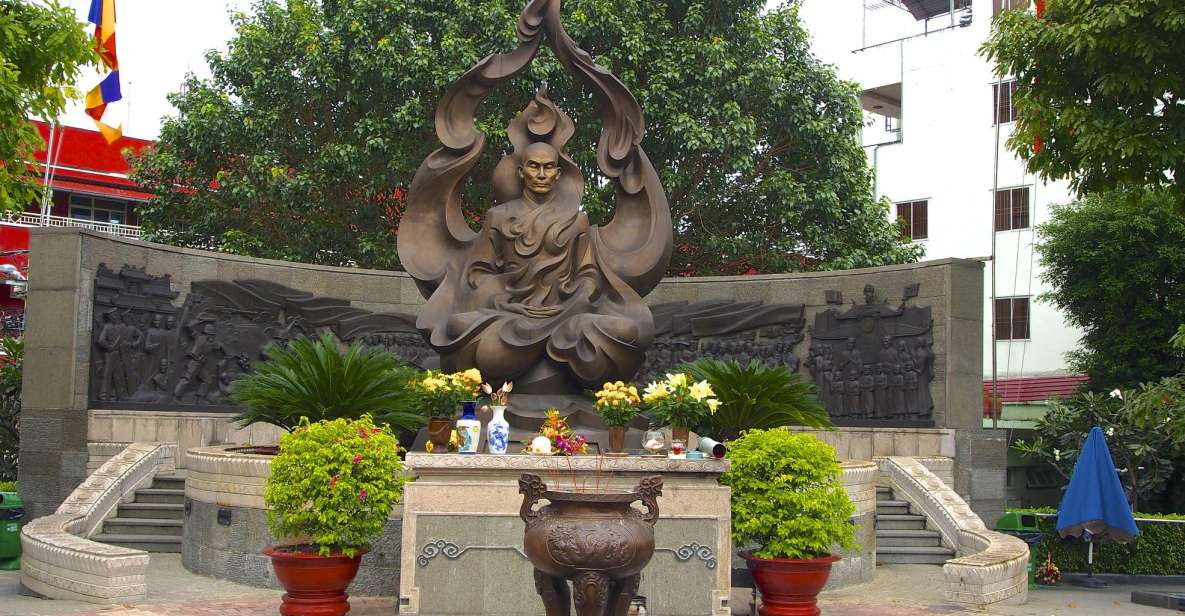
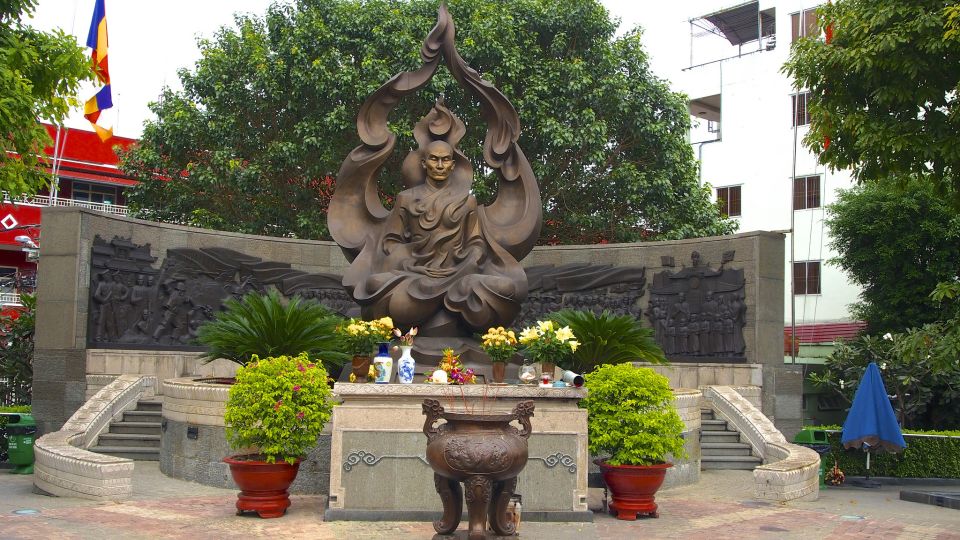
After the museum, you visit the Thich Quang Duc Monument, honoring the monk who self-immolated in 1963 as a protest. It’s a powerful stop, and it also serves as a bridge: you’re leaving wartime history and entering a story about political pressure, religion, and moral action.
Look closely at how the site is arranged and how people respond to it. It’s the kind of place where you don’t need long explanations to feel the weight. A good guide will help you connect the monument to the larger political context without turning it into shock value.
The oldest apartment built from war: everyday life after the fighting
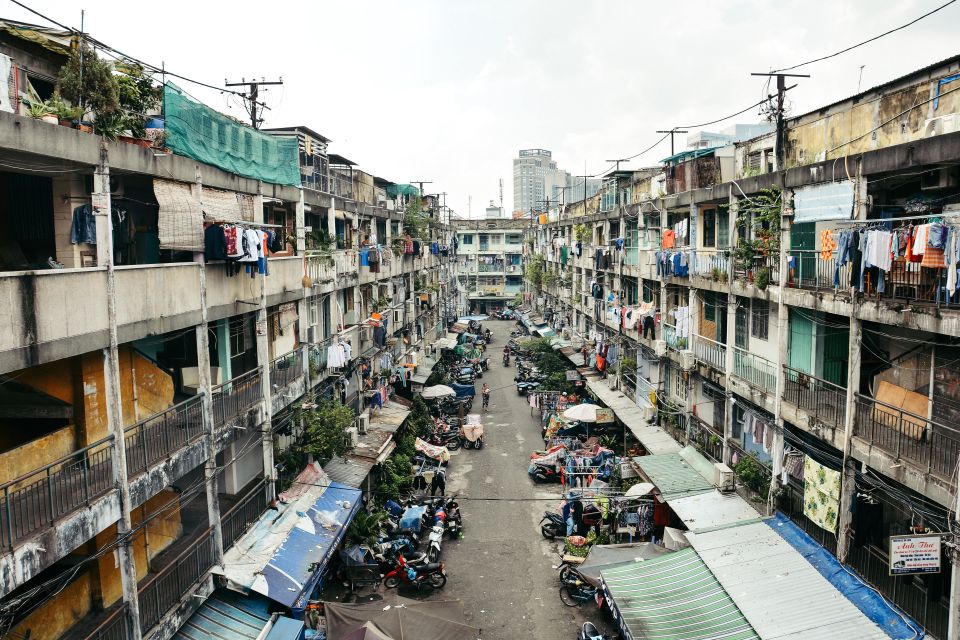
Next, you’ll see the oldest apartment in Ho Chi Minh City, described as being built from the war. This stop is one of the most interesting because it shifts the focus from monuments to living space.
You’ll walk through how locals live there and hear the historical stories behind the building. That matters because war doesn’t just happen in battlefields—it shows up in housing, repairs, and the way neighborhoods rebuild.
If you like places that feel practical rather than staged, you’ll likely enjoy this segment. It’s also a good breather between museum-heavy stops and market energy.
Flower market open almost 24 hours: Da Lat flowers in the morning
Then you roll to the biggest flower market in the city. It’s started in 1980, and it operates almost 24 hours a day, which is wild when you think about how early supply chains need to run.
The key detail: flowers are transferred from Da Lat each morning. So you’re not seeing a random display. You’re seeing a fresh trade system that supports households, ceremonies, and businesses across the city.
Take a slow walk if you can. The goal isn’t to buy anything; it’s to understand how the market moves volume, quality, and timing. If you’re visiting during cooler seasons, the market can feel especially lively with color and scent.
Tip: go ready for foot traffic. Even a short stroll here is still standing, turning, and stepping around stalls.
Vietnamese coffee at a 75-year-old shop with a rare method
Next is Vietnamese coffee, served at a 75-year-old shop using a preparation method described as one of only three in Vietnam. This is one of those stops where the tour gives you context, not just a drink.
Coffee in Vietnam is more than caffeine. It’s social, it’s routine, and it’s tied to how people slow down in the heat. With a good explanation from your guide, you’ll start noticing differences in aroma, strength, and how the drink is managed before you even taste.
If you’re coffee-avoidant, the tour still makes sense here because the shop is a cultural snapshot—how a long-running business survives, what it emphasizes, and how locals treat a break.
Chinatown, markets, and the 300-year-old Thien Hau temple
The tour ends with Chinatown, where you’ll see the culture shaped by generations of Chinese-Vietnamese residents. The area is described as home to 1.5 million people across many families and traditions.
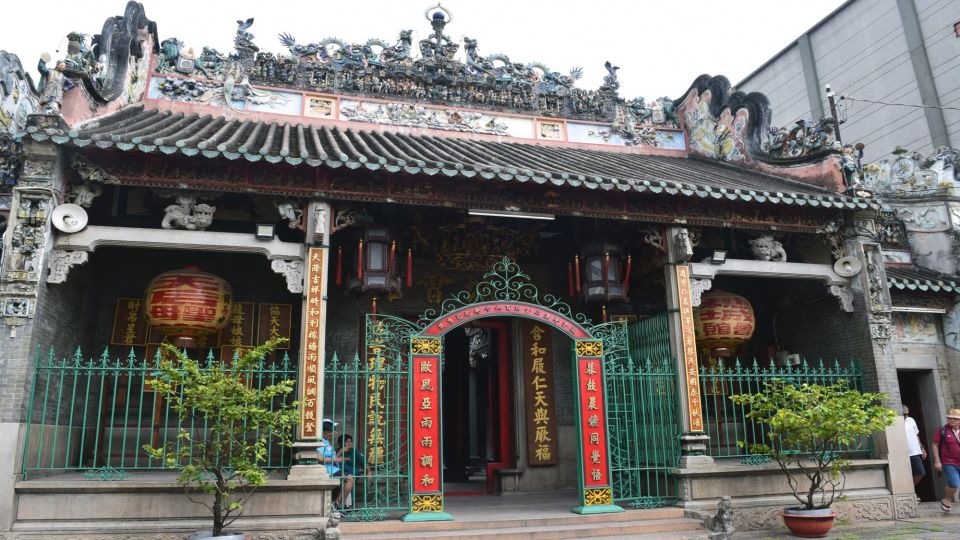
You’ll visit a 300-year-old temple, with a special mention of Thien Hau. This is the stop that often feels most visually rewarding because you get layered religion, community life, and the surrounding market economy all in one place.
The tour also references busy market areas, including a motorbike market and a bird market. Even if you’re not shopping, watching how people trade and talk gives you a better feel for Chinatown than any single photo angle.
Practical note: temples and market streets can be cooler or warmer depending on shade and crowding. Bring a light layer if you run cold easily, then remove it as needed.
Safety, comfort, and getting the most out of the ride
Scooter tours are all about balance: you want the freedom of movement without feeling stressed. The tour’s included helmet and raincoat are a real help, especially if clouds roll in or the road gets wet.
The bigger factor is driver skill. Some of the guide/driver combinations you might meet—like Son, Sunny, or Midori—are praised for maneuvering through heavy traffic while still keeping the ride controlled. That’s what you want: predictable turns, planned stops, and respect for road flow.
If you’re anxious about riding, do two things:
- Sit close, keep your feet planted, and hold on only as much as needed.
- Listen to your driver’s cues and follow their pace. Your job is to relax and observe.
Also, the tour isn’t suitable for wheelchairs and may not work well if you have mobility impairments, back problems, or heart problems. If any of those apply, skip this and choose a walking or car-based tour instead.
Price and value: is $49 a smart spend?
$49 per person for a private, 4-hour historical scooter tour is a strong value when you look at what’s included: entry tickets for the listed stops, a good helmet and raincoat, pickup from your hotel, and a driver with fluent English. You also get a live guide in Vietnamese and English.
Most “history days” in cities like this either cost more or drop the quality by cutting stops or turning the day into a crowded group shuffle. Here, the trade-off is time and focus: you get a lot of sights, but in a way that still lets you absorb details.
If your travel style is active—short walks, quick museum chapters, and market wandering—this price-to-time ratio tends to make sense fast. If you prefer deep museum reading and long café sessions, you may want to treat this as your orientation tour, then return later to your favorite stops.
Who should book this scooter tour
Book it if:
- You want a fast orientation to Saigon and want to cover many districts in one afternoon
- You like history, but also like seeing how people live now
- You enjoy markets, coffee culture, and street-level details
- You’re comfortable riding as a passenger and can handle some steps at stops
Skip it if:
- You can’t ride comfortably due to back, mobility, or heart-related concerns
- You strongly dislike crowds or market environments
- You hate sun and can’t manage basic heat protection (sunscreen, sunglasses)
Should you book the Ho Chi Minh historical scooter tour?
If you want one day that turns Saigon from a blur into a story, this is a smart buy. The tour hits the major landmarks you’d expect—cathedral, post office, War Remnants Museum—then adds the stops that make it feel real: the monk memorial, the older apartment housing history, the flower market supply chain, a long-running coffee shop, and Chinatown with Thien Hau.
I’d book it if you’re the type who likes to get your bearings quickly, then choose what to explore more deeply later. If you’re coming for pure comfort or slow-paced sightseeing, you’ll likely prefer a more gentle format.
FAQ
What time does the pickup usually happen?
Your pick-up time is either 8:00AM or 1:00PM. You’ll wait at your hotel lobby for the team.
How long is the tour?
The tour lasts about 4 hours.
What language is the live guide?
The live tour guide provides Vietnamese and English.
What’s included in the price?
Included are all attractions listed on the tour, a good quality helmet and raincoat, a private driver with fluent English, and entrance tickets.
What should I bring?
Bring comfortable shoes, sunglasses, and sunscreen.
Is this tour suitable for everyone?
It is not suitable for people with back problems, mobility impairments, heart problems, or wheelchair users.