REVIEW · HO CHI MINH CITY
City Sightseeing Saigon Bus Tour
Book on Viator →Operated by City Sightseeing Ltd - USA and Middle East · Bookable on Viator
Saigon moves fast, and this bus keeps up. I like the open-top deck views and the hop-on hop-off flexibility, so you can sample key sights without locking your whole day to one plan. You also get multilingual audio commentary plus free Wi‑Fi and a guidebook for your breaks. One main catch: figuring out where your bus starts and which line to board can be confusing, especially if you’re juggling vouchers and two different routes.
For the price (listed at $21 per person), this tour is a practical way to get your bearings. In roughly 75–80 minutes per loop, you pass major hits like the War Remnants Museum, Ben Thanh Market, Saigon Notre-Dame Cathedral/Central Post Office, and the Independence Palace area. It’s not a slow, sit-and-stare museum day. It’s a smart orientation plus a chance to return later on your own time.
In This Review
- Key things to know before you ride
- How the hop-on hop-off layout works: two routes and quick line changes
- Timing that fits your day: 75–80 minutes, plus frequent buses
- Start points and finding your bus without stress
- Red Route: where the action starts
- Blue Route: a different starting street
- Practical trick that saves time
- Red Route highlights: Opera House, museums, Ben Thanh, and the cathedral core
- Saigon Opera House (Stop 1)
- Nguyen Hue Street (Stop 2)
- Nha Rong Wharf (Stop 3)
- Tran Hung Dao Statue area (Stop 4)
- War Remnants Museum area (Stop 5 and Stop 6 region)
- Pham Ngu Lao Street / Beer Street (Stop 7)
- Ben Thanh Market (Stop 8)
- Independent Palace (Stop 9)
- Saigon Notre-Dame Cathedral / Central Post Office (Stop 10)
- Blue Route detours: flower market, pagodas, and Binh Tay Market
- Liberty Hotel area start (187 Pham Ngu Lao)
- Ben Thanh (reappears)
- War Remnants Museum (reappears)
- Ho Thi Ky Flower Market (Stop 4 region)
- Ong Bon Pagoda (Stop 6 region)
- Binh Tay Market (listed)
- Thien Hau Pagoda and Van Phat Pagoda (listed)
- Phuoc An society’s premises (listed)
- Open-top deck realities in Saigon: views versus comfort
- Audio guide, multilingual commentary, and how to use it right
- Free Wi‑Fi, guidebook maps, and how to make the most of your breaks
- Value for $21: what’s included and what you’ll pay separately
- Who this Saigon bus tour suits best
- Should you book City Sightseeing Saigon Bus Tour?
- FAQ
- How long is the tour?
- How often do the buses run?
- What time is the first and last departure on the Red Route?
- What time is the first and last departure on the Blue Route?
- Where do I exchange a voucher for the Red Route?
- Where is the Blue Route starting point?
- Can I use a mobile ticket or voucher?
- Is food or attraction entry included?
- What if I need to cancel?
Key things to know before you ride
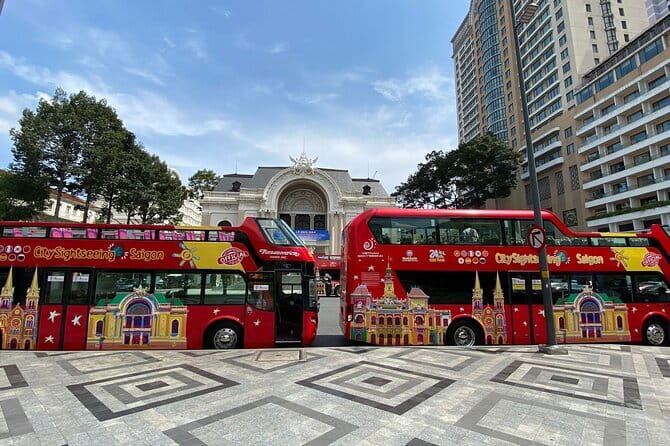
- Two routes, not one: Red and Blue cover the core highlights, with specific stop connections if you want to mix them.
- Short loop time: About 75–80 minutes per full circuit, with frequent departures during the day.
- You’ll want shade strategy: Upstairs is great for views, but weather can change fast.
- Audio is helpful, not magical: Plan to use it as context while you watch the streets go by.
- Bring your voucher: Mobile and paper vouchers are accepted, and there’s a ticket exchange counter at the main start point.
How the hop-on hop-off layout works: two routes and quick line changes
The biggest reason this works in Ho Chi Minh City is simple: you can join and leave the bus at designated stops. That means you’re not trapped on a single route like a one-size-fits-all sightseeing coach. Instead, you can hop out at Ben Thanh for shopping, then hop back on later to keep moving.
There are two routes: the Red Route and the Blue Route. They both hit big landmarks in the center area, but they’re not identical. If you want a fuller day, the key is knowing where the routes link. The info you’ll be given says you should switch lines at Stops 6, 7, and 8 on the Red Route, which correspond to Stops 1, 2, and 3 on the Blue Route. In practice, that’s your cue to stop thinking “one straight line” and start thinking “a network.”
If you like a clean plan, start on one route, then switch only once or twice. If you like flexibility, stay on whichever bus comes next—just check the stop number before you climb aboard.
You can also read our reviews of more city tours in Ho Chi Minh City



Timing that fits your day: 75–80 minutes, plus frequent buses
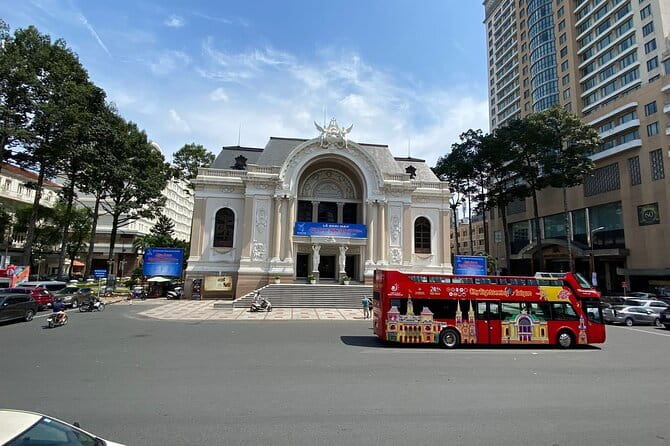
This is built for momentum. The Red Route runs about 75 minutes per loop with buses every 30 minutes. It starts at 9:00am from Stop 1 (Saigon Opera House) and finishes at 4:00pm.
The Blue Route runs about 80 minutes per loop with buses every 45 minutes. It starts at 9:00am but its last departure from Stop 1 (on that route, listed as the main starting point) is 3:45pm.
Those timings matter because you don’t need to be perfectly on time. You can aim for “close enough,” ride a loop, and jump off where it clicks for you. The loop length also means you’ll likely get more street-level awareness than you would if you only saw one museum and then went straight back to your hotel.
Start points and finding your bus without stress
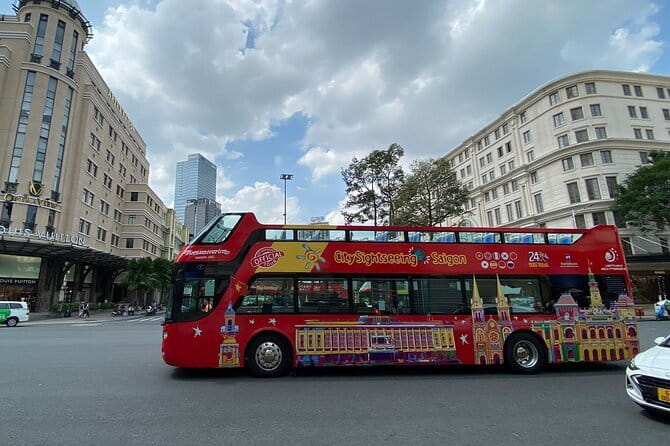
This is the part I’d plan for like a checklist item.
Red Route: where the action starts
For the Red Route, Stop 1 is the Saigon Opera House. If you need to exchange your voucher, the tour info points you to a ticket exchange counter on the side of the Saigon Opera House facing the Continental Hotel. That’s your best anchor when you’re trying to avoid wandering around with your phone out.
Blue Route: a different starting street
For the Blue Route, the starting point is 187 Pham Ngu Lao Street, and the bus stop is in front of the Liberty Hotel. Same city, different starting pin—so don’t assume the Red Route stop will work for the Blue.





Practical trick that saves time
Before you go, I’d use the operator’s interactive map (the idea is to confirm the bus stop locations visually). In a city where sidewalks can be chaotic and signage varies by block, that simple step makes your first boarding much calmer.
Red Route highlights: Opera House, museums, Ben Thanh, and the cathedral core

The Red Route is the easiest one to call “the main show,” because it threads together Saigon’s biggest, most recognizable stops.
Saigon Opera House (Stop 1)
You begin at one of the city’s best-known landmarks. Even if you don’t go inside, the area gives you that classic Central Saigon feel. This is also the anchor point for ticket exchange, which makes it practical for day one.
Nguyen Hue Street (Stop 2)
This is your quick hit of the city’s everyday energy. Think wide boulevard views and a feel for how Saigon’s street life flows around landmark buildings.
Nha Rong Wharf (Stop 3)
A good stop for understanding the city’s relationship to waterways. You’ll be right near the docks area, so it’s a natural place to picture older commercial movement even if you’re mostly sightseeing from the bus.
Tran Hung Dao Statue area (Stop 4)
This gives you another “urban monuments” moment, and it’s helpful for orientation. You’ll also be in a stretch that’s easy to pair with nearby photo stops.
War Remnants Museum area (Stop 5 and Stop 6 region)
The itinerary lists both Ho Chi Minh Campaign Museum and War Remnants Museum along this side of the route. If you only have time for one serious history stop, War Remnants Museum is the one most people circle first for a reason: it’s direct, heavy, and impossible to ignore. Plan your time so you’re not rushing through because the bus loop is short and frequent.
Pham Ngu Lao Street / Beer Street (Stop 7)
This is where the city’s traveler-friendly scene shows up fast. If you want a break from museum intensity, this is a good place to hop off for an easy walk, quick snacks, and a reset.
Ben Thanh Market (Stop 8)
Ben Thanh is the classic Saigon shopping landmark. Even if you’re not buying much, it’s useful for people-watching and understanding what’s sold where. Just keep your expectations realistic: markets can be busy, and you’ll want to move with a plan so you don’t lose time.
Independent Palace (Stop 9)
This stop gives context to the city’s political story and 20th-century history. It’s a strong counterpoint to the war-focused museum area, and it also helps you connect the city’s different historical “zones” you’re seeing from the bus.
Saigon Notre-Dame Cathedral / Central Post Office (Stop 10)
This is your big postcard pair. You’ll pass the cathedral and the Central Post Office area, which is great for photos and a relaxed walk when you’re ready.
Blue Route detours: flower market, pagodas, and Binh Tay Market
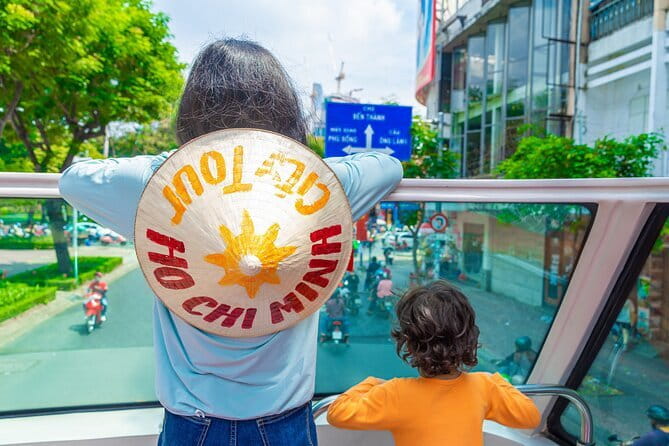
If Red Route feels like your “greatest hits,” Blue Route is your “add flavor” option. It connects you to markets and more local-feeling stops that can break up the big tourist landmarks.
Liberty Hotel area start (187 Pham Ngu Lao)
Blue begins right in the same general neighborhood as the traveler hub, which makes it easy to work into the day after you’ve already been around Pham Ngu Lao.
Ben Thanh (reappears)
Ben Thanh Market is also listed on the Blue Route. That’s useful: it means you can pick up or switch without totally restarting your sightseeing plan.
War Remnants Museum (reappears)
War Remnants Museum is listed again on this route too. If you hopped off earlier but wanted another try, this makes it easier to return later the same day.
Ho Thi Ky Flower Market (Stop 4 region)
This is a great palate cleanser. Flower markets give you color and texture you don’t always get in a day dominated by big buildings and museums.
Ong Bon Pagoda (Stop 6 region)
A stop like this can help you see how everyday spiritual life sits alongside street commerce. Even a short visit can change the vibe of your day.
Binh Tay Market (listed)
Binh Tay is on the route. If you want to shop beyond the most famous tourist market, this is a smart alternate.
Thien Hau Pagoda and Van Phat Pagoda (listed)
These pagoda stops give you repeat chances to appreciate religious architecture and local routines. They’re also a helpful break if you’re feeling museum fatigue.
Phuoc An society’s premises (listed)
This is included as a stop on the Blue Route. If you’re hoping for a specific “must-see” here, you may need to manage expectations because the details of entry aren’t provided. The value is that you’ll have an opportunity to look around and decide if it’s worth your time.
Open-top deck realities in Saigon: views versus comfort
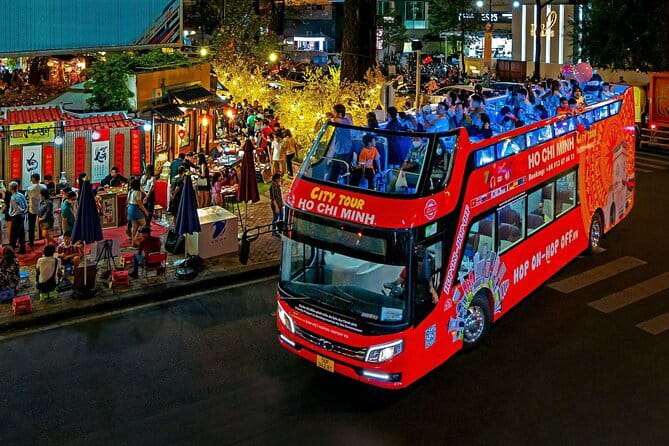
The open-top deck is exactly why people choose this bus. You get views across major streets in a way you can’t from a closed coach.
But Saigon weather is not shy. The tour info and the setup mean that upstairs can mean more exposure when conditions change. My advice: if the sky looks unstable, sit where you can get shade quickly, and keep a light layer handy. If you’re sensitive to heat, consider the air-conditioned option inside when available.
If you want the best experience, combine viewing with timing: do photos early in the route, then hop off where you can slow down—especially around markets and museum areas.
Audio guide, multilingual commentary, and how to use it right

The bus includes audio commentary in several languages. That’s a big deal when you want a guided overview without booking separate guided tours for every stop.
Still, don’t treat the audio as your only source of meaning. Use it as a “what to look for” guide while you’re rolling past key landmarks. For example, when the bus passes major institutions (Opera area, museums, cathedral/post office), the narration can help you identify what you’re seeing and why it matters.
If you find the audio a bit slow or repetitive, that doesn’t mean the tour failed. It just means the bus does one main job well: moving you efficiently between sights so you can decide what deserves your deeper time.
Free Wi‑Fi, guidebook maps, and how to make the most of your breaks
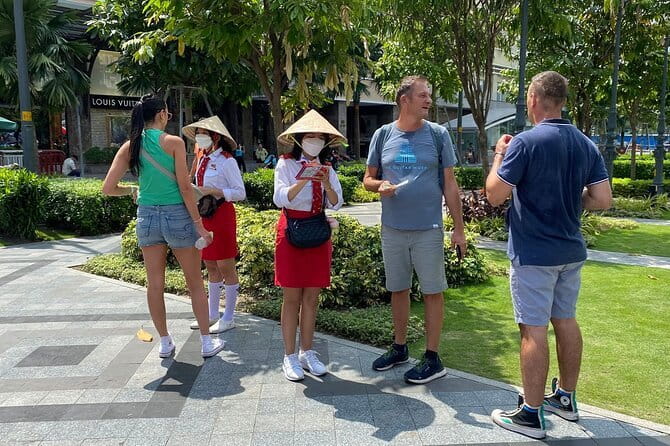
This isn’t just a ride. You get a free guidebook with maps, recommendations, timetables, and coupons. That’s handy in Ho Chi Minh City because it helps you plan short walks from the bus stops without guessing.
The free Wi‑Fi is also useful for practical tasks:
- checking opening times before you commit to a museum or market block
- pulling up your next stop number
- confirming whether your next hop-off is the one you intended
A good rhythm is to watch the route once (listen lightly, note landmarks), then get off at one or two stops for deeper time. The guidebook helps you choose those “deeper time” stops instead of letting the bus do all the work.
Value for $21: what’s included and what you’ll pay separately
At $21 per person, you’re mainly paying for transportation between major landmarks plus orientation and planning tools. The tour includes:
- 1-day or 2-day hop-on hop-off access
- stops near major sights
- free Wi‑Fi
- a free guidebook (maps, recommendations, timetables, coupons)
- access to two routes
What’s not included:
- food and drink
- tips
- entry to attractions
That last point is important. If you hop off at places like museums, you’ll still need to budget for entry fees. The good news is the bus helps you group your paid stops so you’re not spending your day in transit. It’s a cost-effective way to stack sightseeing.
Also note: bus duration is short per loop, so your money works best when you plan a mix of quick photo/coffee stops and one or two longer sights.
Who this Saigon bus tour suits best
This tour fits best if you want:
- a fast way to get your bearings in Ho Chi Minh City (Saigon)
- an easy way to reach the center’s big-name landmarks without wrestling with multiple taxis
- flexibility to do museums and markets in the order that matches your energy
It’s also a good option for first-timers who want a “first day plan” and for repeat visitors who’d rather pick a few highlights and then wander. If you dislike guided commentary at all, you can still use it as a transport pass—just treat the audio as optional context.
If you’re someone who needs lots of quiet and lots of time at each stop, you may find the loop-style pacing a bit demanding. This is built for movement, not for long stays at every location.
Should you book City Sightseeing Saigon Bus Tour?
I’d book it if you’re spending limited time in Saigon and you want the top sights in one efficient package. The combination of hop-on hop-off convenience, two routes, and a guidebook with maps/coupons is a strong value for the money. You’ll also appreciate the clear start anchors: Saigon Opera House for the Red Route and the Liberty Hotel frontage for the Blue Route.
I’d think twice if you hate “find your stop first” situations or if you’re arriving already stressed and don’t want to manage voucher exchange at the start. If that’s you, do one simple thing: check the stop locations on the interactive map before you step outside.
Overall, this is a practical, city-logic kind of tour. It won’t replace day-to-day walking and a real museum afternoon. It will help you get there with less guesswork.
FAQ
How long is the tour?
The Red Route is listed at about 75 minutes per loop, and the Blue Route about 80 minutes.
How often do the buses run?
On the Red Route, buses run every 30 minutes. On the Blue Route, buses run every 45 minutes.
What time is the first and last departure on the Red Route?
The Red Route first departure is 9:00am and the last departure from Stop 1 is 4:00pm.
What time is the first and last departure on the Blue Route?
The Blue Route first departure is 9:00am, and the last departure from Stop 1 is 3:45pm.
Where do I exchange a voucher for the Red Route?
The ticket exchange counter is located on the side of the Saigon Opera House, facing the Continental Hotel.
Where is the Blue Route starting point?
The starting point is 187 Pham Ngu Lao Street, with the bus stop located in front of the Liberty Hotel.
Can I use a mobile ticket or voucher?
Yes. Mobile and printed paper vouchers are both accepted.
Is food or attraction entry included?
No. Food and drink are not included, and entry to attractions is also not included. Tips are not included either.
What if I need to cancel?
You can cancel for a full refund if you cancel at least 24 hours before the experience start time. If you cancel less than 24 hours before, the amount paid is not refunded.