REVIEW · HO CHI MINH CITY
Private VIP Cu Chi Tunnels Tour by Car, No Crowds
Book on Viator →Operated by Saigon Taste Tours · Bookable on Viator
Underground war stories, above-ground calm. This private Cu Chi Tunnels tour pairs a quiet countryside drive with hands-on history, so you’re not stuck in a loud, stop-and-go crowd. I like how the day mixes big-picture context (film and diagrams) with the sensory reality of narrow tunnels, traps, and reconstructed chambers.
My other favorite part is the wartime snack: hot tea and tapioca, the kind of food Vietnam soldiers ate during the war. One drawback to flag early: the tunnel section is very tight and involves crawling and crouching, so it’s not ideal if you hate enclosed spaces or have mobility limits.
In This Review
- Key highlights to look for
- The ride out of Saigon: rice fields, slow pace, and fewer crowds
- Film first: using the documentary to make the tunnels click
- Booby traps and narrow tunnels: the moment you feel history in your body
- Guerrilla ingenuity you can point to: weapons, traps, and truck-tire sandals
- Tea and tapioca: a wartime meal break (and why it matters)
- Why “private by car” is more than a marketing phrase
- Price and value: what your $97 covers in real terms
- Who this tour suits best (and who should rethink it)
- Should you book this Cu Chi Tunnels private car tour?
- FAQ
- Is pickup included?
- How long is the Cu Chi Tunnels tour?
- What’s included in the ticket price?
- Is the documentary included?
- Can I shoot a rifle?
- What if weather is bad?
Key highlights to look for
- Private car pickup and drop-off around central Saigon so you spend less time herding with strangers.
- A documentary plus tunnel diagrams first to help the site make sense before you go underground.
- Booby traps and trapdoors shown at close range alongside reconstructed rooms.
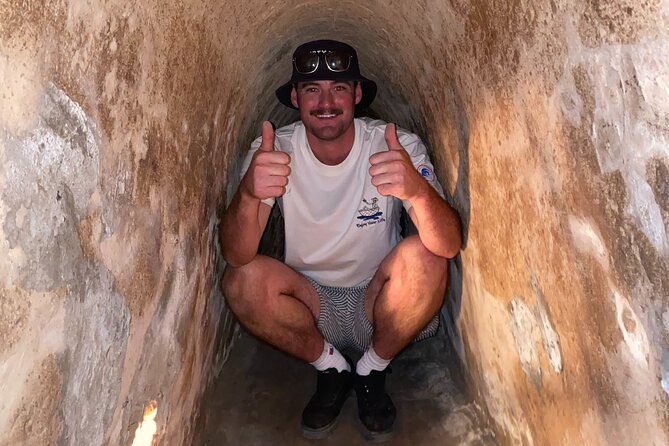
- Crawling/walking through extremely narrow passages for a real sense of what guerrilla life demanded.
- Guerrilla “kitchen” and workshop details including homemade weapons and sandals made from truck tires.
- Optional shooting range with a surcharge, including AK47 or MK16 rifles in a supervised area.
The ride out of Saigon: rice fields, slow pace, and fewer crowds
Cu Chi is far enough from Ho Chi Minh City that the drive matters. You’ll get picked up from central Saigon (the starting point is the Saigon Opera House area) and then head beyond the usual tourist stops into a calmer rhythm of green rice fields. The tour’s timing gives you about two hours of travel each way, which sounds long until you realize it’s part of the experience. You start the day breathing easier, not immediately overwhelmed by ticket lines and signage.
Because this is private, you don’t get the same mass-group feel. Your guide can set the tone on the road—what you’ll see later, what to watch for, and how to connect the war story to the landscape. I also appreciate that the ride is in an air-conditioned car or minivan, which is a real quality-of-life detail in Ho Chi Minh City’s heat and humidity.
Practical tip: dress for the car ride comfort. You’ll likely get some shade time outdoors at the tunnel site, but the transitions can be fast, and you’ll want to stay comfortable for the crawling portion later.
You can also read our reviews of more private tours in Ho Chi Minh City


Film first: using the documentary to make the tunnels click
Before you go underground, you watch a short documentary about the Vietnam War. This isn’t just filler. When you arrive at a site like Cu Chi, it’s easy to see tunnels and tools as museum objects. The documentary helps you understand why the system mattered—how underground life supported guerrilla operations and how the tunnel network was built to survive heavy attacks.
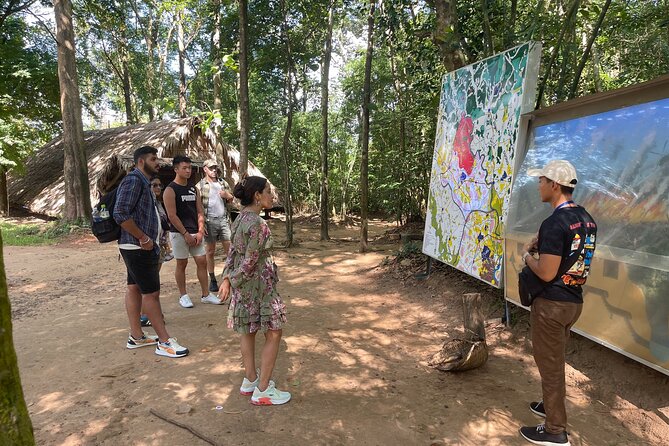
After the film, you’ll be shown a diagram of the Cu Chi tunnels and how sections connect, with mentions of rooms and functions you’ll later recognize when you see reconstructed areas. This ordering is smart: it gives you mental wayfinding so the site feels coherent instead of random.
The value here is pacing. If you’re the type of traveler who likes to know why something exists before you inspect it, this format works well. You won’t have to guess at the purpose of every corridor and chamber.
Booby traps and narrow tunnels: the moment you feel history in your body
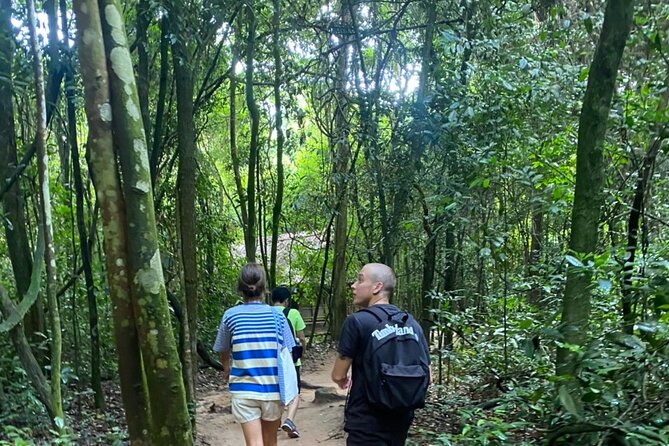
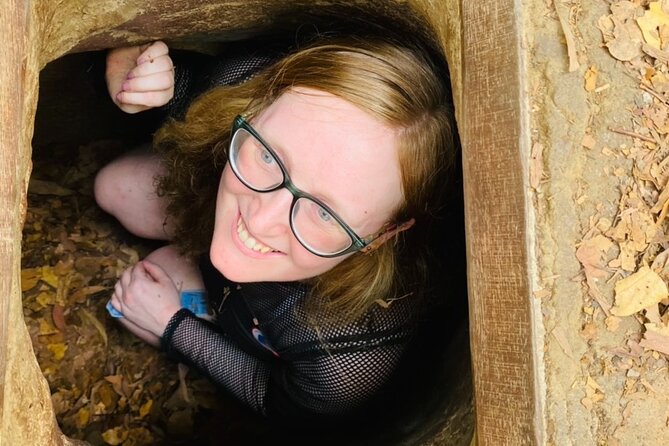
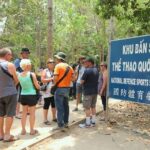
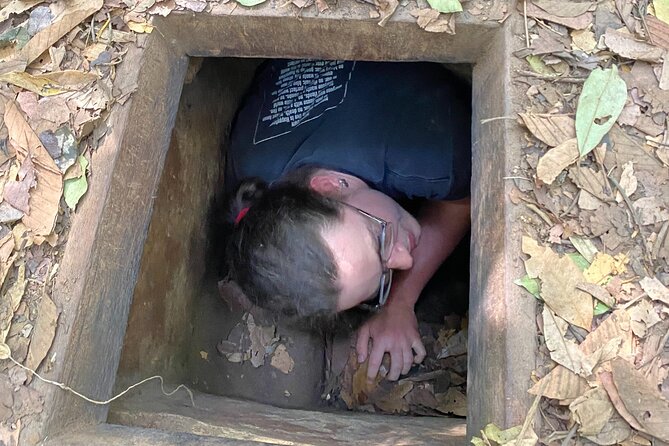
The core of the tour is the tunnel experience, and it’s handled with a mix of explanation and physical reality. You’ll start by seeing booby traps and trapdoors, then the highlight shift happens: walking and crawling through very cramped and narrow passages.
This is where your expectations should be honest. Cu Chi tunnels aren’t built for comfort, and the experience is designed around that fact. You’re not just looking at tunnels; you’re physically moving through them. Even with reconstructive elements and guidance, the narrowness changes your sense of space. It’s the kind of moment that makes war history feel personal, not abstract.
A good guide makes this part easier to handle. The guide can point out what you’re seeing—why certain layouts exist, how trap concepts worked, and what the reconstructed chambers are meant to show. From the guide feedback I’ve seen, people really respond to hosts who explain with clarity and humor, like guides such as Harry and James, who were praised for keeping the day understandable and lively.
Possible drawback again, but worth repeating: if claustrophobia is a serious issue for you, the crawling section may be too much. The tour does include time to observe reconstructed areas, but the physical tunnel portion is still central.
Practical tip: go slow. You don’t win points for rushing. You’ll also want to keep an eye on your footing and follow instructions exactly, because the narrow space is part of the safety approach.
Guerrilla ingenuity you can point to: weapons, traps, and truck-tire sandals
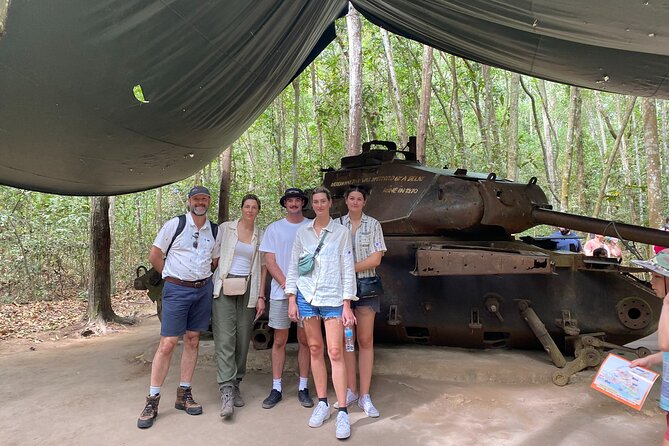
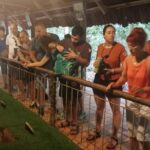
After the tunnel crawl, you’ll shift into more workshop-style history. You’ll learn about handmade weapons and traps used during the Vietnam War, and you’ll see examples of how guerrillas engineered solutions with limited resources.
One detail that stands out is the mention of sandals made from truck tires. It’s small, but it’s the kind of practical invention that tells you a lot about daily life during conflict. Instead of only hearing about tactics, you get a picture of survival needs—foot protection, movement, and durability.
This portion also helps you separate “war facts” from “war life.” The Cu Chi story can easily turn into generic military history if the guide only lists dates. A strong host ties the items to function: how traps and tools fit into defensive strategy, how homemade equipment mattered when supply lines were uncertain, and how ingenuity replaced industrial scale.
Guides like Sang and Binh have been noted for being friendly and fluent in English, and for making the story click through explanations and straightforward answers. That matters, because the site is intense enough without language gaps.
Practical tip: ask questions. This is the part where curiosity pays off. If you care about how guerrillas adapted day-to-day, this is your window.
Tea and tapioca: a wartime meal break (and why it matters)
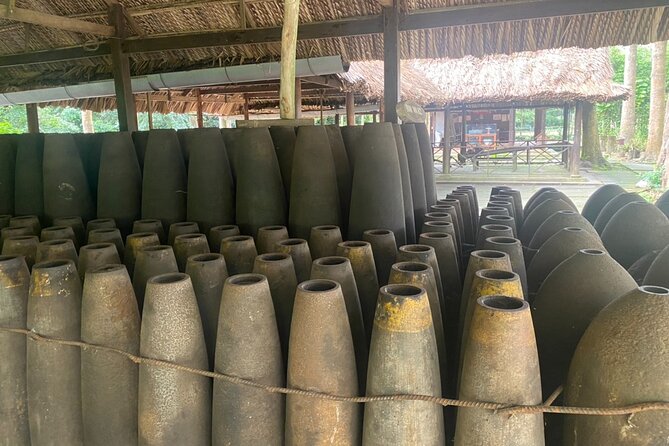
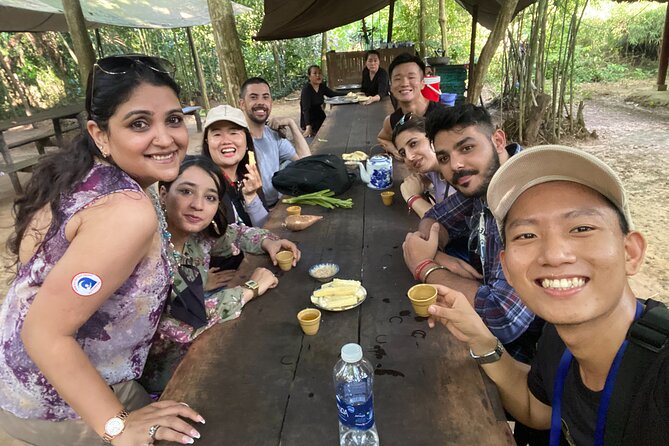
At the last tunnel stop, you get a real pause: hot tea and tapioca. The tour notes that tapioca was part of the wartime food for Vietnam soldiers, which gives the snack more meaning than a random break.
Why I like this: it slows the day down right after the most physically intense segment. You refuel, cool off a bit, and reset your brain. And because it’s tied to wartime life, it makes the history feel connected to routine rather than only action.
Even if you’re not a “food on tours” person, this snack is worth treating as part of the learning. Tapioca and tea are simple, and that simplicity is the point: the underground system wasn’t built for comfort; it was built to keep people working and surviving.
Optional add-on: shooting range
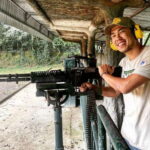
If you want an extra, you can visit a shooting range for an additional cost. The tour specifies that options may include AK47 or MK16 rifles in a well-supervised area. This is not included in the base price, but it can be a memorable contrast to the tunnel experience.
My quick caution: if you’re going to do the shooting, be realistic about your time and energy after crawling. It’s easy to underestimate how much the tunnel part drains you.
You can also read our reviews of more tours and experiences in Ho Chi Minh City


Why “private by car” is more than a marketing phrase
Private tours can be hit-or-miss, but here the setup is practical. You’re in an air-conditioned car/minivan, you’re picked up and dropped off near central Saigon, and it’s only your group. That changes the flow of the day.
First, it reduces waiting. In crowded tours, you’re constantly recalibrating your pace to match the group. Here, your guide can hold a slower rhythm if you want to read signage longer, or speed up if your group is comfortable moving. That flexibility is a big deal on a site that’s physically demanding.
Second, it makes questions easier. In a private setting, you’re more likely to get real answers instead of a quick summary to keep everyone on schedule. Many people highlight the guides’ storytelling and the way they explain war history in a way that feels human. Names that show up in the guide praise include Lily and Quyen, Harry, Sang, and James, along with Binh for his accommodating, flexible approach.
Third, you can manage your own comfort. You’ll be underground and in tight corridors, so you need to feel safe and unhurried. With a private guide, you’re not trying to “perform” around strangers.
If you want the day to feel thoughtful rather than rushed, private is the way to go.
Price and value: what your $97 covers in real terms
The listed price is $97 per person for around 6 hours. For that, you get a solid bundle: entrance fees, light snacks (tapioca and tea), bottled water, transportation by air-conditioned car/minivan, and a professional guide with pick up and drop off at the center of Saigon.
Here’s how I’d think about the value, especially if you’re comparing against cheaper group options:
- You’re paying for reduced friction. Less time waiting, less navigating, and a smoother pace.
- The experience includes the physical tunnel crawl plus guided context. That matters more than a bare entrance ticket.
- Food and water are included, so you don’t burn time hunting for a quick drink right after an exhausting underground walk.
Group discounts are also noted, which can make the per-person price even more sensible if you’re traveling with 2–3 people. And you get a mobile ticket, which usually means fewer last-minute hassles.
Is it the cheapest way to see Cu Chi? Maybe not. But if you care about comfort, clarity, and a more human pace, it’s priced like a service that’s actually built around the day, not just a vehicle and a ticket.
Who this tour suits best (and who should rethink it)
This tour fits best if you want a guided, structured visit and you don’t mind the physical side of Cu Chi. You’ll get:
- a documentary and diagram before you crawl,
- trapdoors and booby traps shown with explanation,
- and time to learn about handmade weapons and practical wartime inventions like truck-tire sandals.
You should consider booking if:
- you like history told through objects and practical details,
- you want your guide to answer questions,
- and you prefer private pacing over large groups.
You should think twice if:
- you’re uncomfortable with tight spaces or expect the crawling portion to feel too intense,
- you have mobility concerns that make kneeling and crawling difficult,
- or you’re trying to keep your day very light and easy physically.
One more note: the tour is weather-dependent, since it’s partly outdoors (drive and site viewing). If weather turns poor, you’ll be offered a different date or a full refund.
Should you book this Cu Chi Tunnels private car tour?
If you’re deciding between a quick, crowded stop and a more guided, personal day, I’d lean toward booking this one. The combination of private transport, context-setting film and diagrams, and hands-on crawling through narrow tunnels is exactly what makes Cu Chi feel real instead of like a checkbox.
It’s also a good fit if you care about explanations and pacing. People repeatedly praise the guides for being friendly, fluent in English, and able to turn dense war history into something you can follow without getting lost. Names like Sang, Harry, James, Lily, Quyen, and Binh come up in that kind of feedback, which is a decent signal that the human side matters here.
My final advice is simple: be honest about the crawl. If you can handle tight spaces, you’ll likely come away with a stronger understanding of why this underground system was so effective. If you can’t, you may still learn a lot, but the tunnel portion could overshadow everything else.
FAQ
Is pickup included?
Yes. The tour offers pickup and drop-off at the center of Saigon, and you start from the Saigon Opera House area.
How long is the Cu Chi Tunnels tour?
It runs about 6 hours, including time for travel from Ho Chi Minh City.
What’s included in the ticket price?
Entrance fees are included, along with a light snack of hot tea and tapioca, bottled water, and transportation in an air-conditioned car or minivan with a professional guide.
Is the documentary included?
Yes. A short documentary film about the Vietnam War is part of the Cu Chi Tunnels portion.
Can I shoot a rifle?
An optional visit to a supervised shooting range is available for an extra cost, with options mentioned including AK47 or MK16 rifles.
What if weather is bad?
This experience requires good weather. If it’s canceled due to poor weather, you’ll be offered a different date or a full refund. Free cancellation is also available up to 24 hours before the start time for a full refund.