REVIEW · HO CHI MINH CITY
Cu Chi Underground Tunnels Half-day Tour
Book on Viator →Operated by Hoi An Express Travel · Bookable on Viator
You walk into a war below ground. I love the chance to see two different tunnel sections and learn how the network functioned as a real underground home. I also like the convenience of round-trip hotel transport in an air-conditioned vehicle. One thing to watch: the total time can feel tight, and traffic can cut into your time at the site.
This is built as a focused 5-hour outing, not an all-day endurance test. Your guide brings the story to life with explanations in English, and the quality of that narration really matters here. The optional firing range using an M16 or AK47 can be a memorable add-on, but it’s extra. (So go in knowing the base tour is about the tunnels, not the shooting.)
Because it’s an underground site with history built into it, plan your expectations. You’re touring preserved sections of a vast network, and you’ll likely spend most of your time learning and moving through set areas rather than roaming freely. If you’re sensitive to confined spaces or prefer long, slow stops, you might want the morning slot if it’s available.
In This Review
- Key Things to Know Before You Go
- Why Cu Chi Tunnels Still Matter in a Half-Day
- Getting There From Ho Chi Minh City Without Losing the Day
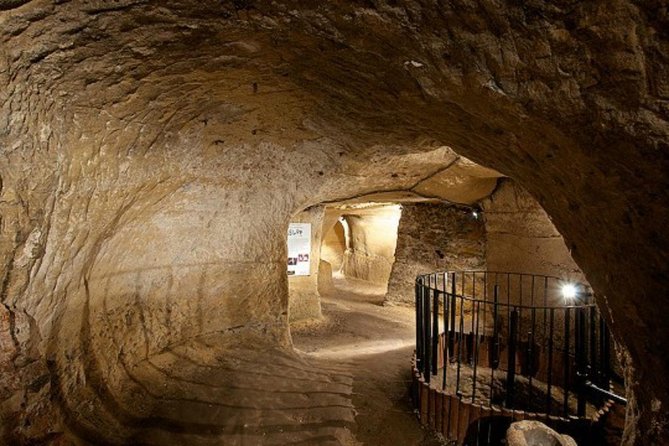
- Tunnel Stop 1: The 1948 Roots and the Underground City
- Tunnel Stop 2: Free-Fire Zone Tactics and the Parts Built to Last
- Optional Shooting Range: M16 and AK47 If You Want That Extra Impact
- How the 5-Hour Timing Works (and Where It Can Feel Rushed)
- Guide Quality Makes a Big Difference Here
- Price and Value: What $48 Buys You
- What to Bring and How to Prepare for the Tunnels
- Who Should Book This Cu Chi Half-Day (and Who Might Rethink It)
- Should You Book This Tour?
- FAQ
- How long is the Cu Chi Tunnels half-day tour?
- Is hotel pickup and drop-off included?
- Does the tour include entrance fees and a guide?
- How much do I pay, and what’s included in the price?
- What exactly will I see underground?
- Is the M16/AK47 shooting range included?
- What’s the group size limit?
- When should I go if I care about cooler or less busy conditions?
- What about kids and pricing?
- What is the cancellation window?
Key Things to Know Before You Go
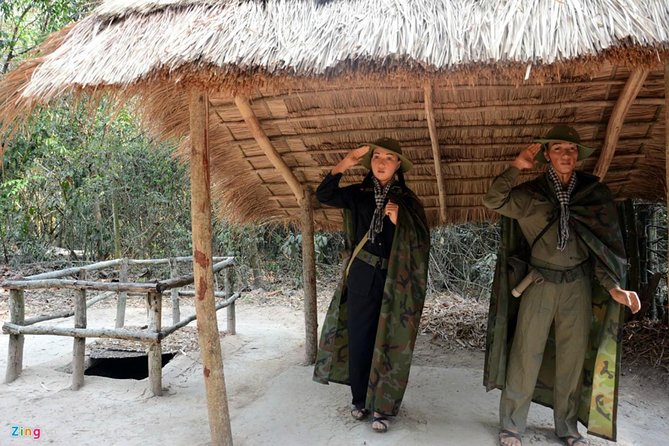
- Two tunnel sections in one half-day keeps the focus sharp without turning it into a marathon
- Hotel pickup and drop-off from Ho Chi Minh City center saves you the stress of figuring out transport
- History spans independence and the Vietnam War so you get the full timeline, not just one era
- “Moving parts” tunnel structures are part of the engineering story and help explain how people survived underground
- Optional M16/AK47 firing range adds impact, but you’ll pay extra separately
- Small group size (max 15 travelers) makes it easier to ask questions and keep things organized
Why Cu Chi Tunnels Still Matter in a Half-Day
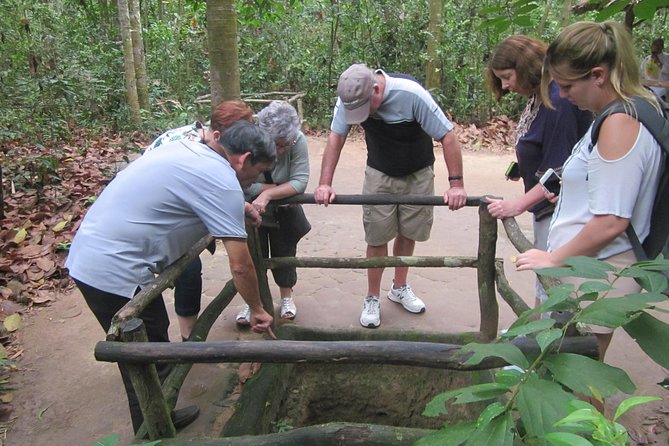
Cu Chi isn’t just a tourist set of tunnels. It was a working network created for fighting and survival, later built into an underground system that could support thousands of people for years. The timeline alone is a big reason this stop lands so hard.
Construction started in 1948 to support the Viet Minh during the fight for independence from the French, and it continued for about 25 years. By the time you’re visiting, you’re looking at part of a subterranean world described as covering more than 155 miles (250 kilometers), with areas for living, kitchens, storage, weapons production, field hospitals, and command centers.
In practical terms, a half-day tour works because it gives you context without overload. You get to connect how the tunnels evolved from early independence-era needs into later Vietnam War strategy.
You can also read our reviews of more tours and experiences in Ho Chi Minh City
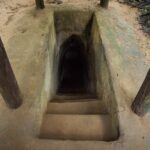


Getting There From Ho Chi Minh City Without Losing the Day
This tour is set up for convenience: you get hotel pickup and drop-off in Ho Chi Minh City center, plus transportation with air-conditioning. That matters more than it sounds, especially if you’re trying to line up a day with other plans in the city.
One real-world consideration: road traffic can eat time. If you’re the type who hates running behind, choose the morning option if you have that choice. A cooler start can also make the site visit feel more comfortable, and it often helps with overall crowd levels.
Also note the tour timing is about 5 hours total. That includes travel time plus time inside the two tunnel sections. If you want extra moments for photos or extra questions, arriving ready to move helps.
Tunnel Stop 1: The 1948 Roots and the Underground City
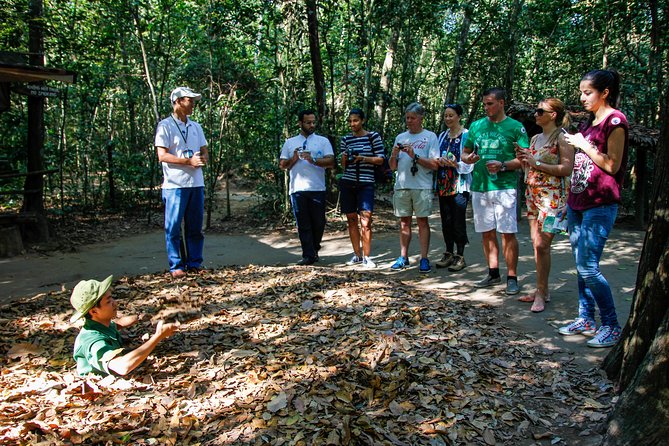
Your first tunnel stop is where the story starts to feel concrete. You’ll learn how the tunnels were created in 1948 for the Viet Minh, then expanded and improved for decades. The key idea is that this wasn’t only “hiding places.” It was engineered as a functional underground city.
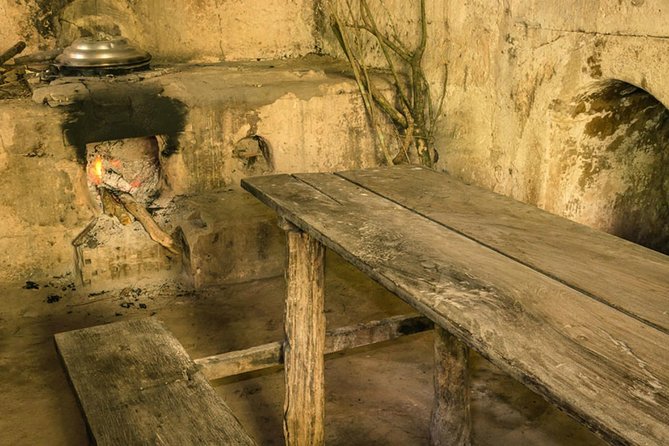
Expect to hear how the network could hold living areas, kitchens, storage facilities, weapons factories, field hospitals, and command centers. It’s an unusual mix of military necessity and daily life logistics. That’s the part that helps the history click.
Another detail that stands out: people could live nearly entirely underground for years, including having families. The tour context explains that relatively normal life events like getting married and raising children happened despite the war setting. It’s not about romanticizing anything—it’s about understanding how survival systems work.
Time at this first stop is about 2 hours. That’s usually enough to absorb the main areas and get a feel for the layout, but it still won’t feel like you have unlimited time to sit and study every corner.
Tunnel Stop 2: Free-Fire Zone Tactics and the Parts Built to Last
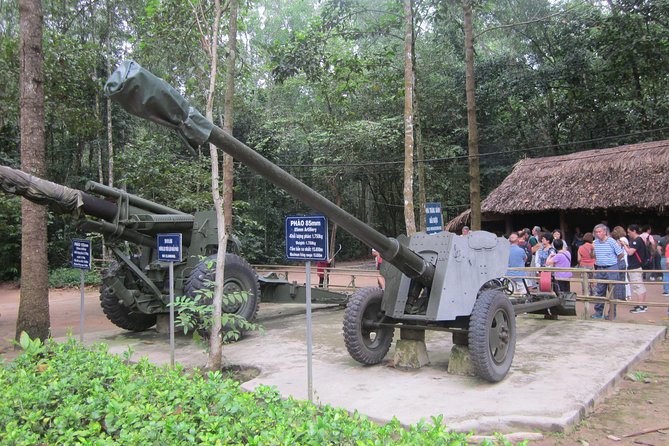
The second tunnel stop focuses on what changed during the American War. The Cu Chi area was designated as a free-fire zone, and the region saw heavy attacks and bombings. That shift in pressure is why the tunnels became more than a support system—they had to perform under intense conditions.
Here’s where you get another layer of engineering context. The tour also describes tunnel sections made with “moving parts,” designed so they could be livable for long periods. That phrase matters. It points to the idea that the tunnel system was set up to support human routines, not just quick escapes.
This stop is shorter—about 1 hour—but it’s designed to keep the overall timeline balanced. You’ll still cover a major portion of the experience, especially if your guide is good at tightening the narrative without rushing you past key moments.
Optional Shooting Range: M16 and AK47 If You Want That Extra Impact
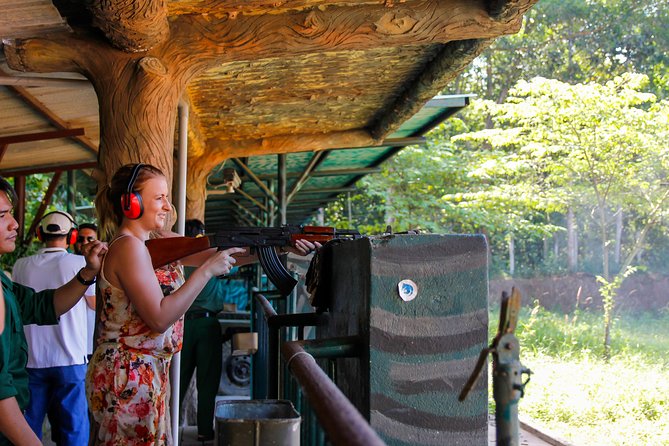
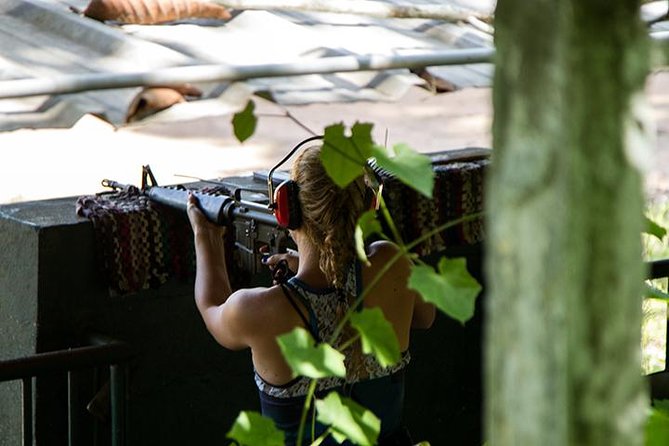
There’s an optional add-on at a nearby firing range where you can fire rounds using a war-era M16 or AK47. It’s not included in the base price, so you’ll pay firing range fees separately.
Should you do it? If you want a sensory, high-intensity add-on that matches the war theme, this is the moment. Several guides in the feedback you’ll encounter are praised specifically for handling this segment well, and the general vibe is that it’s a must-do for some people—if you’re comfortable with the concept.
If you’d rather keep the visit focused strictly on history and the tunnel engineering, you can skip it. Either way, you’ll still get the main tunnel experience.





How the 5-Hour Timing Works (and Where It Can Feel Rushed)
Let’s talk about the pacing, because timing is where this tour can make or break your day. The day is structured so you hit both tunnel sections within the 5-hour window, and the 2-hour + 1-hour tunnel timing is the backbone.
That means you may not have the luxury of long backtracking or extended pauses. The best version of the day happens when your guide keeps everyone moving while still giving you enough time in each area to take it in.
This is also where traffic can play havoc. Even if the tunnel portion is well paced, delays getting there can shrink your margin for questions and extra walking.
If you want the calmest experience, aim for the morning when possible. Some people clearly found it more comfortable and easier to focus.
Guide Quality Makes a Big Difference Here

This tour includes an English-speaking guide, with other languages available for an extra surcharge. And for Cu Chi, the guide isn’t a background role. The story is heavy, and the details matter—how the tunnels were used, how people lived, and why specific sections were opened to visitors.
In the feedback you’ll see reflected in how the tour is run, certain guides get singled out for making the information clear and for adjusting the pacing. Names mentioned include Stephen, Lam, and Anh. If you’re given one of those guides, it’s a good sign for both clarity and timing.
What I recommend you do either way: come with 2-3 specific questions. For example, ask how the tunnel engineering addressed both independence-era needs and later war-era pressure, or what “moving parts” are intended to solve in day-to-day underground living.
Price and Value: What $48 Buys You
At $48 per person, this half-day price feels more reasonable when you look at what’s included. You’re paying for:
- English-speaking guide service
- hotel pickup and drop-off in Ho Chi Minh City center
- entrance fees
- bottled drinking water
- air-conditioned transportation
- travel insurance
That’s a lot of “hidden costs” wrapped into one number, and it’s why the tour can feel good value versus piecing it together yourself. The only major extra is the optional shooting range activity, plus your personal spending and tipping.
The tour is also capped at a maximum of 15 travelers, which can matter for how much attention you get and how quickly the group moves. Smaller groups tend to feel more manageable when you’re dealing with a site that already has a time limit baked in.
What to Bring and How to Prepare for the Tunnels
This tour includes bottled water, so you’re not starting empty-handed. Still, I’d bring a bit of practical backup so you don’t end up fussing with basics while you’re trying to take in the site.
Wear comfortable shoes and dress for warm weather, since Cu Chi is a big outdoor area even if much of the focus is underground. Bring a light layer if you’re sensitive to temperature swings when moving between open areas and enclosed tunnel sections.
Also think about your camera habits. You’ll likely be moving through designated areas, so quick photo stops work better than slow wandering. If you want that optional firing range experience, plan your budget for extra fees ahead of time.
Who Should Book This Cu Chi Half-Day (and Who Might Rethink It)
This is a strong fit if you want a compact but meaningful Vietnam War stop without giving up an entire day. History buffs will like the way it covers both independence-era context and the American War phase.
It also suits people who appreciate structure. With set tunnel sections and a guide-led flow, you won’t need to figure out what to prioritize once you’re at the site.
I’d rethink it if you hate being on a schedule, since the total time is about 5 hours and the tunnel time is limited to fixed stops. Also consider that the site is underground, so if you’re uncomfortable with that kind of environment, you may find the experience more stressful than you want.
Should You Book This Tour?
If you want the most efficient way to experience Cu Chi in a half-day, I’d book this. The mix of hotel pickup, English guide, entrance fees, and bottled water makes the $48 price feel less like a ticket and more like a full package.
Choose it especially if you like clear storytelling and you want to understand both eras of the tunnels instead of only seeing a set of underground rooms. If you also want the optional M16/AK47 firing range, this format gives you that option without turning the visit into a separate trip.
Skip it only if your top priority is lots of free time inside the tunnels. With a fixed schedule and a small group cap, you’ll get a strong overview, but it won’t feel like you can slow down indefinitely.
FAQ
How long is the Cu Chi Tunnels half-day tour?
The tour runs about 5 hours total, including the time at the two tunnel sections and round-trip transportation.
Is hotel pickup and drop-off included?
Yes. You’ll get hotel pickup and drop-off in Ho Chi Minh City center, plus air-conditioned transportation.
Does the tour include entrance fees and a guide?
Yes. Entrance fees and an English-speaking guide are included (other languages may be available with a surcharge).
How much do I pay, and what’s included in the price?
The price is $48 per person. Included items are the guide, entrance fees, bottled water, travel insurance, and hotel pickup/drop-off with transport.
What exactly will I see underground?
You’ll explore two sections of the Cu Chi tunnel network. The tunnels described cover more than 155 miles (250 kilometers) in total, and the visit focuses on opened sections for visitors.
Is the M16/AK47 shooting range included?
No. Firing rounds from a war-era M16 or AK47 at the nearby range is optional, and shooting range fees are not included.
What’s the group size limit?
The tour has a maximum of 15 travelers.
When should I go if I care about cooler or less busy conditions?
If you have a choice, the morning tour is often recommended because it can be cooler and less busy.
What about kids and pricing?
Children 0–5 are free, and children 6–10 pay 50% off. The limit described is a maximum of 1 child accompanied by 1 adult, and a second child would pay the adult price.
What is the cancellation window?
You can cancel for a full refund if you cancel at least 24 hours before the experience’s start time. Changes inside 24 hours aren’t accepted, and refunds don’t apply if you cancel less than 24 hours before.