REVIEW · HO CHI MINH CITY
Saigon Then & Now: A Bygone Cyclo Adventure
Book on Viator →Operated by Vietnam Tours VIP · Bookable on Viator
Saigon changes fast. This cyclo tour slows it down by mixing landmark architecture with everyday market life. I like that you ride in cyclos close to the street scene, and you get a real rhythm of the city rather than a car-and-camera sprint.
I also like the mix of stops: big sights like the Central Post Office and Reunification Palace, then hands-on culture at a lacquer workshop, plus a proper meal with pho. One thing to consider: the market portion is intense on the senses, and some stops are brief photo breaks, so you’ll want patience if you prefer longer browsing.
In This Review
- Quick takeaways you’ll actually use
- Cyclo-Style Saigon: Why This 4-Hour Loop Works
- Central Post Office to Reunification Palace: Two Stops, Two Eras
- Minh Phuong Lacquer: Vietnamese Craft You Can See Up Close
- Markets by Pedicab: Flowers, Electronics, Fabric, and Motorbike Parts
- Pho 24 at Pasteur: Lunch That Fits the Schedule
- Ba Thien Hau Temple: A Calm Contrast in District 5
- Price and value: What $74.11 buys you in the real world
- Who should book this cyclo “then and now” tour
- Should you book Saigon Then & Now: A Bygone Cyclo Adventure?
- FAQ
- How long is the Saigon Then & Now cyclo tour?
- Where does the tour start and end?
- Is pickup offered?
- What’s included in the price?
- What are some of the main stops?
- Is the tour private?
- Can I get a full refund if I cancel?
Quick takeaways you’ll actually use
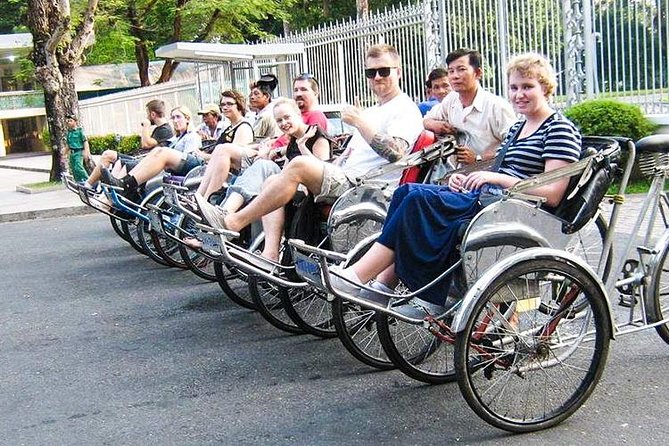
- Cyclo riding for every person: one cyclo (listed as Richshow) per person keeps the experience feeling personal.
- Short, smart stops: the tour is timed so you see major landmarks without turning into a full-day sit-and-watch.
- Lacquer craft stop: Minh Phuong Lacquer takes you from street life into a specific Vietnamese art form.
- Market variety, not just one district: flowers, electronics, fabric, motorbike parts, and Cholon markets all show up in the route.
- Pho + water included: lunch is built in, so you don’t have to hunt for food mid-tour.
Cyclo-Style Saigon: Why This 4-Hour Loop Works
Ho Chi Minh City can feel like a blur at first. This tour is a planned way to get your bearings fast, using slow, open-air cyclo rides to connect the dots between neighborhoods.
The time window is about 4 hours, which is ideal if you want history and street life without losing half a day. You also start and end at a central spot near the Saigon Opera House area, so it feels easy to plug into a sightseeing schedule.
You’ll ride with an English-speaking guide, and the tour is listed as private for your group. That matters in Ho Chi Minh City, where traffic noise and constant movement can make group tours feel chaotic. Here, your guide can pace the stops and answer questions as you go. Two guide names you may meet are Luc and Cici, both noted for being friendly and good at keeping the tour organized—Luc is also specifically called out for answering kids’ questions.
You can also read our reviews of more tours and experiences in Ho Chi Minh City.


Central Post Office to Reunification Palace: Two Stops, Two Eras
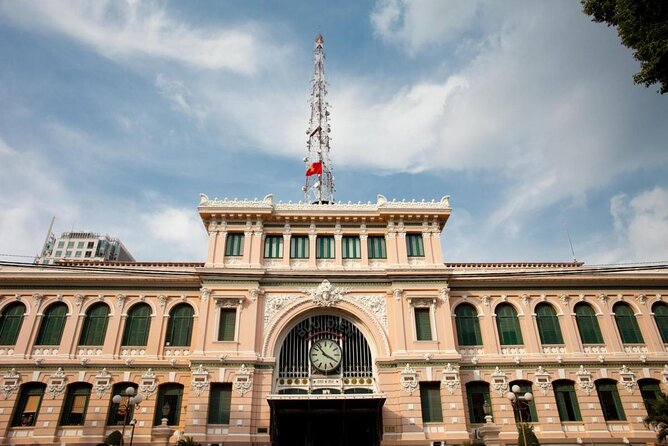
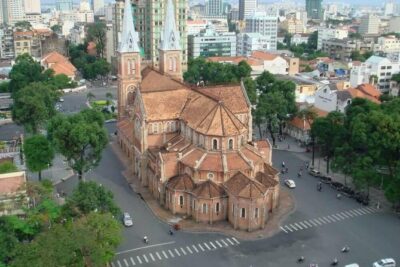
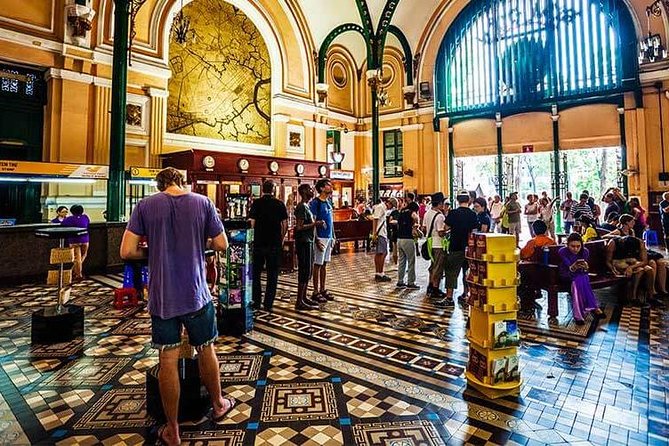
You begin with architecture that many people only see from a distance. The Saigon Central Post Office is the kind of building that makes you stop walking. It combines French colonial and Gothic influences, and the design is detailed enough that even a short visit feels worth it.
You’ll also visit the Reunification Palace, sometimes called Independence Palace. This isn’t just a photo stop. It’s presented as a key symbol tied to Vietnam’s turbulent 20th-century history, with the palace itself standing in the heart of the city as a major landmark.
Practical tip: both of these are classic “walk up, look up, then keep going” places. Since your time is limited, it helps to decide what you want—facade details, interiors, or the overall layout—so you don’t rush yourself.
Minh Phuong Lacquer: Vietnamese Craft You Can See Up Close
After the big landmarks, the tour pivots into something you can’t really replicate by yourself in a quick snack-and-stroll plan.
You’ll stop at Dai Viet Lacquerware / Minh Phuong Lacquer for about 30 minutes. The focus here is on Vietnamese craftsmanship—how lacquerware is made and why it’s treated as an art form, not just a souvenir category. You get a chance to understand what you’re looking at, which makes the objects feel more meaningful when you browse or buy later.
In a city of motorcycles and speed, a workshop stop is a good reset. It gives you a break from the noise and lets you slow down long enough to appreciate technique—especially if you like cultural crafts, design, or anything hand-made.
Markets by Pedicab: Flowers, Electronics, Fabric, and Motorbike Parts
Then the city turns up the volume. This part of the tour is designed around photo stops and quick looks at major market areas. Even if you don’t plan to shop, it’s a powerful way to see what locals actually buy and fix.
You’ll visit Ho Thi Ky Flower Market for around 10 minutes. This is one of the larger flower markets, and the energy is obvious even in a short time. It’s a good stop if you want color and a sense of early-day city rhythm.
Next, the tour moves through major trading zones where you’ll see everything from small necessities to big-ticket repairs:
- Nhat Tao Electronics Market (electronics and spare parts hub)
- Tan Motorbike Spare Parts Market (motorcycle components and accessories)
- Soai Kinh Lam Fabric Market (textiles and fabric stalls)
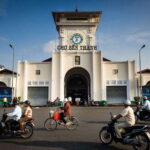
- Binh Tay Market in Cholon (a historic market area with strong visual character)
What makes this section valuable is the variety. You’re not just watching tourists window-shop. You’re seeing how the city supplies itself—flowers for celebrations, electronics for daily life, fabrics for clothing, and motorbike parts for transportation. That’s the “then and now” idea in real form: today’s city logistics alongside the older historic landmarks you saw earlier.
A consideration: markets can be crowded, loud, and physically tight. Wear shoes you can stand in, and keep your phone secured when you pass through denser areas. If you don’t like negotiating or pushing through crowds, it’s still manageable—just keep your goal focused on photos and walking, not shopping pressure.
Pho 24 at Pasteur: Lunch That Fits the Schedule
At about the midpoint, you get a built-in meal stop: Phở 24 (158D Pasteur) for roughly 45 minutes. You’re getting pho noodle soup plus bottled water as part of the included items.
This is one of the best “tour design” choices of the day. Markets make you hungry, and landmark walking makes you thirsty. Rather than squeezing food in on your own timeline, the tour gives you a real break, so you don’t end up eating something random at the wrong time.
If you’re picky about broth intensity or spice levels, it’s still a restaurant environment where you can order what you like. You just need to remember: pho is the main plan here, and it’s a comfort-food stop in the middle of a busy route.



Ba Thien Hau Temple: A Calm Contrast in District 5
After the commerce-heavy market areas, you’ll visit Ba Thien Hau Temple in District 5. You’ll spend about 30 minutes, which is long enough to notice details.
This temple is dedicated to the sea goddess Mazu and was built in the early 19th century by Chinese immigrants. That historical connection gives you another angle on Ho Chi Minh City: not only French colonial influences and wartime history, but also the layered Chinese-Vietnamese presence in parts of the city.
What I like about ending this way is the contrast. The day moves from architecture to craft to markets, then finishes with a place designed for worship and reflection. It’s a gentler landing before you head back.
Price and value: What $74.11 buys you in the real world

At about $74.11 per person, this isn’t the cheapest way to tour Ho Chi Minh City—but it’s also not priced like a luxury private day. The value comes from what’s included:
- English-speaking tour guide
- One cyclo per person
- Entrance fees for the listed admission stops
- Bottled water
- Pho noodle soup at the restaurant
When a tour includes transport and admissions, your main “hidden costs” get reduced. Here, that matters because the day covers multiple landmark-style sites and multiple market districts. You’re not paying separately for each entry, and you’re not trying to coordinate rides between far-flung areas while traffic does its thing.
Where you can spend extra is also clear: tips/gratuities and personal expenses are not included. If you like good service, set aside a bit for that. Also, if you want to buy lacquerware or market items, budget for it separately—those purchases are totally optional, but the stop is designed for you to see products up close.
Who should book this cyclo “then and now” tour
This works best for you if:
- You want a history + street-life mix in a short time
- You’re okay with brief stops and a steady pace
- You like markets, photo breaks, and cultural stops more than long museum hours
- You’d appreciate having an English-speaking guide explain what you’re seeing
It may not be ideal if:
- You prefer slow, unstructured wandering with lots of free time
- You dislike crowds or prefer fewer stops per day
- You want only “classic tourist sights” with minimal local-market context
Should you book Saigon Then & Now: A Bygone Cyclo Adventure?
If you want one plan that gives you both the landmark icons and the everyday city supply chain—flowers, textiles, electronics, motorbike parts—this is a strong choice. The cyclo format helps you feel the city rather than just pass it.
Book it if you’re aiming for practical sightseeing with included transport, entry fees, and lunch. Skip it if you’re trying to do Ho Chi Minh City at a lazy pace or you don’t enjoy market environments. For most first-timers, though, this is a smart way to understand Saigon faster.
FAQ
How long is the Saigon Then & Now cyclo tour?
It runs for about 4 hours.
Where does the tour start and end?
It starts at Saigon Opera House (07 Công trường Lam Sơn, Quận 1) and ends back at the same meeting point.
Is pickup offered?
Yes, pickup is offered.
What’s included in the price?
The tour includes an English-speaking tour guide, one cyclo per person, entrance fees, bottled water, and pho noodle soup.
What are some of the main stops?
You’ll visit places such as Saigon Central Post Office, Reunification Palace, a lacquerware stop (Minh Phuong Lacquer), Ho Thi Ky Flower Market, major market areas including electronics, motorbike spare parts, and fabric markets, plus Binh Tay Market, Pho 24, and Ba Thien Hau Temple.
Is the tour private?
Yes, it’s listed as private, meaning only your group participates.
Can I get a full refund if I cancel?
The policy offers free cancellation and you can cancel up to 24 hours in advance for a full refund.