REVIEW · HO CHI MINH CITY
Saigon Slum tour and Saigon Chillspots by motorbike/ Aodai rider
Book on Viator →Operated by Toward Local · Bookable on Viator
Two wheels, and Saigon tells the truth. This Ho Chi Minh City slum and chillspots tour takes you off the usual central sights and onto the streets where wealth and hardship sit side by side, guided by locals on a motorbike/scooter ride. You’ll also hit a charity food stand stop to try regional fare while learning what day-to-day life can look like for people living in the city’s less visible corners.
What I like most is how well guides balance facts with real human detail. On recent runs, guides such as Hana and Flora have been singled out for their friendly humor and city knowledge, which makes the topic easier to take in without turning it into a lecture. I also love the practical mix of places you actually walk past every day, including a visit to the older Nguyen Thien Thuat Apartment Buildings area (built in 1968) and a nearby flower market moment where you can even make a lotus flower shape.
One consideration: you’re riding through traffic on a motorbike, so comfort matters. The tour also needs good weather, and the day’s stops can shift if a restaurant is closed or an area is under maintenance, so build in flexibility.
In This Review
- Key things that make this tour worth your time
- Motorbike Saigon: what this 2–4 hour route really shows
- Stop 1: getting oriented in areas most visitors skip
- Stop 2: Nguyen Thien Thuat Apartments and the flower market pause
- The charity food stand stop: what to expect (and what to ask in advance)
- Why the $16 price can make sense here
- Meet the guide vibe: humor and history without the hard sell
- Rush Saigon vs the standard 2–4 hour tour
- Transportation reality: helmets, rain, and handling traffic
- Who should book this tour, and who might not love it
- Tips to get more out of it on the day
- Should you book this Ho Chi Minh City slum tour?
- FAQ
- How long is the slum and chillspots tour?
- How much does it cost?
- Do you get pickup and drop-off?
- Are helmets and raincoats included?
- What food or drinks are included?
- Is there an English-speaking guide?
- How big is the group?
- Is the tour suitable for most people?
- What happens if weather is bad?
- Can I cancel and get my money back?
Key things that make this tour worth your time
- Real neighborhoods, not postcard stops: you avoid the standard central highlights and see how Saigon lives beyond them
- A short ride, tight experience: typical duration runs 2–4 hours, so you’re not stuck for half a day
- Nguyen Thien Thuat Apartments stop: a look at older housing built in 1968 and what that setting means
- Charity food stand included in the concept: you may try regional fare during the tour
- Guides with personality: multiple guides are praised for humor and local stories
- Gear provided: helmet and raincoat help make the ride more manageable
Motorbike Saigon: what this 2–4 hour route really shows
This is a group tour (up to 30 people) that’s designed to change your mental map of Ho Chi Minh City fast. Instead of focusing on the famous sights in the center, you ride toward neighborhoods that many visitors never see—or only pass through on a taxi ride without really noticing.
The structure is simple: you start with an orientation-style stop, then move to an older apartment building area, and you may add a food moment and a flower market stop along the way. It’s the kind of itinerary that works because it’s paced for street-level understanding. You see the disparities between rich and poor not as an abstract theme, but as something you can literally watch unfold from the sidewalk and from the street.
For me, the biggest value is that the guides turn the ride into context. You’re not just being transported; you’re learning how locals think about the city: where people gather, how daily routines shape neighborhoods, and why certain areas feel the way they do.
You’ll also notice the tour is set up for actual movement. Helmets and raincoats are included if needed, and pickup/drop-off are offered at hotels in District 1 and District 3. That matters because it removes the friction of planning your own scooter route.
You can also read our reviews of more tours and experiences in Ho Chi Minh City.



Stop 1: getting oriented in areas most visitors skip

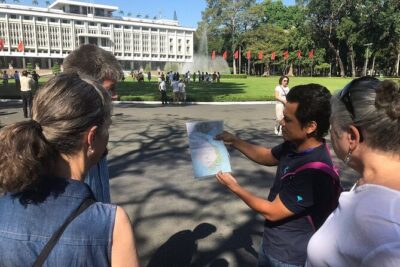
The first stop is the start of your “behind the scenes” feeling. The idea here is to get you looking at Saigon with fresh eyes—less like a visitor hunting landmarks, more like a person getting bearings. You’ll ride through busy streets, and the guide helps explain what you’re seeing as you pass different neighborhoods.
Even if you’ve been to Ho Chi Minh City before, this stop can still be useful. The tour isn’t trying to replace the central attractions you’ve heard about. It’s trying to complement them by showing you what the city is doing when it’s not performing for tourists.
Also, keep your expectations realistic. This is not a museum. You’re outdoors in real traffic, and the goal is understanding through observation. If you come in wanting quiet, guaranteed photo spots, you might find it less satisfying than a traditional walking tour. If you come in wanting a clear picture of daily life, it’s a strong match.
One more practical note: the day’s schedule can change if a restaurant is closed or a place is under maintenance. That’s not ideal, but it’s common for street-based tours, and it usually just means a slight swap rather than a total cancellation.
Stop 2: Nguyen Thien Thuat Apartments and the flower market pause
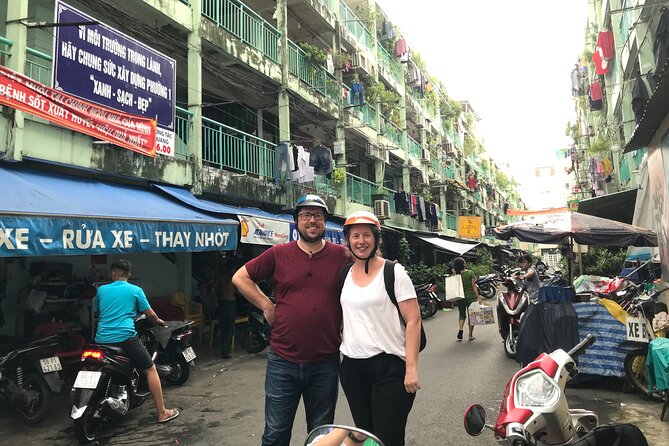
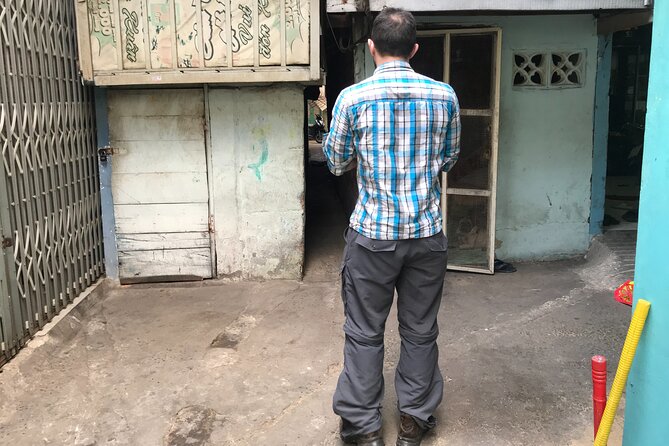
The most specific named stop is Nguyen Thien Thuat Apartment Buildings, described as one of the oldest in Saigon, built in 1968. This is the tour’s anchor for learning. Older apartment blocks like this tend to tell you a lot about how cities house people and how neighborhoods evolve over time.
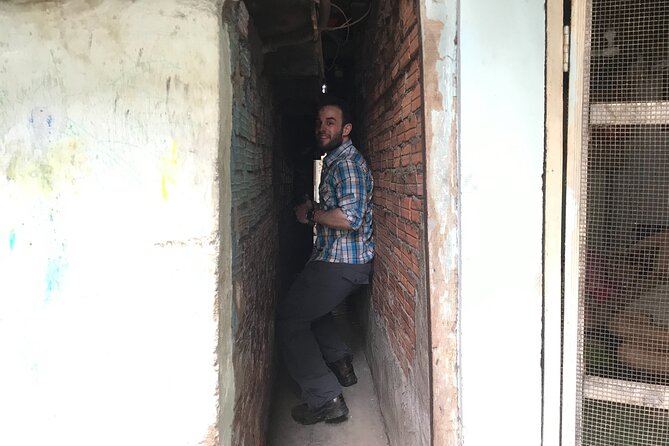
What makes this stop valuable is that it turns “slum” from a label into a place with shape. You get to see the layout, the density, and the way life carries on around buildings that many outsiders only hear about. The guide’s job is to connect that visual reality to the bigger story: inequality, housing history, and the routines that keep communities going.
You may also get a flower-market moment around this stop area. The tour mentions the chance to make a lotus flower shape—using the national flower as a cultural thread—while learning about how locals buy and use flowers. It’s a small detail, but it helps balance the heavier parts of the tour with something hands-on and human.
If you’re the type who learns best through doing, that lotus craft can be a nice reset. And if you’re focused on photography, you’ll probably find more interesting street scenes here than you expect. Just be respectful and don’t treat people like props; you’re watching life happen, not collecting a trophy photo.
The charity food stand stop: what to expect (and what to ask in advance)
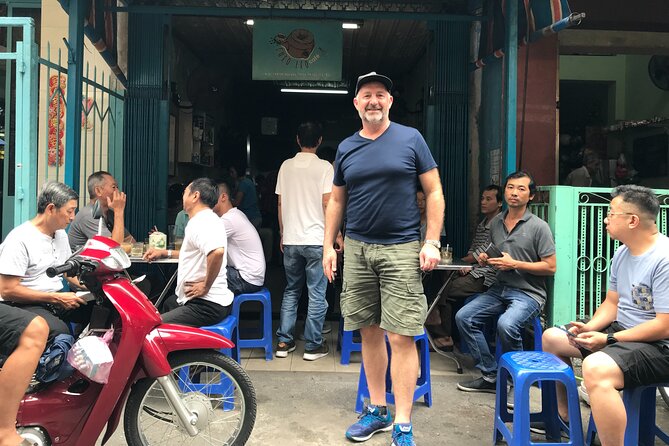
The tour overview includes a stop at a charity food stand where you can try regional fare. That’s one of the reasons this feels more meaningful than a drive-by. Food is a shortcut to culture because it’s practical. People eat what they can get, what they’re used to, and what fits their budget.
That said, the exact food you’ll get isn’t spelled out in the tour details you provided. I’d treat this as a “try something local” moment rather than a full meal plan. If you have dietary restrictions, it’s worth asking before you go what’s typically served and whether you’ll have options.
Also note there’s a special version called the Rush Saigon option. That one is described as a 2-hour scooter experience and it specifically says it is not included any food or drinks. So if food matters to you, choose the standard slum/chillspots format rather than the Rush option.
Why the $16 price can make sense here
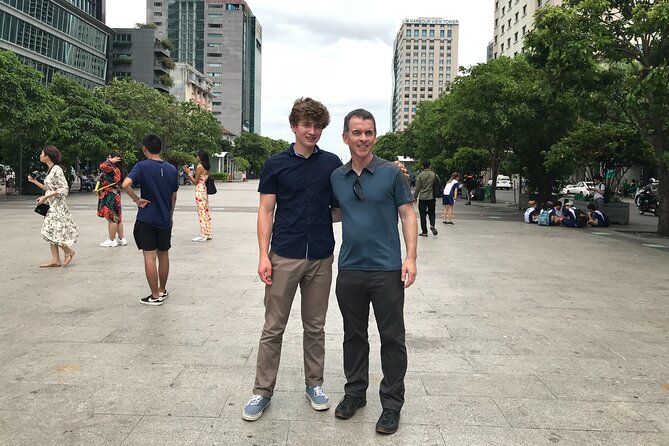
Let’s talk value in real terms, not just “cheap.” At $16 per person, you’re paying for several things that would cost more if you built your own plan: a guided route, a group structure, and the transport support (including a helmet and raincoat). Pickup and drop-off are also included for hotels in District 1 and District 3, which reduces your day’s logistics cost.
Now, the price is still low enough that you should be clear about what you’re not getting. This isn’t a private car tour with stops at major ticketed landmarks. It’s a street tour focused on everyday neighborhoods and learning through context. If you want air-conditioned comfort and set-piece attractions, you’ll likely feel underwhelmed.
But if you want a guided look at how Saigon works—plus the chance to try regional food at a charity stand—this price is hard to beat. The repeated 5-star scores (52 reviews) and the consistent praise for guides like Hana, Flora, Mallorie, Jason, Anna, and Choi suggest the experience is doing what it promises: friendly, fun, informative street-level storytelling.



Meet the guide vibe: humor and history without the hard sell
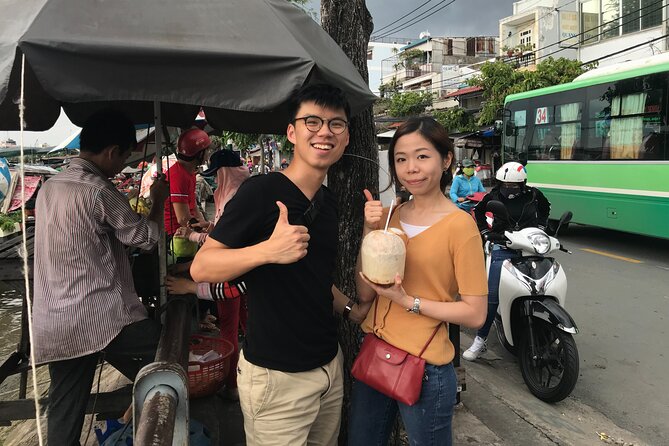
One theme that pops up across the guide mentions is the tone. Guides are described as friendly, with a good sense of humor, and able to explain what you’re seeing in a way that doesn’t feel stiff.
Names come up such as Hana, Flora, and Mallorie, plus other guide pairings like Vincent, Hannah, and Jay, and also Anna and Choi. Of course, guides can vary by date, but the broader pattern matters for you: you’re not signing up for someone who recites facts like a script. You’re signing up for people who can make the ride feel human.
That matters because the subject—slums, inequality, housing conditions—can feel heavy. Humor and warmth don’t make the topic disappear. They just make you more able to absorb it. For many people, that’s the difference between a tour you remember and a tour you rush past.
Rush Saigon vs the standard 2–4 hour tour

If you’re short on time, the Rush Saigon option is a different creature. It’s described as a 2-hour experience by scooter with a local guide. There’s also a rule that if the tour lasts longer than 2 hours, you pay the guide $6 per hour. And it’s explicitly not included any food or drinks.
That makes Rush a good pick when you want movement and a quick orientation, not when you want the food stop or the longer pacing. If you care about the charity food stand and the extra time to take in apartment-building life and the surrounding street scenes, the standard format is the better match.
Transportation reality: helmets, rain, and handling traffic
Riding a motorbike through Ho Chi Minh City traffic is part of the point. It’s also where preparation helps.
Good news: a helmet and raincoat are included if needed. Bad news: weather matters. The tour says it requires good weather, and if it’s canceled due to poor weather, you’ll be offered a different date or a full refund.
Practical tip: wear shoes you can stand in comfortably and clothing that won’t make you feel trapped when you’re seated. If you’re sensitive to motion or uncomfortable in traffic, you should consider whether a scooter ride is truly for you—even if the guides do everything right.
Also, since itinerary stops can shift due to closures or maintenance, you might end up with a slightly different route day-to-day. The overall theme stays the same, but the specific “where exactly at this time” can vary.
Who should book this tour, and who might not love it
This tour is best for you if:
- You want a side of Ho Chi Minh City that most first-timers skip
- You’re curious about daily life and inequality from street-level observation
- You enjoy learning through conversation with local guides
- You like movement and can handle traffic, because riding is central to the experience
You might think twice if:
- You want a comfort-first itinerary with major ticketed attractions
- You need a totally quiet, low-stimulation experience
- You’re booking expecting a guaranteed full meal, especially if you choose Rush
Tips to get more out of it on the day
A few things that will help you enjoy it more and feel respectful at the same time:
- Ask your guide (early) about what you’ll eat if the charity food stop is scheduled.
- Keep your phone camera ready, but don’t turn every moment into a photo mission. Look first.
- Bring a little patience for traffic and small schedule changes. This is street reality, not a museum timeline.
- If you’re wearing something that gets uncomfortable when you’re seated for a while, switch it out before you meet the guide.
And a small mindset shift works wonders: try to watch how people move through the neighborhood, not just what buildings look like. When you focus on routines, you start to understand what housing and inequality feel like from the inside.
Should you book this Ho Chi Minh City slum tour?
Book it if you want the kind of experience that changes your perspective fast—through guided street riding, a visit tied to older apartment housing from 1968, and a chance to try regional food at a charity stand. The consistent 5-star feedback and the repeated praise for guides like Hana and Flora point to a tour that’s both serious about its storytelling and comfortable to be around.
Skip it if you want classic landmark sightseeing, or if you’re uncomfortable riding a scooter through busy traffic. This tour doesn’t pretend to be quiet or easygoing in the way a gallery stroll is.
If you fit the first group, this is one of those low-cost tours that can feel like the best use of a few hours in Ho Chi Minh City.
FAQ
How long is the slum and chillspots tour?
The tour duration is typically 2 to 4 hours. The Rush Saigon option is a 2-hour scooter experience.
How much does it cost?
It costs $16.00 per person.
Do you get pickup and drop-off?
Yes. Free pick up and drop off at your hotel is offered in District 1 and District 3.
Are helmets and raincoats included?
Yes. The tour includes a helmet and a raincoat if needed.
What food or drinks are included?
The tour includes coffee and/or tea and coconut water. The tour overview also mentions a stop at a charity food stand to try regional fare. The Rush Saigon option states that food and drinks are not included.
Is there an English-speaking guide?
Yes. The tour includes friendly and professional English-speaking guides.
How big is the group?
The maximum group size is 30 travelers.
Is the tour suitable for most people?
The tour indicates that most travelers can participate.
What happens if weather is bad?
The tour requires good weather. If it’s canceled due to poor weather, you’ll be offered a different date or a full refund.
Can I cancel and get my money back?
Yes. There is free cancellation. You can cancel up to 24 hours in advance for a full refund.