REVIEW · HO CHI MINH CITY
Ho Chi Minh City: Perfume Workshop with Scent of Saigon
Book on GetYourGuide →Operated by VIVA VIETNAM · Bookable on GetYourGuide
Saigon turns fragrance into personal art. In this Perfume Workshop with Scent of Saigon, you design a scent you actually want to wear, not a tourist-only souvenir. You’ll follow a local instructor’s guidance to understand fragrance structure, then build a custom mix from a set of essential oils and aroma blends.
What I like most is the hands-on scent layering approach (top, middle, base notes) and the fact that you leave with a real bottle—15/30/50ml—so it’s a lasting memory you can use later. One thing to consider: the workshop is listed as 2 hours, but some sessions may run shorter, and the English level from the guide can vary a bit.
In This Review
- Key Takeaways Before You Go
- Why This Ho Chi Minh City Perfume Workshop Feels Different
- Entering the Studio: What the First Minutes Actually Do for You
- Learning Top, Middle, and Base Notes Without Becoming a Perfumer
- Choosing From Saigon’s Scent Library: How You Avoid Random Mixing
- Mixing and Adjusting: The Part That Makes This Feel Like Real Craft
- Bottling Your Signature Scent: Take-Home Value That Matters
- Price and Value in Real Terms: $18 for a Bottle You Made
- Timing, Duration, and What to Expect When Your Session Runs Short
- Finding the Place: The One Logistics Tip That Saves Time
- Who This Workshop Suits Best (And Who Might Skip It)
- Should You Book Scent of Saigon in Ho Chi Minh City?
- FAQ
- How long is the Perfume Workshop with Scent of Saigon?
- How much does it cost?
- What’s included in the price?
- What size bottle do I take home?
- Do I need prior experience with perfume making?
- Is the instructor English-speaking?
- Is the workshop wheelchair accessible?
- Can I cancel and get a refund?
Key Takeaways Before You Go
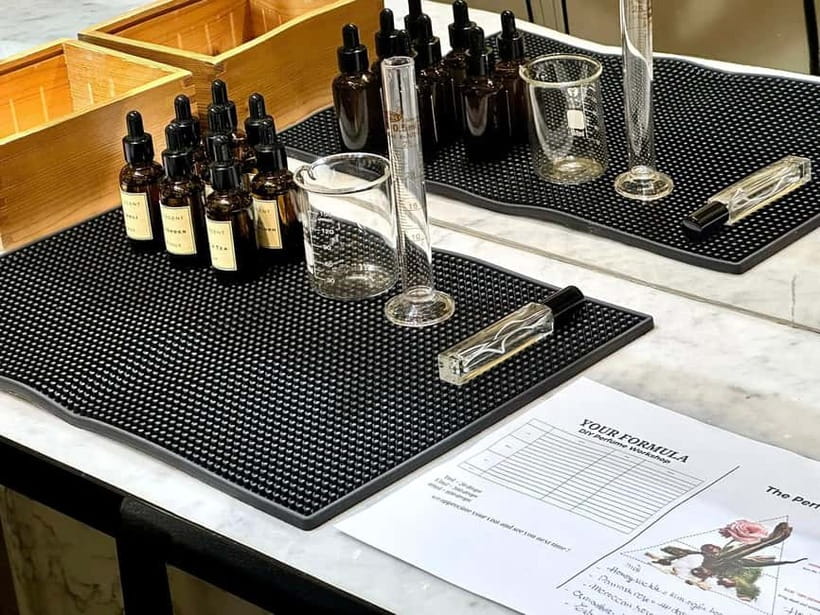
- Top, middle, and base notes: Learn what changes as a scent dries down.
- Mix from an oil and blend library: Pick the directions you like instead of guessing.
- Take-home bottles: You leave with your own perfume in an elegant container.
- Small, relaxed vibe: No pushy sales energy; the focus stays on making.
- Plan for language gaps: English explanations may be clearer with simple questions or a translator app.
Why This Ho Chi Minh City Perfume Workshop Feels Different
In Ho Chi Minh City, a lot of tours show you sights. This one shows you something more personal: how scent is built, and how you can shape that process with your own preferences. Even if you think you’re not a perfume person, you can still have fun with the sensory part—smelling, comparing, and narrowing choices until you land on a combination that feels like you.
I also appreciate that the workshop treats perfume like craft, not magic. You’re not just handed a pre-made formula. You learn the basic logic behind fragrance, then use that logic to make decisions while you’re mixing.
The studio setting is described as cozy and clean, and the tone is relaxed. You get room to experiment, and from what people report, it’s friendly even for first-timers. One couple even made perfume for each other, which tells you the experience can be playful, not just instructional.
You can also read our reviews of more city tours in Ho Chi Minh City



Entering the Studio: What the First Minutes Actually Do for You
The workshop starts with a quick setup for your senses. You get an introduction to fragrance families and the idea of scent layering, which matters because perfume doesn’t smell the same in every moment. Early notes hit first; later notes linger and round everything out.
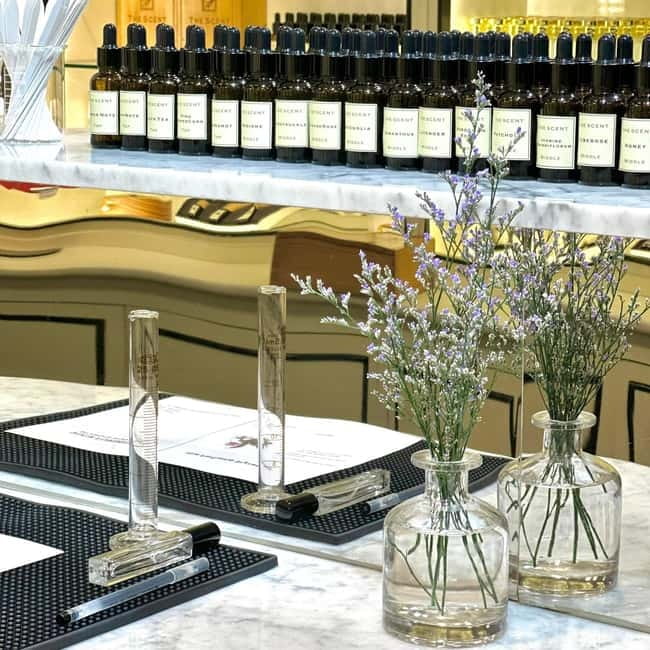
Then the practical part begins: you’ll move from learning into choosing. You sample options from a curated library of essential oils and aroma blends, guided by your instructor. This is a key point for first-timers. If you’re worried you won’t know what you like, the workshop gives you structure: you’re building your preferences into a plan.
One more nice detail: some people mention the guide was patient and helped them refine choices. That matters because perfume can feel tricky when you only smell once. Here, you have the chance to test, compare, and adjust your blend before it becomes final.
Learning Top, Middle, and Base Notes Without Becoming a Perfumer
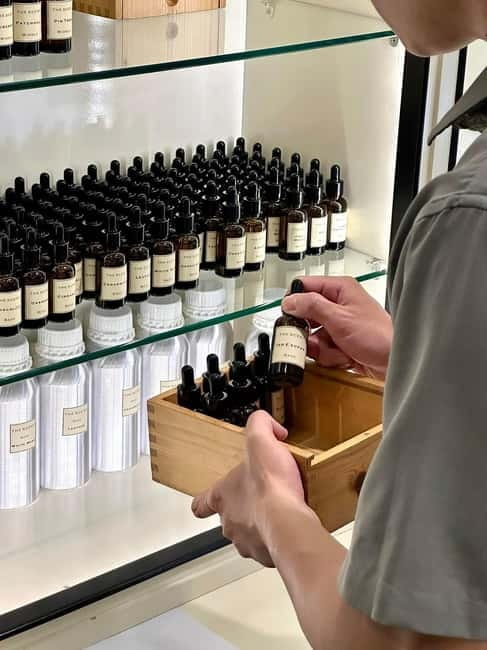
The workshop’s main lesson is how top, middle, and base notes work together. Instead of memorizing fragrance jargon, you use the concepts while you’re creating. That’s the best way to learn: you hear the idea, then you apply it instantly.
Here’s how that usually plays out in your experience:
- Top notes tend to feel bright and immediate, the scent you notice first.
- Middle notes form the heart of the fragrance, often giving it character and body.
- Base notes provide the lasting foundation, the part that hangs around as the perfume settles.
This setup is valuable because it helps you buy and wear scents more confidently later. Once you understand the dry-down effect, you stop judging perfume based on the first whiff only. You start thinking like a wearer: what do I want it to smell like right after I apply it, and what do I want it to become an hour later?
A few participants also described recognizing which scents represent base, middle, and top notes. That’s exactly what you should take away from the workshop, because it turns the activity into reusable skill, not just a one-off souvenir.
Choosing From Saigon’s Scent Library: How You Avoid Random Mixing
The workshop gives you choices, but not infinite choices. That curated library is a big deal for comfort and time. If you’ve ever walked into a perfume counter with hundreds of options, you know how easy it is to freeze, overthink, or pick something you don’t actually love.
Here, you select essential oils and aroma blends based on fragrance direction—fresh, warm, floral, or unexpected combinations. People specifically mention trying combinations that match their taste, then building from those picks.
I like the way this reduces the stress of decision-making. Instead of asking you to invent a fragrance from scratch with no rules, it gives you a framework:
1) pick the characters you like,
2) assign them to roles (top/middle/base),
3) then balance the blend.
A small warning from real experience reports: the instructor’s English may be less clear at times. That doesn’t kill the experience, but it can make it harder to understand the finer distinctions between notes. If you’re planning to rely on explanation, I’d keep a few simple questions in your phone translation app, like what each scent is supposed to do in the blend.
Mixing and Adjusting: The Part That Makes This Feel Like Real Craft
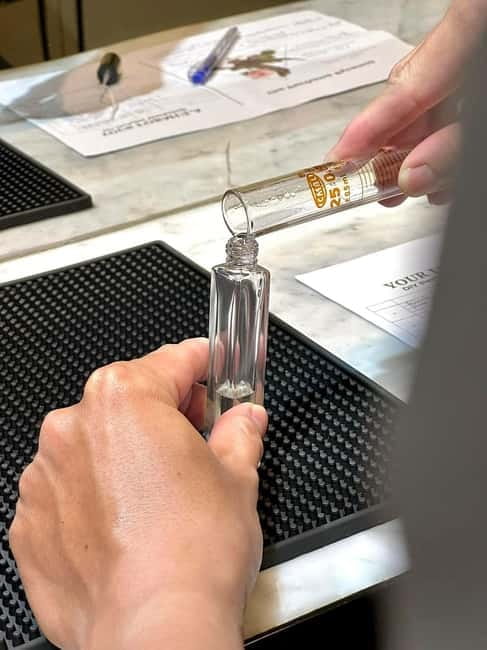
The main action is mixing your blend with guidance. You’ll experiment with combinations until the scent feels right. The workshop is designed so you don’t need prior perfume knowledge, which is perfect if you’re the type who usually avoids hands-on classes.
What you’re actually practicing is balance. Perfume is rarely about one ingredient. It’s about how ingredients behave together. Many people mention that their guidance helped them choose scents to combine, and that the resulting perfume smelled great and lasted through the day.
One useful detail: some sessions can move quickly, especially if the group is small or even one-on-one. So if you’re someone who wants to linger and compare every option, you might want to choose a time slot when you expect the workshop won’t be rushed. If your session runs faster than the listed duration, you’ll still have a complete take-home bottle and a clear result.
You can also read our reviews of more tours and experiences in Ho Chi Minh City





Bottling Your Signature Scent: Take-Home Value That Matters
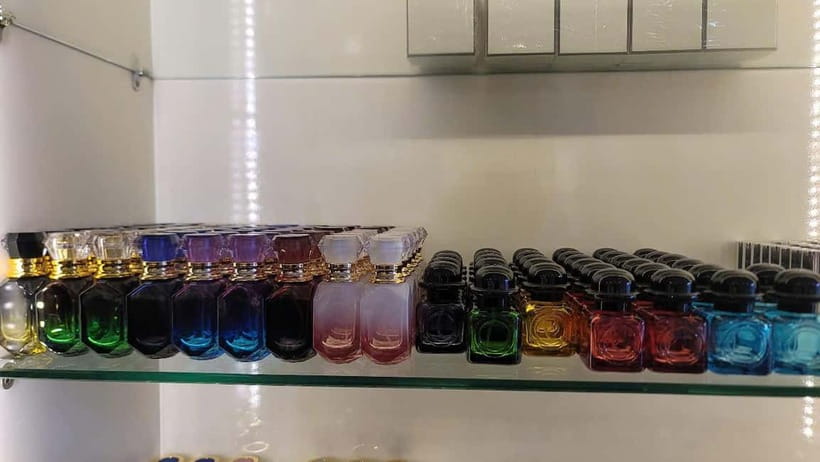
At the end, you take home your handcrafted perfume in an elegant bottle. The standard take-home sizes are 15/30/50ml, so you can match the bottle size to how you plan to use it. A smaller size is great if you want a memory scent. A larger one is better if you actually want to wear it often.
People also describe choosing their bottles and even giving them names. That’s a small detail, but it makes the bottle feel personal, not like a generic product you picked up on a street corner.
Also pay attention to the packaging. Multiple reports mention that the perfume is packaged beautifully and that the scent lasts a long time. That’s a big part of value. If you’re paying for a workshop, you want the product you take home to perform like a real fragrance, not a quick-cologne trick.
One more practical note from the experience itself: if you end up loving your blend, the shop may be willing to help with additional bottles or larger sizes. I wouldn’t plan on it as a guarantee, but it’s worth asking if you want more than the included bottle.
Price and Value in Real Terms: $18 for a Bottle You Made
At $18 per person for a 2-hour workshop, the price is reasonable mainly because it includes the materials and ingredients plus your take-home bottle. In other words, you’re not paying just for instruction; you’re paying for a finished product.
It also helps that the workshop gives you a learning framework. Even if you only make one bottle, you walk away understanding top/middle/base notes and fragrance families. That makes it feel less like a one-time craft activity and more like a skill you can use when you shop for perfume later.
That said, there’s one potential cost surprise. Some people mention that other scents in the shop can be pricey compared with what they can find back home. If you think you might want extra bottles, browse thoughtfully and ask questions before you buy. Focus on what you need while you’re making your included bottle.
When you compare this class to buying a quality fragrance, the economics can work in your favor. You’re paying for a guided creation experience and a bottle that you control. If you’ve ever paid for custom perfume before, you know how expensive it can get. Here, it’s priced like an accessible class rather than a high-end artisan service.
Timing, Duration, and What to Expect When Your Session Runs Short
The activity is listed as 2 hours, but some people report their workshop lasting closer to an hour. That usually doesn’t mean anything went wrong. It can mean your group was small, you made quicker decisions, or the process moved faster.
What you can do to protect your experience is simple:
- Don’t pack your schedule too tightly right before or after.
- If you’re traveling with other plans, build in buffer time.
- Keep your expectations focused on the end result: a custom bottle and a clear understanding of note layering.
There’s also a practical benefit to the way the workshop is run. People describe it as clean, organized, and free from pushy sales tactics. That reduces stress and keeps you focused on mixing.
If you want to take photos, most people don’t mention any issues, but always be mindful around the mixing stations and bottles. The staff’s priority is keeping the process smooth.
Finding the Place: The One Logistics Tip That Saves Time
One small real-world problem comes up: some people had trouble finding the location. The clue mentioned in reports is that the workshop may be connected to a shop sign called The Scent and could be near a Sports Center. That’s the kind of information that can save 30 minutes of wandering.
So if you’re arriving on foot, open your map, then look around for that shop-style signage. If you’re unsure, ask locally with a simple phrase about perfume making or scent. This is a straightforward class location, but it’s worth arriving with a clear reference point.
Transportation isn’t included, so plan to get there by your normal local method—taxi, ride-hailing, or walking depending on your neighborhood.
Who This Workshop Suits Best (And Who Might Skip It)
This is a great fit if you:
- love experimenting with smells and want something hands-on in Ho Chi Minh City
- want a take-home gift that’s personal, not generic
- like the idea of learning how fragrances change as they dry down
- want a class that works for couples and families (people have done it in groups, including teenagers)
It’s also good if you’re traveling with someone who’s hard to shop for. You’re creating the gift together, which is usually more satisfying than buying something and hoping it fits their taste.
You might consider skipping if:
- you only want major city sights and you’re not interested in sensory activities
- you’re extremely sensitive to smells and want to avoid lots of scent sampling (the workshop involves smelling multiple oils and blends)
- you need very detailed English explanations and you’re worried about communication gaps
Even in those cases, the core result is still a bottle you made. But make sure perfume-making is your kind of activity first.
Should You Book Scent of Saigon in Ho Chi Minh City?
I think you should book it if you want a memorable, personal experience that’s also practical. You’re not just watching something happen; you’re crafting your own scent and walking away with an actual bottle you can use.
The biggest reasons to go are simple: the structure around top/middle/base notes and the fact that everything needed is included in the price. The main reason to pause is language clarity and the possibility that your session may run shorter than the listed 2 hours. Neither is a dealbreaker, but it affects how relaxed you’ll feel.
If you like trying new things with your senses, this one is a smart use of a couple hours in Saigon.
FAQ
How long is the Perfume Workshop with Scent of Saigon?
The workshop is listed as 2 hours. Some participants reported their session ran closer to about an hour.
How much does it cost?
It costs $18 per person.
What’s included in the price?
The price includes an introduction to fragrance families and scent layering, all materials and ingredients, and one take-home bottle of your custom perfume.
What size bottle do I take home?
You take home a 15/30/50ml bottle of your custom perfume.
Do I need prior experience with perfume making?
No. The workshop is designed so you can create your own scent with guidance and no prior knowledge needed.
Is the instructor English-speaking?
Yes, the instructor provides the workshop in English.
Is the workshop wheelchair accessible?
Yes, the activity is wheelchair accessible.
Can I cancel and get a refund?
Yes. You can cancel up to 24 hours in advance for a full refund.