REVIEW · HO CHI MINH CITY
Bean to bar Chocolate Workshop in Ho Chi Minh City
Book on Viator →Operated by Ban Cacao - Vietnamese chocolate maker · Bookable on Viator
Chocolate starts with a seed.
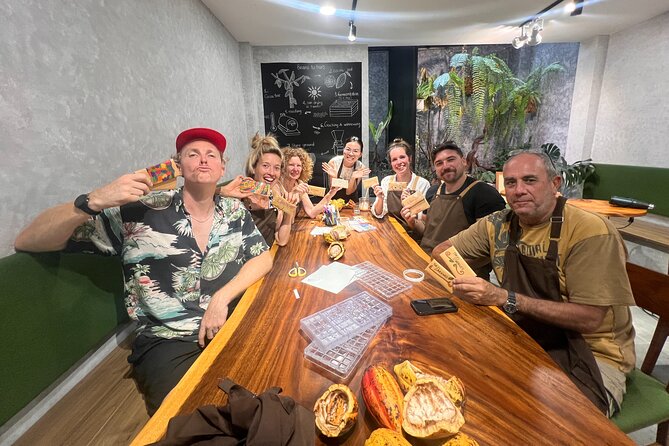
This bean-to-bar workshop at Ban Cacao turns cacao into a finished chocolate bar in about two hours, step by step. You’ll work with fresh cacao pods and beans, make cacao paste the traditional way, and finish by molding and decorating your own bar.
What I like most is how hands-on it is, from husking your own beans to grinding cacao paste in a granite mortar. I also like that the class includes tasting the fresh pods and a clear explanation of how cacao moves from pods to bars, plus context on how Vietnamese chocolate makers use local ingredients. One consideration: the grinding part can be tiring, so it’s best for kids roughly 8+ and adults who don’t mind a bit of elbow work.
In This Review
- Key highlights you’ll remember
- Ban Cacao in District 1: what you’re really walking into
- The 2-hour pods-to-bar flow: how the time gets used
- Tasting fresh cacao pods, then husking your own beans
- Making cacao paste with a granite mortar (and why it can be tiring)
- Turning paste into your chocolate bar: ingredients and tools you’ll use
- The drink, the Vietnamese angle, and what you learn besides chocolate
- What you take home: the real payoff
- Price and value: why $32 makes sense for what you get
- Who should book Ban Cacao’s workshop in Ho Chi Minh City
- Quick practical tips before you go
- Should you book this bean-to-bar chocolate workshop?
- FAQ
- How long is the bean-to-bar chocolate workshop?
- Where does the workshop take place?
- What do I make during the class?
- Do I get to take chocolate home?
- Is there a drink included?
- Is there free cancellation?
Key highlights you’ll remember
- Pods-to-bars process explained clearly, with local Vietnamese context
- Fresh cacao pod tasting before you touch the beans
- You husk your own cacao beans and get your hands dirty in a good way
- Traditional cacao paste making using a granite mortar
- You make and decorate a chocolate bar with wrapping paper to take home
- Small groups (up to 10) keep the pace friendly
Ban Cacao in District 1: what you’re really walking into
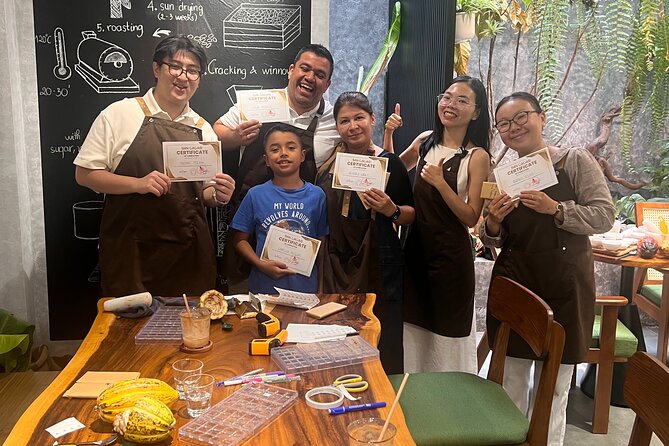
This workshop is based at Ban Cacao, the Vietnamese chocolate maker behind the experience in Ho Chi Minh City. The meeting point is at 89/14 Hàm Nghi, Phường Nguyễn Thái Bình, Quận 1, and it’s described as near public transportation, which matters because you can keep the rest of your day flexible.
The group size is capped at 10 travelers, so this doesn’t feel like a big classroom. Expect a workshop vibe: practical, focused, and built around you producing something at the end, not just watching.
You’ll also use a mobile ticket, and you’ll start and end right back at the meeting point. That makes it easy to slot into a lunch-to-afternoon plan without long transfers.
You can also read our reviews of more city tours in Ho Chi Minh City



The 2-hour pods-to-bar flow: how the time gets used
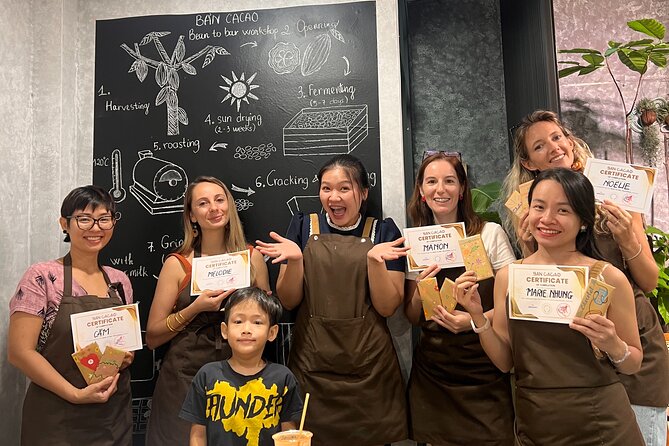
In about two hours, you’ll go through the full arc of bean-to-bar chocolate making. The class is structured so you experience the logic of chocolate-making, not just the final sugary result.
Here’s the overall progression you can expect:
- learning the pods-to-bars process (and cacao’s Vietnam angle)
- tasting fresh cacao pods
- husking your own beans
- turning beans into cacao paste with traditional tools
- mixing ingredients and forming your own finished bar
- decorating and taking your bar home
The pacing works because each stage feeds the next one. You’re not just collecting facts; you’re watching how choices in earlier steps affect what chocolate tastes like at the end.
Tasting fresh cacao pods, then husking your own beans
The first hands-on moment is tasting the fresh cacao pods. This is a smart start because it resets your expectations. Cacao fruit tastes and smells nothing like the chocolate bar you’re used to, and that contrast helps you understand why the beans matter.
Right after that, you husk your own cacao beans. This is one of the best parts for people who love doing things themselves instead of just observing. It also helps you connect the sensory stage (pods) to the process stage (beans), so the rest of the steps feel grounded.
Why this step matters: chocolate begins with proper raw handling. Once you see how beans are taken from the pods, the next stage—turning them into paste—feels less mysterious. You’ll also be less likely to treat the rest of the class like a recipe you follow blindly.
Making cacao paste with a granite mortar (and why it can be tiring)
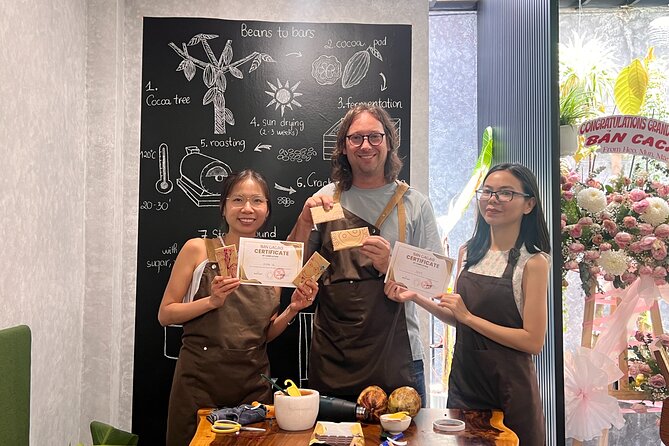
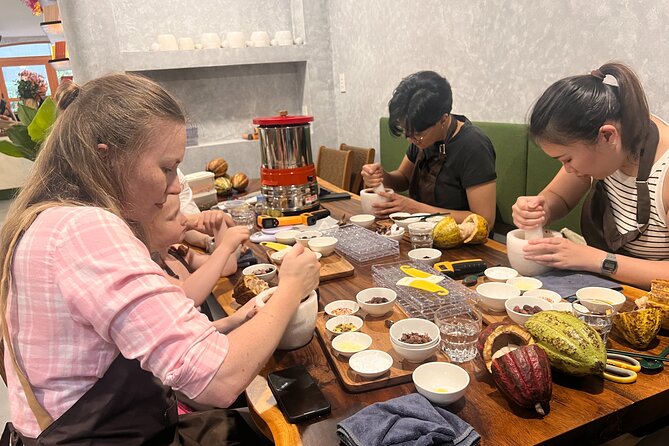
Then comes the most traditional-feeling part: making cacao paste with a granite stone mortar. You’re not just stirring ingredients here. You’re doing the physical work of breaking cacao down into paste using a tool that looks simple but takes effort.
The class uses measuring and temperature tools as well, including a scale and a thermometer, which is a good sign if you care about consistency. Even in a fun workshop, those tools suggest you’re learning the practical reality of chocolate-making, not only the “cute” parts.
One practical consideration: grinding can take time and energy. A parent highlighted that the grinding part can be quite tiring for kids, which is why I’d plan on children around 8 years old and up for the best experience.
If you’re an adult, don’t worry—this isn’t punishment. It’s just how you learn paste texture for real. And that texture is what makes the difference between chocolate that tastes flat versus chocolate that tastes developed.
Turning paste into your chocolate bar: ingredients and tools you’ll use
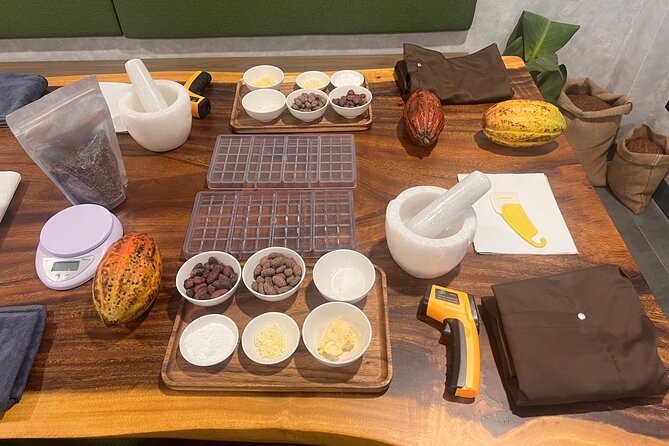
Once the cacao paste is made, the workshop moves into forming your actual chocolate bar. The materials listed include cacao nibs, cacao butter, and cane sugar, plus the core starting point of fresh cacao fruits and cacao beans.
You’ll use tools like a chocolate mold and wrapping paper so you can finish with something presentable. This matters more than it sounds. Many food classes end with a small bite. This one aims to end with a bar you can show off and share.
Also, you’ll be guided through making your bar from the first step to the final result. That means you should understand what’s happening at each stage, including how cacao paste and sweeteners work together. It’s the difference between copying a process and learning it.
The class doesn’t just stop at mixing. You’ll also decorate your own chocolate. That small creative step makes the final product feel personal, which is why people rave about the experience ending with a bar they made themselves.
You can also read our reviews of more drinking tours in Ho Chi Minh City


The drink, the Vietnamese angle, and what you learn besides chocolate
The workshop includes more than hands-on steps. There’s an explanation of the pods-to-bars chocolate making process and the history of cacao in Vietnam, along with how Vietnamese chocolate makers use local ingredients.
You’ll also taste the cacao pods, which gives you a baseline for everything that follows. That’s a rare bonus in chocolate experiences, because it connects “fruit” to “bean” to “bar” in a way most people never see.
One extra detail worth planning for: a review mentions the class includes a drink each—hot or iced chocolate. Even if you don’t treat it like a meal replacement, it’s a nice break in the middle of active grinding and molding.
What you take home: the real payoff
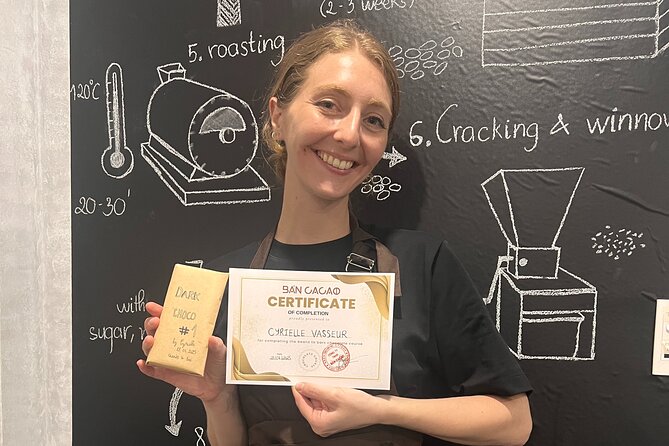
The biggest reason this workshop feels worth it is the ending. You’ll make and decorate your own chocolate and take it with you.
One review specifically mentioned that they kept two bars after decorating wrappers. The main description focuses on taking home a finished chocolate bar, but either way, the key point is that you’re not leaving with just memories. You’re leaving with something edible you helped produce.
The wrapping paper part is also more useful than it sounds. It makes the bar easier to bring home intact and ready to share, which helps if you’re traveling and want a snack that feels like a souvenir rather than an impulse candy purchase.
Price and value: why $32 makes sense for what you get
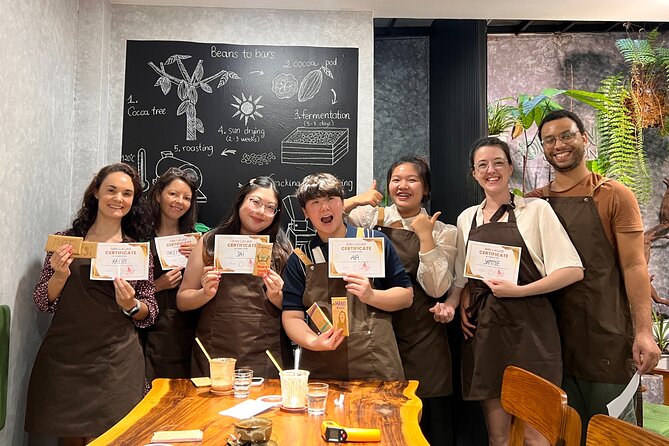
At $32 per person for about two hours, this is priced like a real workshop, not a quick tasting session. What you’re getting justifies that cost: hands-on husking, traditional paste grinding with a granite mortar, molding into a bar, decorating it, and taking it home.
You’re also using materials like cacao beans, nibs, cacao butter, and cane sugar, plus tools including the mold and measuring equipment. In other words, the fee covers both instruction and the practical stuff that lets you actually finish a bar.
And because the class runs with small groups, you’re paying for a process where you’re likely to participate in the key steps. If you’ve done tours where you barely touch the food, this one tends to feel different.
Who should book Ban Cacao’s workshop in Ho Chi Minh City
This is a good fit if you want a hands-on food experience in Quận 1 that feels rooted in Vietnamese cacao, not imported chocolate trivia. It also works well if you like learning through doing—tasting pods, husking beans, grinding paste, and molding a bar all in one go.
Families can have a great time here, especially with kids old enough to handle the grinding stage without getting frustrated. Based on what’s been said about the effort involved, I’d target kids around 8+ for the smoothest experience.
If you’re traveling solo, it’s still a friendly plan since the group is small and the activities keep you engaged. Couples and chocolate lovers will likely appreciate the progression and the fact that you end with something you made, not just something you ate.
Quick practical tips before you go
A few small things can improve your experience:
- Wear clothes you don’t mind getting a little messy, since you’ll husk cacao beans and grind paste.
- Plan a bit of time afterward for a slower pace, because the class involves physical effort.
- Bring a mindset that this is more workshop than sugar rush. The pod-tasting stage is an eye-opener.
If you’re planning your day, treat it as a main activity, not a sidebar. It’s built to fill your attention for about two hours.
Should you book this bean-to-bar chocolate workshop?
Yes, if you want an authentic Ho Chi Minh City food activity that teaches you how chocolate is made starting from real cacao fruit. The combination of tasting fresh pods, husking your own beans, making paste with a granite mortar, and finishing with a decorated bar you take home is exactly the kind of experience that turns travel memories into a real edible object.
Skip it (or choose a different kind of activity) if you’re expecting a mostly passive tour or you know kids in your group won’t do well with the grinding part. Otherwise, it’s a strong choice for travelers who like learning through hands-on work and leaving with a product that proves you did it.
FAQ
How long is the bean-to-bar chocolate workshop?
The class runs for about two hours.
Where does the workshop take place?
It starts at 89/14 Hàm Nghi, Phường Nguyễn Thái Bình, Quận 1, Thành phố Hồ Chí Minh, Vietnam, and ends back at the same meeting point.
What do I make during the class?
You’ll learn the process from cacao pods to bars, taste fresh pods, husk your own cacao beans, make cacao paste using a traditional granite stone mortar, and make and decorate your own chocolate bar.
Do I get to take chocolate home?
Yes. The workshop includes making chocolate that you can take home, and you’ll also use wrapping paper to finish it.
Is there a drink included?
Yes. The class includes a drink for each participant, with options described as hot or ice chocolate.
Is there free cancellation?
Yes, you can cancel for a full refund if you cancel at least 24 hours in advance.