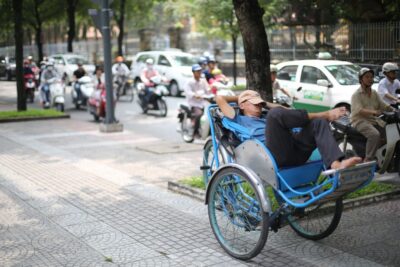
Saigon can feel like a blur of scooters and signs, so this walk helps you make sense of it fast. The Joy Journeys Saigon Walking Tour uses a small group and university student guides to connect the sights to everyday life, not just dates. Expect casual questions, personal stories, and a route built around key landmarks plus one underground stop.
What I like most is the small-group size—up to 6 people in the walking group—so you’re not lost in a megaphone crowd. The other big plus is the mix of places: iconic colonial-era buildings, a war-era monument stop, and then the Secret Weapons Cellar, with the cost included and the story told in a human way.
One drawback to consider: you’ll be walking in the city for about 3 hours 15 minutes, and the tour is weather-dependent. If you’re not up for heat, sun, and a steady pace, you may prefer a shorter, more indoor-focused plan.
In This Review
- Key things to know before you go
- Walking with student guides in Ho Chi Minh City
- A route that moves fast but doesn’t rush you
- Stop-by-stop: what each landmark adds to the story
- Notre-Dame Cathedral Basilica: French-era drama in the center of town
- Saigon Central Post Office: old architecture that still works today
- Vincom Center and the Last Helicopter sculpture: war memory made concrete
- Independence Palace: South Vietnam’s power center and its transformation
- The Thich Quang Duc Monument: protest remembered in stone
- Secret Weapons Cellar: the underground side of the Vietnam War
- Value check: why $14 makes sense here
- How to make the most of the conversation with your guide
- Getting your timing right in Saigon heat
- Who this tour suits best
- Should you book the Saigon Walking Tour?
- FAQ
- FAQ
- How long is the Saigon Walking Tour?
- Where does the tour start?
- Is the tour group small?
- What does the tour cost?
- What’s included in the price?
- What is not included?
- Are admission tickets needed for the listed stops?
- What happens if the weather is bad?
- What is the cancellation policy?
Key things to know before you go
- Max 6 people in your walking group keeps the conversation flowing
- University student guides share personal context and local recommendations
- Secret Weapons Cellar is included and takes the longest stop at 45 minutes
- Free admission stops at the cathedral and central post office help keep the cost down
- Vietnamese coffee (cà phê sữa đá) plus bottled water are included
- A classic route in District 1 means easy access and good first-time orientation
Walking with student guides in Ho Chi Minh City
The big idea here is simple: you get a guided walk that treats Saigon as a living city, not a list of facts. Joy Journeys turns the experience into a conversation. The guides are energetic university students who are working toward becoming professional tour guides, and that shows in how they explain what you’re seeing.
Instead of a script that marches from one landmark to the next, you’ll get space to ask questions and react in real time. You’ll also pick up the kind of context that never makes it onto a postcard: what a place means today, what people notice on a normal day, and how Saigon’s past still shapes the street-level feeling.
In groups I’ve read about, the guides included people like Lucy, Lily, Tyson, and Andrea. Even though each guide brings a slightly different tone, the constant thread is the same: clear explanations, personal storytelling, and time set aside for you to talk.
You can also read our reviews of more walking tours in Ho Chi Minh City



A route that moves fast but doesn’t rush you
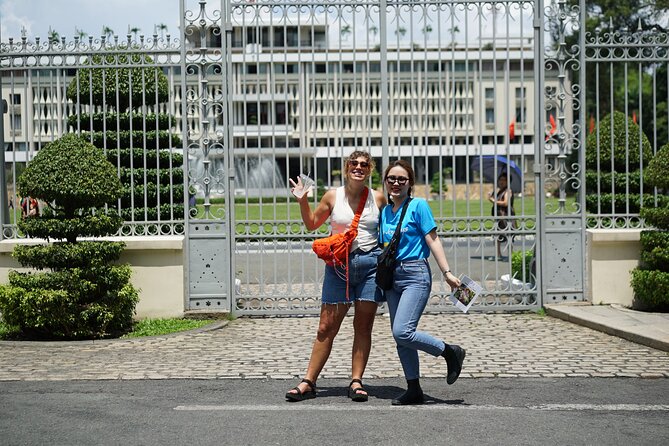
The tour runs about 3 hours 15 minutes. In a city this spread out, that’s a practical length. You’ll cover enough ground to get your bearings in District 1, but you’re not stuck for half a day.
The pacing is built around short-to-medium stops. You’ll spend roughly:
- 20–30 minutes at the major above-ground sights
- 45 minutes at the underground Secret Weapons Cellar
- brief transitions as you walk between them
That structure matters for two reasons. First, you keep the energy up without burning the day. Second, you get a real emotional arc: from French-era architecture to war memories and protest history, then down into the tunnels where the whole theme becomes physical.
If you want to get the most out of a walking tour, show up ready to ask questions. When you listen with curiosity—How does this place feel now? What would a local notice first?—the stops land harder.
Stop-by-stop: what each landmark adds to the story

Notre-Dame Cathedral Basilica: French-era drama in the center of town
The tour begins at Saigon Notre Dame Cathedral. It’s the famous Catholic cathedral in the heart of the city, built in the late 19th century. Admission is free for this stop, and the timing is about 20 minutes.
What makes this stop work on a walking tour is the contrast. You’re standing in the center of modern Ho Chi Minh City, but the building’s history pulls you back to a French colonial era. If you’re the type who likes to understand why cities look the way they do, this is a good opener. It sets a visual baseline for everything you’ll see later.
Practical note: it’s a popular landmark. Expect crowds around arrival and the immediate sidewalks, so keep your focus on the guide’s pointers rather than trying to take perfect photos from every angle.
Saigon Central Post Office: old architecture that still works today
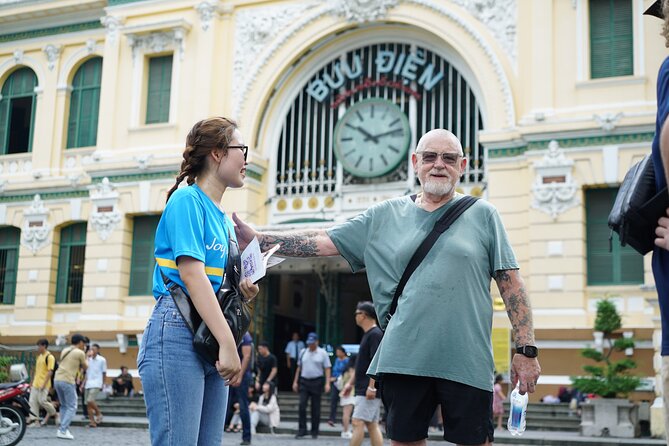
Next is the Saigon Central Post Office, also called the Ho Chi Minh City Post Office. It’s another late 19th-century French colonial-era building, and again the tour highlights it with about 30 minutes. Admission is free.
This stop is more than a photo stop. A post office is a job that keeps going. That makes the building feel less like a museum shell and more like a functional piece of city life. You get to see how an old civic space can stay in use while the city changes around it.
Tip: if you want to buy postcards or simple souvenirs, this is one of the more sensible places to do it during the walk. You’ll be standing in a historically themed setting that still feels practical.



Vincom Center and the Last Helicopter sculpture: war memory made concrete
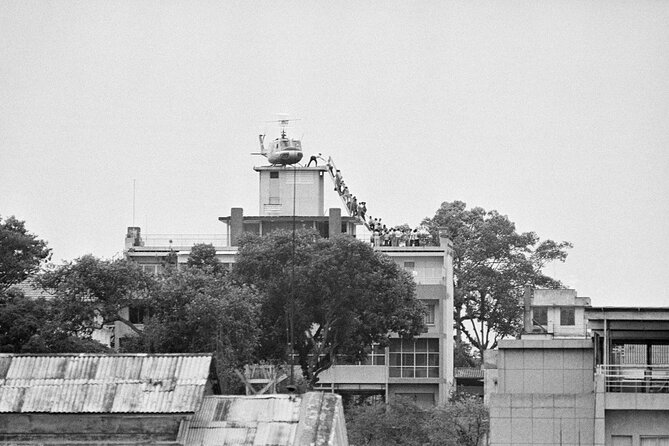
The route then heads to Vincom Center for a 20-minute stop at a sculpture called The Last Helicopter. The sculpture commemorates the end of the Vietnam War and depicts an iconic Huey helicopter as it takes off.
This is a pivot point in the tour. Up to now you’ve been looking at architecture tied to a colonial period. Now you’re looking at a symbol tied to war and its end. The value of having it on a walking route is that it’s not isolated. You’re building meaning step by step, not hopping randomly between unrelated sights.
Consideration: if you don’t care much for war memorials or sculpture art, this stop may feel more like a quick checkpoint than a must-see. But even then, it’s a useful marker for the theme shift.
Independence Palace: South Vietnam’s power center and its transformation
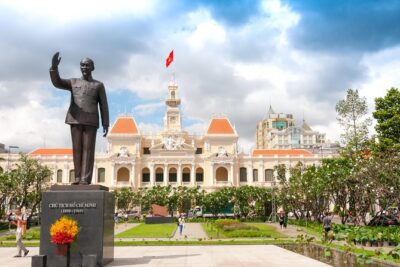
Then you’ll reach Independence Palace, also known as the Reunification Palace. The tour spends about 30 minutes here. Admission is listed as free in the information provided.
Independence Palace matters because it was built in the 1960s and served as the home and workplace of the President of South Vietnam. The guide can help connect the building to the larger story behind the term reunification, and that helps you see why this isn’t just a pretty landmark.
What I like about placing it after the helicopter sculpture is how the conversation can shift from symbols to real political spaces. After you’ve seen a war-era emblem, the palace stop feels more grounded.
Practical note: this is a big historical site. Plan for standing in the sun and spending a little time listening before you rush off to photos.
The Thich Quang Duc Monument: protest remembered in stone
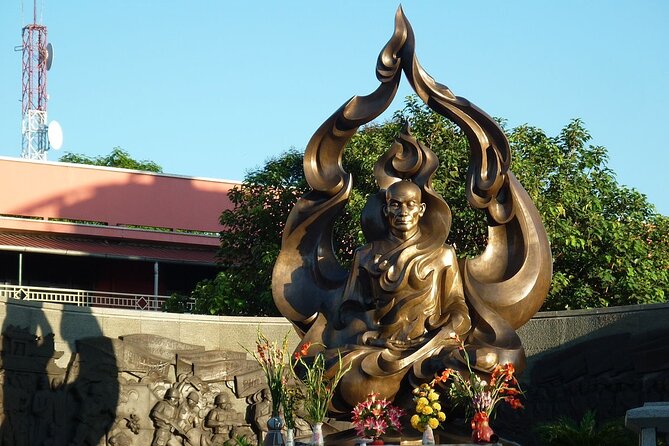
Next is the Venerable Thich Quang Duc Monument, with about 30 minutes on the schedule. Admission is free here as well.
This stop commemorates Thich Quang Duc, a Buddhist monk who set himself on fire in 1963 to protest at that time. The guide’s framing is what turns the moment from a distant headline into something you can actually understand in place.
On a practical level, this is where the tour often becomes more personal. The city’s monuments stop feeling like trivia. They feel like part of the moral conversations that shaped Vietnam in the modern era.
Because the subject is heavy, I recommend you pause and let the meaning settle before moving on. You’ll get more out of the walk if you’re not just scanning.
Secret Weapons Cellar: the underground side of the Vietnam War
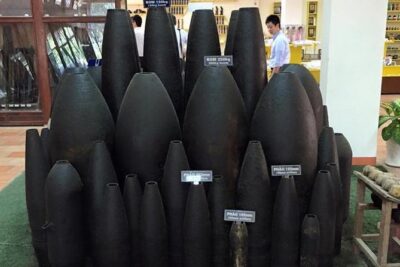
The final stop is the Secret Weapons Cellar, scheduled for about 45 minutes and listed as included in the tour. This is the longest portion, and it’s also the most physical.
The cellar was originally built by the Viet Cong during the Vietnam War. It functioned as a base for guerrilla warfare and as a way to transport supplies and weapons without being detected. You’re going underground to see how the war was fought in spaces that didn’t make the main headlines.
Why this stop is such a strong finish: it turns your understanding from abstract to concrete. The above-ground landmarks tell you what people built and what symbols meant. The tunnels show you how people survived and moved in a different reality.
Practical note: you’ll want comfortable shoes and a steady pace. Even when the tour isn’t described as physically intense, underground spaces can be darker and require careful footing.
Value check: why $14 makes sense here
At $14 per person, this tour is priced to be accessible. The math gets better when you look at what’s included:
- Bottled water
- Vietnamese coffee (cà phê sữa đá)
- All fees and taxes
- Secret Weapons Cellar included
On top of that, the major above-ground stops in the route are listed with free admission (including Notre-Dame Cathedral and the Central Post Office). So you’re not paying a pile of entry fees on top.
The other value factor is time and group size. Up to 6 in the walking group means you’re paying for a guided experience that can actually respond to your questions. A larger group tour can be cheaper, but you often lose the conversation. Here, you keep it.
If you’re trying to do a first-time city overview without spending a day jumping between taxis and separate ticket lines, this offers a tidy package.
How to make the most of the conversation with your guide
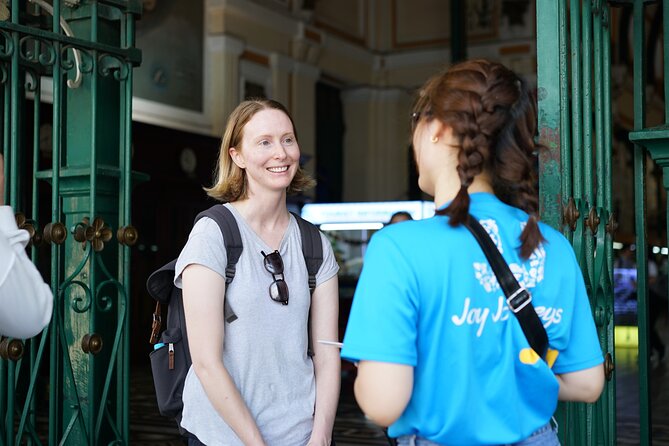
This is the kind of tour where your attitude shapes your payoff. If you go in quietly just to collect photos, you’ll still see the sights. But if you treat it like a chat with smart locals-in-training, you’ll get the story behind the story.
A few ways to help it click:
- Ask why a site matters today, not just what happened there once
- Pick one stop where you want extra context (often the monument or the tunnels)
- Let the guide recommend what to eat or where to look next—those suggestions tend to be grounded in what locals actually notice
- If you see a detail you don’t understand, stop the guide and ask right there
One thing I consistently like in walks led by guides like Lucy, Lily, Tyson, or Andrea is that they make room for questions. That turns a “tour” into a real interaction with Saigon.
Getting your timing right in Saigon heat
The schedule runs for about 3 hours 15 minutes, and the tour requires good weather. That’s a big hint about what conditions to plan for: you should expect walking time in real outdoor conditions.
So bring what keeps you comfortable:
- breathable clothing and sunscreen
- a hat or something to shade your face
- comfortable walking shoes with grip
- your best hydration habits (you’ll get bottled water, but it’s smart to pace yourself)
A small-group morning walk can be a smart way to beat the worst heat. If your schedule gives you a choice, consider going earlier rather than later.
Who this tour suits best
This is a great fit if you:
- want an introduction to the main landmarks of Ho Chi Minh City without overpaying
- like talking with guides and comparing notes with locals
- prefer personal explanations over pure lecture style
- want a war-related stop that includes both public symbols and underground context
It might be less ideal if you:
- hate walking and prefer mostly indoor experiences
- want only surface-level, quick facts with no conversation
- get frustrated if you can’t fully control the pace of a group
Still, for the price and the structure, it’s a practical way to understand the city’s layers.
Should you book the Saigon Walking Tour?
I’d book it if you want a guided walk that treats Saigon like a place you can talk to, not just a checklist. The $14 price is strong for a route that includes Vietnamese coffee, bottled water, and the Secret Weapons Cellar.
Choose a different option only if walking time and weather risk would stress you out. If you’re okay with that, this tour offers exactly what you need for a first pass through the city: clear landmarks, meaningful context, and guides who bring the story down to street level.
FAQ
FAQ
How long is the Saigon Walking Tour?
It lasts about 3 hours 15 minutes.
Where does the tour start?
It starts at Joy Journeys, 30A Hồ Hảo Hớn Street, Quận 1, Ho Chi Minh City, Vietnam.
Is the tour group small?
Yes. The walk is described as a maximum of 6 travelers in your group, and the overall activity has a maximum of 20 travelers.
What does the tour cost?
The price is $14.00 per person.
What’s included in the price?
The tour includes bottled water, all fees and taxes, and a cup of Vietnamese coffee (cà phê sữa đá). It also includes the Secret Weapons Cellar admission.
What is not included?
Gratitude and tips are not included.
Are admission tickets needed for the listed stops?
For the stops listed as free (like the Notre-Dame Cathedral and Saigon Central Post Office), you don’t pay admission through the tour. The Secret Weapons Cellar is included.
What happens if the weather is bad?
The tour requires good weather. If it’s canceled due to poor weather, you’ll be offered a different date or a full refund.
What is the cancellation policy?
You can cancel for a full refund up to 24 hours in advance. If you cancel less than 24 hours before the start time, the amount paid is not refunded.