REVIEW · HO CHI MINH CITY
Cu Chi Tunnels & Mekong Delta Small-Group Tour from Ho Chi Minh
Book on Viator →Operated by SST TRAVEL · Bookable on Viator
Tunnels and river life in one long day. Cu Chi Tunnels plus the Mekong Delta in a single 11–12 hour outing is a smart way to see two very different sides of Vietnam without doing two separate days. You’ll start with a look at wartime underground life, then switch gears to boats, canals, fruit, and local music in the southern delta.
I like two things most. First, the day is led by a professional English-speaking guide, and the best guides (like Haley) make the war story easy to follow, including the north–south political angle. Second, the Mekong portion isn’t just sitting on a bus; you get a real river rhythm with cruises and wooden sampans, plus stops for coconut candy and honey tea.
One thing to plan around: this route does not center on a floating market. The Mekong portion focuses on river cruising, small canals, and local food/music rather than that classic market setup.
In This Review
- Key highlights worth your time
- Pickup to Cu Chi Tunnels: when a long day makes sense
- Inside Cu Chi Tunnels: living space, weapon work, and trap logic
- Your guide is the difference: Haley, Kevin, Ken, and Robert
- Lunch and the break between history and boats
- My Tho on the Tien River: cruise, canals, and that southern pace
- Coconut candy mill and folk music in the Mekong Delta
- Price and logistics for $27.55: good value, but know what costs extra
- Should you book this Cu Chi and Mekong Delta small-group tour?
- FAQ
- How long is the Cu Chi Tunnels & Mekong Delta tour from Ho Chi Minh?
- Where are the hotel pickup and drop-off locations?
- What happens when you arrive at Cu Chi Tunnels?
- Is lunch included?
- What boat trips are included on the Mekong Delta portion?
- Do you visit a coconut candy mill and get to try honey tea?
- Are tips and the shooting gun experience included?
- How large is the group?
- Is free cancellation available?
Key highlights worth your time
- Small-group size (max 18) keeps the day feeling manageable instead of chaotic.
- Cu Chi highlights you can actually visualize: living areas, kitchens/bedrooms together, and working spaces like weapon storage and field hospitals.
- Trap doors and hidden defenses are part of the tunnel explanation, not glossed over.
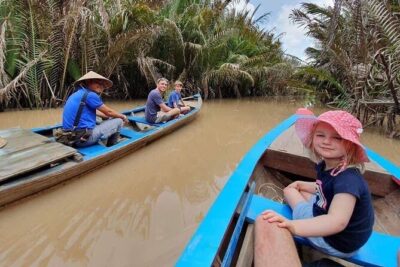
- Two boat styles on the Mekong: a motorboat trip and a smaller rowboat/sampan-style ride through canals.
- Coconut candy and honey tea are built into the schedule, not tacked on at the end.
- Folk music performed by locals is part of the cultural stop in My Tho.
Pickup to Cu Chi Tunnels: when a long day makes sense
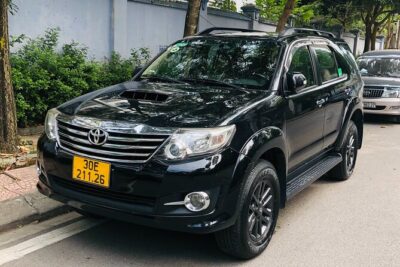
This is a true full-day swing: you’ll be picked up from your hotel in District 1 and 4 (right in the city center zones most first-timers use), then head out toward Cu Chi. The drive takes about 1.5 hours, so you’ll feel like the day starts quickly and keeps moving.
Plan on a lot of switching environments. Underground to daylight. History explanations to lunch. Then boats and canals. The payoff is that you don’t lose half a day commuting between two far-apart areas on your own.
The group is capped at 18 people, which matters. With smaller numbers, you’re more likely to get a guide who can keep explanations clear and keep the schedule tight. The tour returns you to Ho Chi Minh City at about 7:00 PM, so you still have dinner options after.
You can also read our reviews of more tours and experiences in Ho Chi Minh City.


Inside Cu Chi Tunnels: living space, weapon work, and trap logic
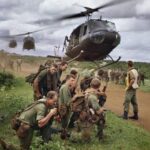
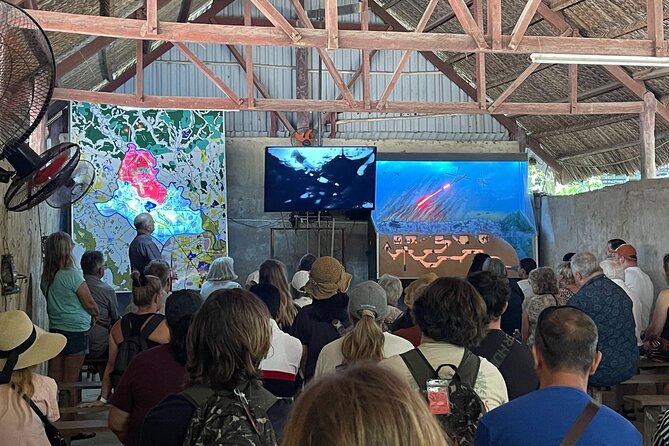
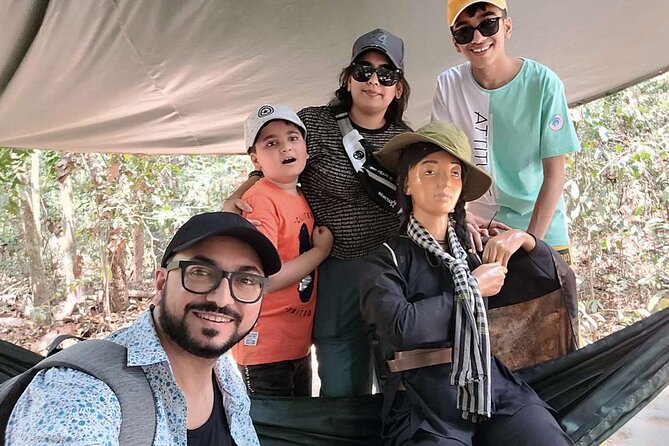
Cu Chi is famous for a reason: it’s not just a tunnel “museum.” The visit includes a short intro video, then you move through a remaining section of the tunnel network where you can see the kinds of spaces people squeezed into during wartime.
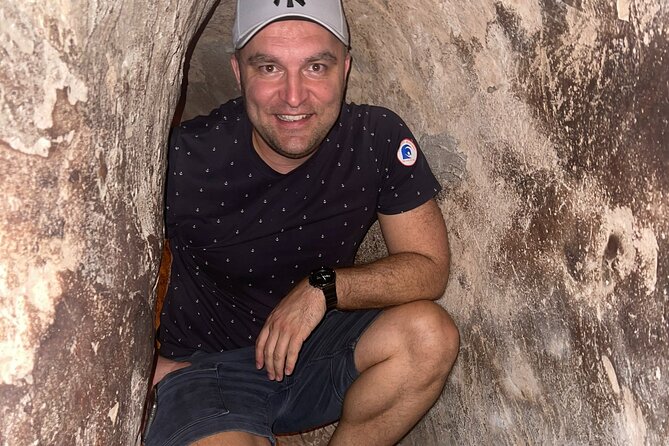
What I find most compelling is how the tunnel areas are organized around everyday survival and ongoing operations. You’ll see living spaces described as kitchens and bedrooms side by side, plus areas tied to military support like weapon factories, storage, command centers, and field hospitals. That setup helps you understand something crucial: these were not random holes in the ground. They were a system.
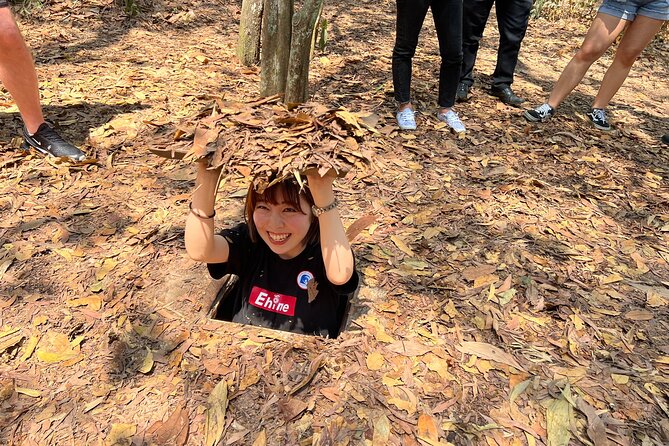
Another high-value part is the focus on defenses. You’ll learn about dangerous traps and hidden trap doors inside the maze-like passages, explained as security measures for guerrillas. Even if you’re not a history nerd, the way these details connect to movement and danger makes the underground map feel real.
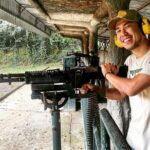
Practical consideration: you should expect the tunnel section to be physical. It’s underground, tight, and focused on walking through a preserved/accessible portion, so wear comfortable shoes. Also note that the shooting gun experience at Cu Chi is not included, so if you’re chasing that add-on, you’ll need to budget separately.
Your guide is the difference: Haley, Kevin, Ken, and Robert
This tour lives or dies by interpretation, and the guides here tend to be strong. The professional English-speaking guide matters because Cu Chi can turn into dates and slogans unless someone connects the dots in plain language.
From the experience of guides like Haley, I especially like how the history is explained in a way that’s easy to grasp, including the context between north and south and the role of the communist party. That kind of explanation gives your tunnel visit a backbone. You’re not just looking at a cramped space; you’re understanding why people were there and how they adapted.
Other guides also stand out in different ways. Kevin is described as kind, knowledgeable, and funny, and his approach made the day feel well organized while balancing culture stops with tunnel time. Robert and Ken are also mentioned for guiding smoothly through Cu Chi and the Mekong portion, with Ken receiving a strong note for keeping things positive during the day even when expectations didn’t match the final plan.
If you care about clarity more than raw entertainment, look for that guide-driven storytelling. It’s what turns a long day into a meaningful one.
Lunch and the break between history and boats

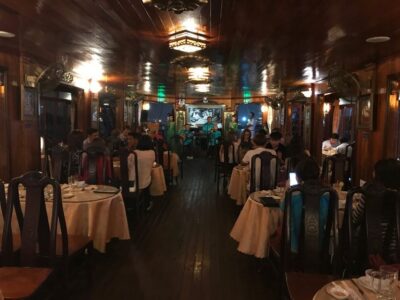
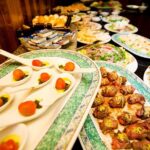
After Cu Chi, you’ll stop for lunch at a local restaurant. Lunch is included, and it’s positioned as a reset before the Mekong portion. That matters because Cu Chi is mentally heavy; a real meal helps you switch gears.
The lunch is described as Vietnamese with authentic flavors and specialties, so you’re not eating a generic tourist platter. Spice levels can vary by restaurant, so if you’re sensitive, it helps to ask quickly when you sit down.
This is also where you’ll likely notice how the day is structured: Cu Chi is the intense focus, lunch is the decompression point, and then My Tho turns the volume down with a slower pace on the water and canals.
My Tho on the Tien River: cruise, canals, and that southern pace
Once lunch is done, the itinerary brings you to My Tho city and the waterways that made the southern delta famous. You start with a cruise along the Tien River, described as a leisurely ride with natural beauty. This is the mental reset: open air after tunnels, wide water after tight spaces.
Then comes the part that often feels more memorable than the cruise itself: you’ll take a ride down small canals by wooden sampans. This switch from motorboat-style touring to smaller, tighter water navigation changes the feel of the experience. You slow down, the scenery comes closer, and the ride becomes more about atmosphere than checkpoints.
You’ll also get tasting moments during this stretch: seasonal fruits and honey tea are included. This is where the Mekong stops feel practical. You’re not just passing through a landscape; you’re sampling what local life tastes like.
One scheduling note: this delta segment uses included boat time and short cultural stops, so you’ll want to stay flexible and be ready for a few transitions. If you get motion-sick easily, it may help to sit where you feel most stable during boat rides, but the tour itself doesn’t provide any extra accommodations info beyond the normal small-group structure.
Coconut candy mill and folk music in the Mekong Delta
The Mekong Delta part doesn’t end with boats. You’ll visit a coconut candy mill, described as a family business. This is one of those stops that’s worth it because it’s connected to the everyday ingredients of the region. Coconut candy is simple on paper, but when you see how it’s made and try it, it feels like a real local product rather than a generic snack.
In one guide-led account, people also mention sampling coconut candy alongside local chocolate, which lines up with what you’d typically find around a candy-focused stop. Since the exact tasting menu isn’t spelled out here beyond fruit and honey tea inclusions, treat any extra samples as a bonus if they’re offered on the day.
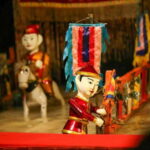
Before you return toward Ho Chi Minh City, you’ll also experience folk music performed by locals. That’s a great way to balance the day. Cu Chi teaches you how people endured hardship. The music stop shifts you to how people express life and identity today.
Price and logistics for $27.55: good value, but know what costs extra
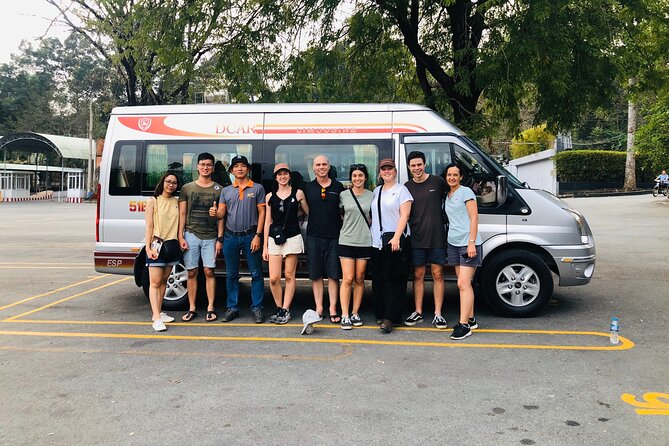
At $27.55 per person, this day trip is priced for real value—especially in a city like Ho Chi Minh where getting out to Cu Chi and back plus doing Mekong waterways can add up fast on your own.
Here’s the practical value breakdown based on what’s included:
- Hotel pickup and drop-off in District 1 and 4
- Lunch at a local restaurant
- Professional English-speaking guide
- Admission to attractions at Cu Chi and during the day’s stops
- Motorboat trip and a small rowboat/sampan-style trip
- Fruit and honey tea
What’s not included matters too:
- Tips and gratuities
- The shooting gun experience at Cu Chi
You’ll also want to keep an eye on the calendar. On holidays or festival dates, there can be an extra charge, so your final total might differ.
Overall, this looks like a solid deal if you want: (1) guided history at Cu Chi, (2) a structured Mekong day that includes boats plus food/music, and (3) a small group that doesn’t balloon into a slow-moving crowd.
Should you book this Cu Chi and Mekong Delta small-group tour?
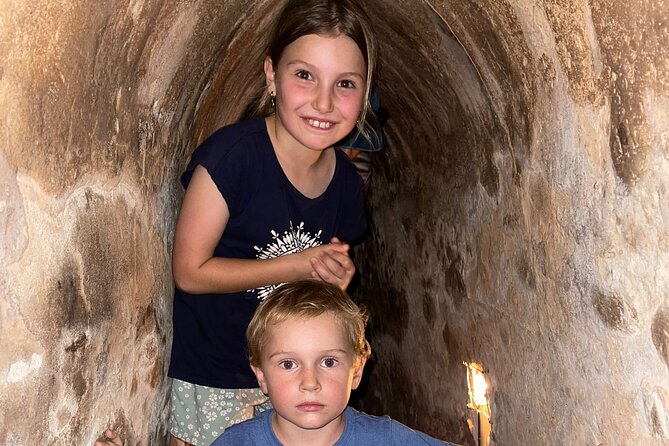
I’d book it if you’re a first-timer in Ho Chi Minh and want a single day that hits both the wartime underground story and the delta lifestyle. The combination is efficient, and the included food and boat time help justify the price.
You should think twice if your top priority is a floating market. This plan focuses on river cruising and small canals with sampans, plus cultural tasting and folk music, and that’s a different vibe than a market-heavy route.
If you’re comfortable with a long day, like the idea of guided explanations, and want your history plus scenery in one package, this is the kind of tour that makes your time count.
FAQ
How long is the Cu Chi Tunnels & Mekong Delta tour from Ho Chi Minh?
It runs about 11 to 12 hours.
Where are the hotel pickup and drop-off locations?
Pickup and drop-off are provided for hotels in the center of District 1 and 4.
What happens when you arrive at Cu Chi Tunnels?
You watch a short introduction video, then explore remaining areas of the tunnel network, including living areas and various wartime facilities. You also learn about traps and hidden trap doors.
Is lunch included?
Yes. Lunch at a local restaurant is included.
What boat trips are included on the Mekong Delta portion?
The itinerary includes a motorboat trip plus a small rowboat trip.
Do you visit a coconut candy mill and get to try honey tea?
Yes. You visit a coconut candy mill (a family business) and you’re included with seasonal fruits and honey tea.
Are tips and the shooting gun experience included?
No. Tips/gratuities are not included, and shooting gun at Cu Chi Tunnels is also not included.
How large is the group?
The tour has a maximum of 18 travelers.
Is free cancellation available?
Yes. You can cancel up to 24 hours in advance for a full refund.